
Last updated September 10, 2026
Level 1 sweep and inspection to the NFPA 211 annual standard - flue, crown, cap, and flashing checked and photographed
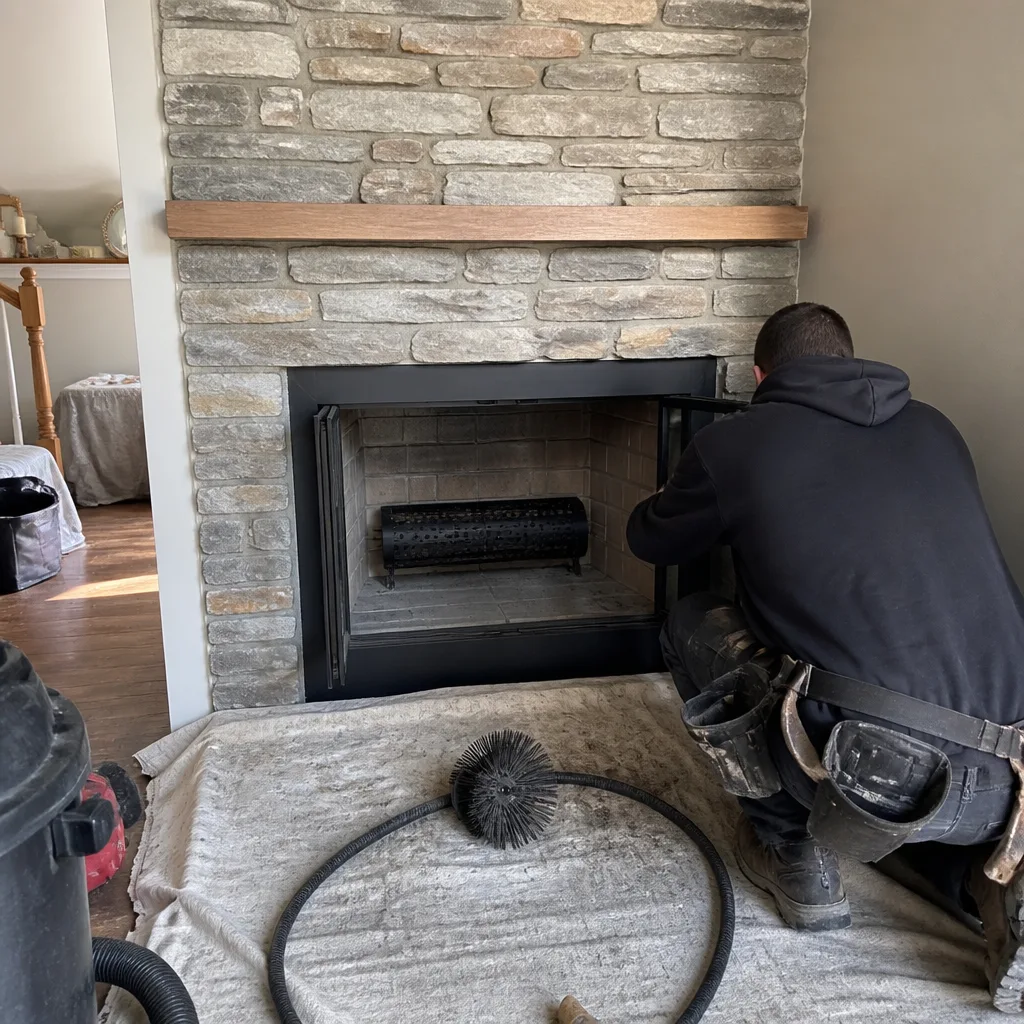
Chimney sweep logs do not sweep chimneys. They loosen some creosote - which then falls where a brush and vacuum still have to collect it.
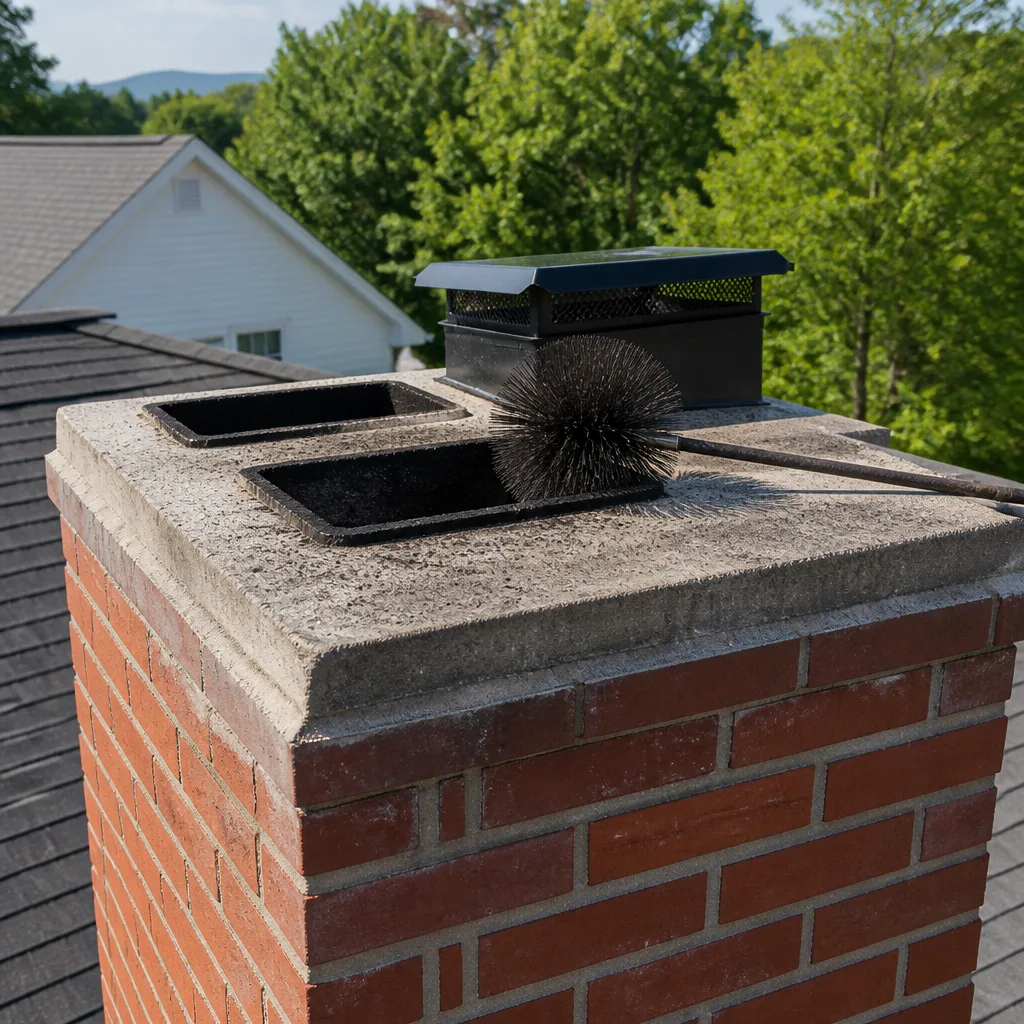
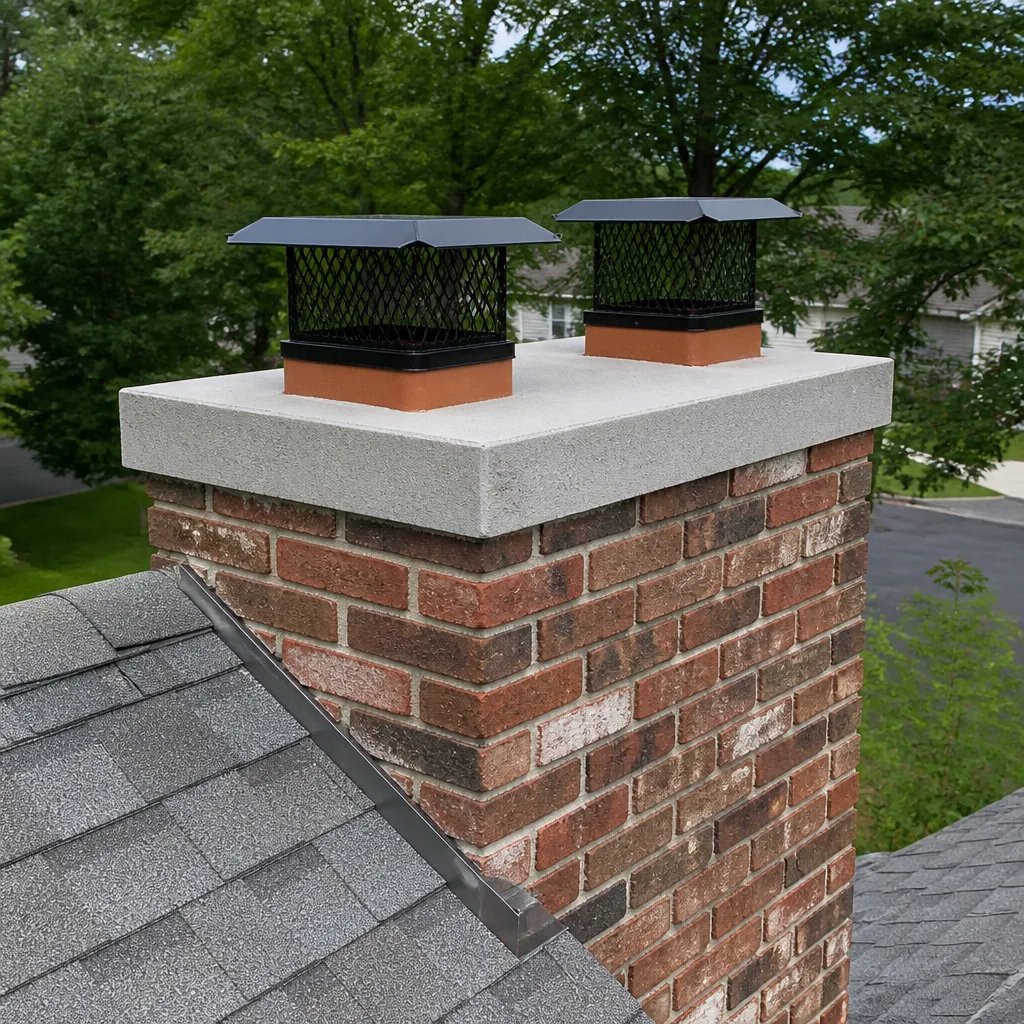
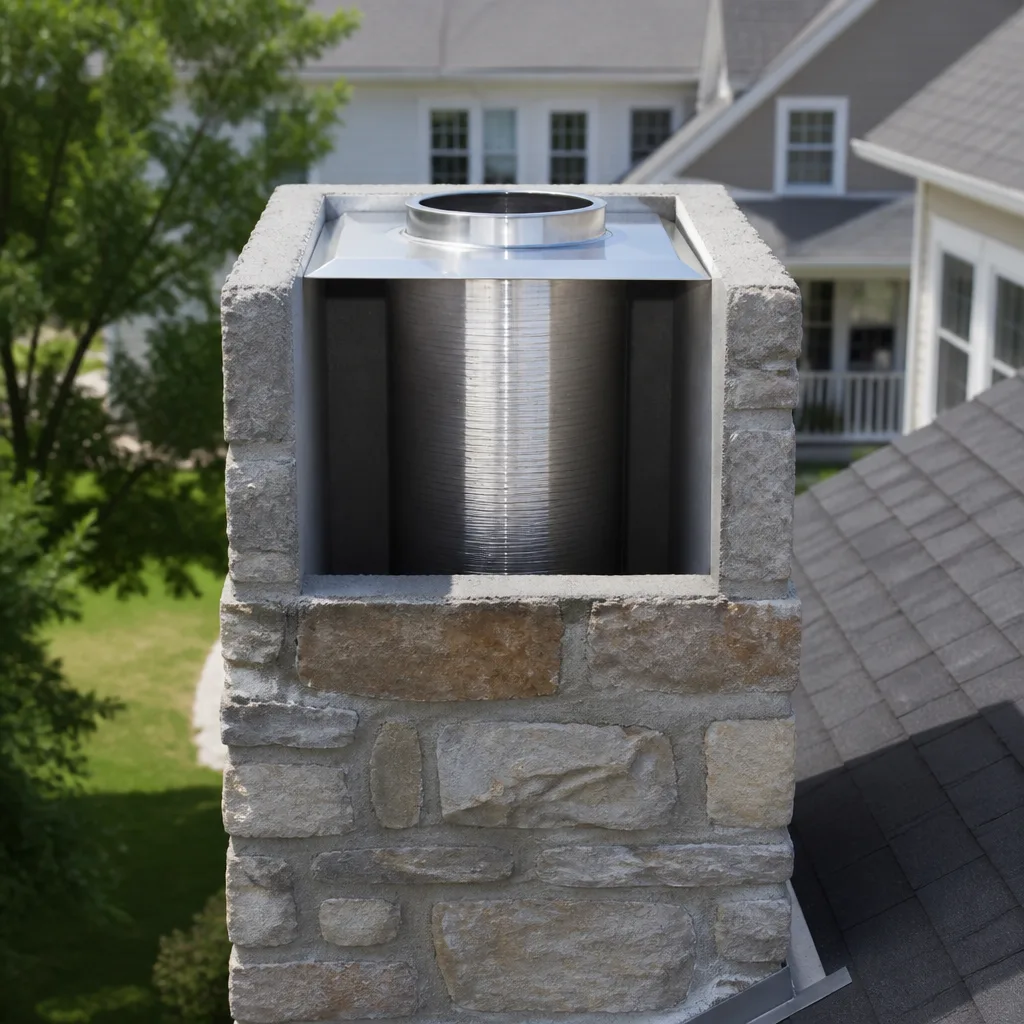
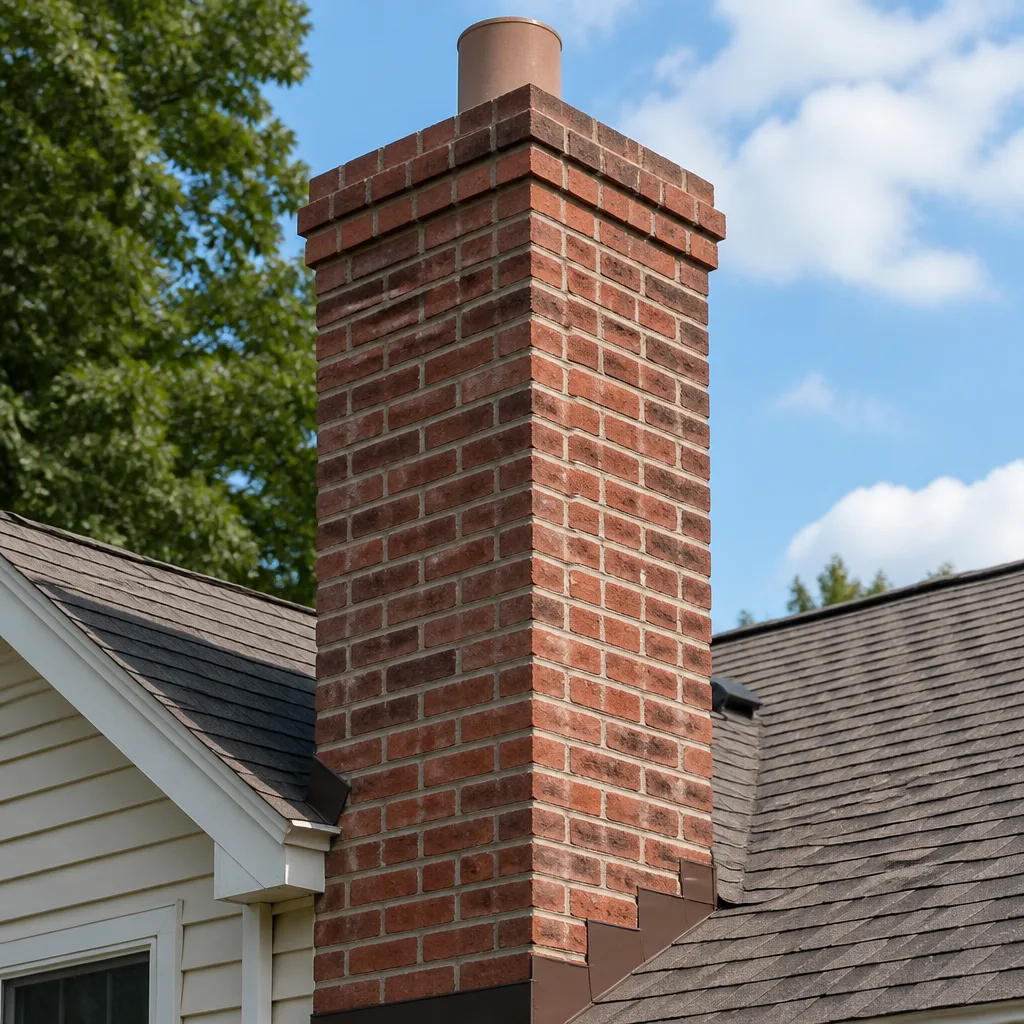
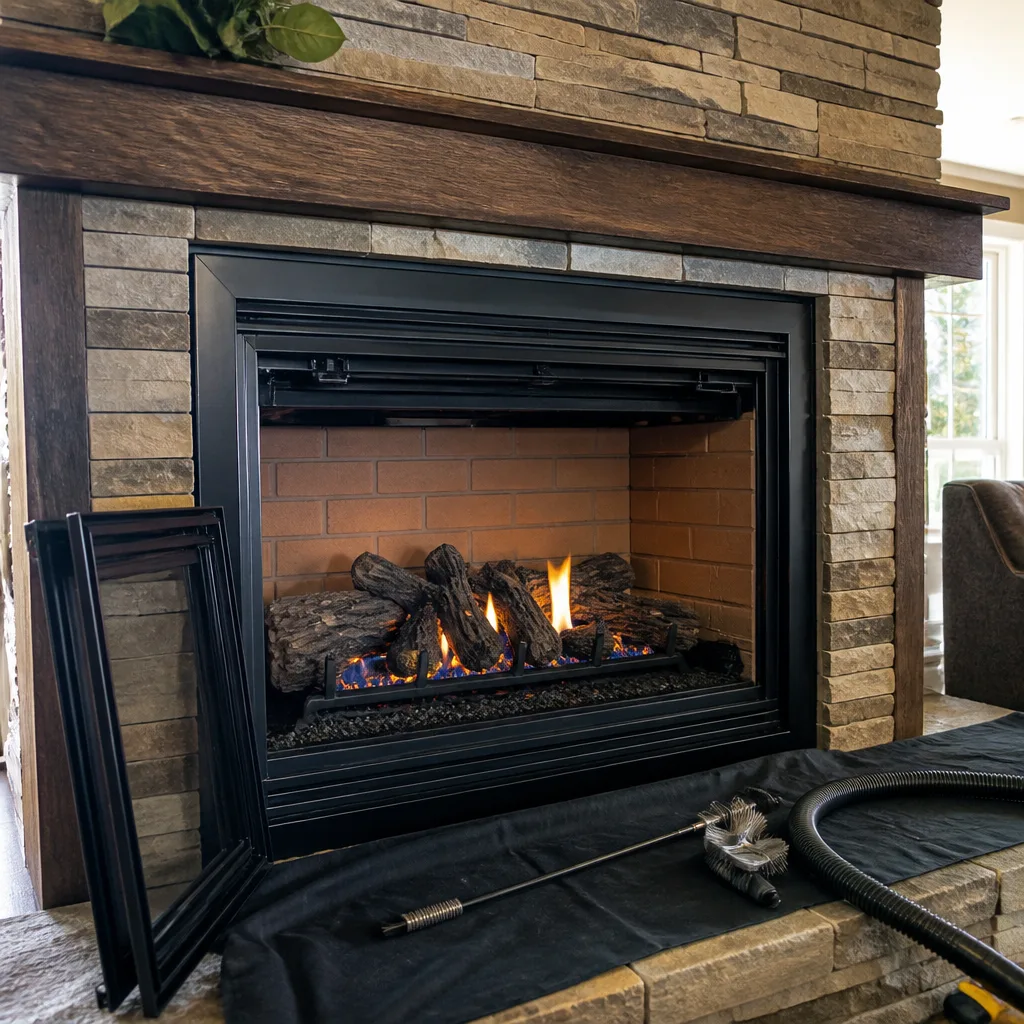
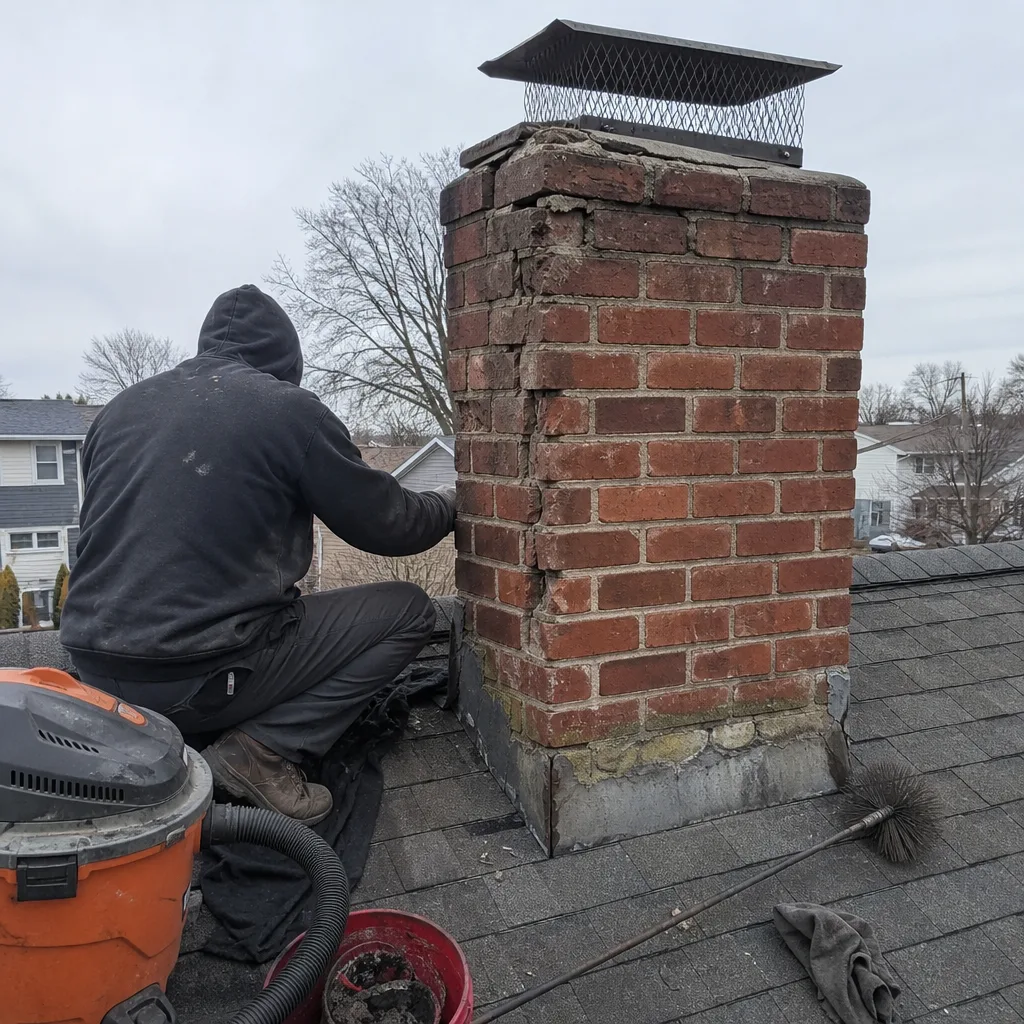 Before
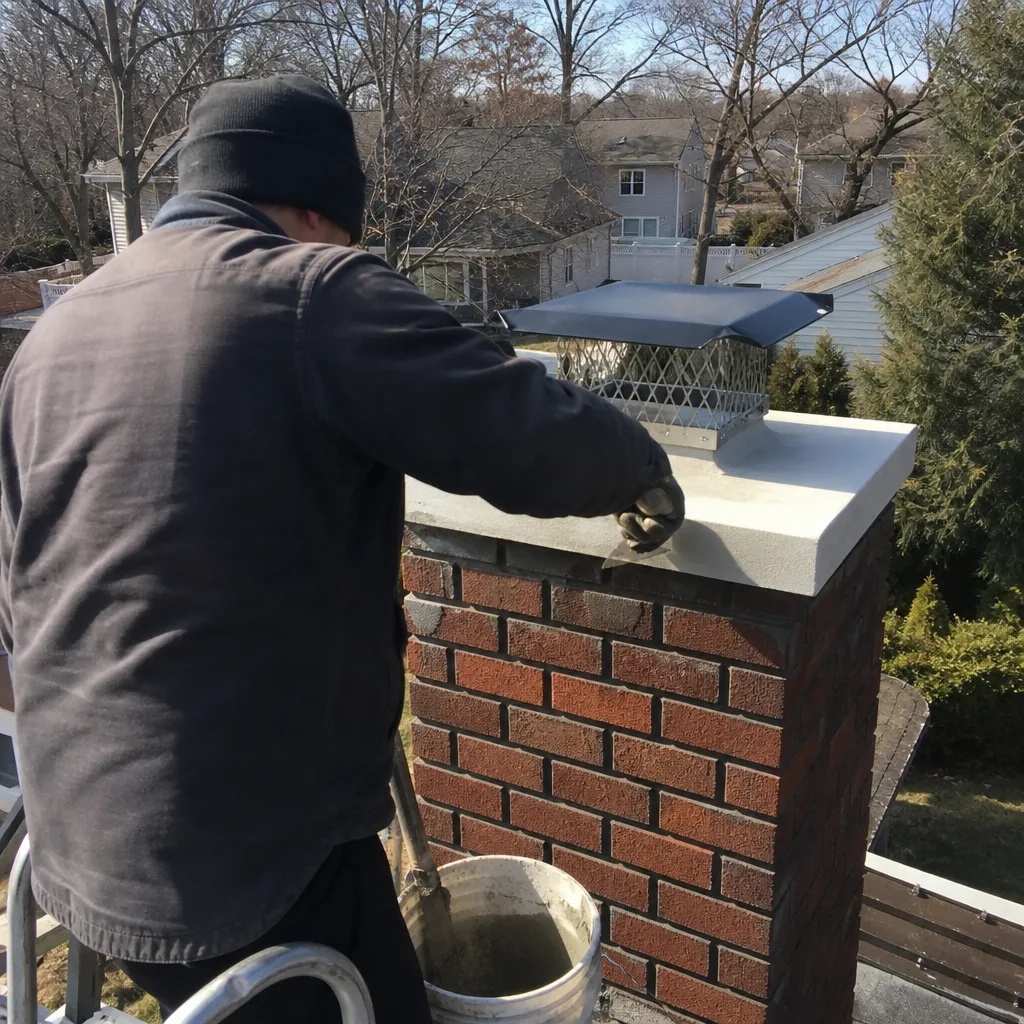 After
After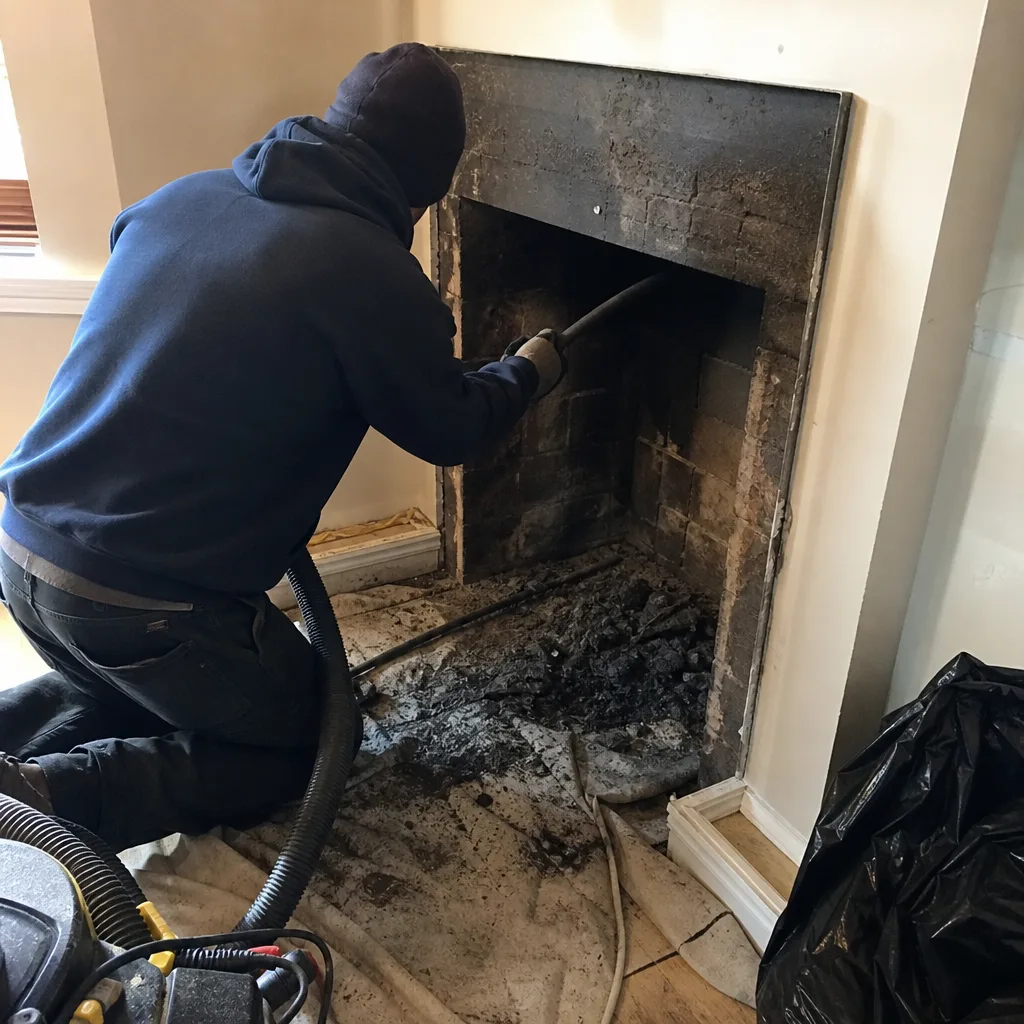 Before
 After
After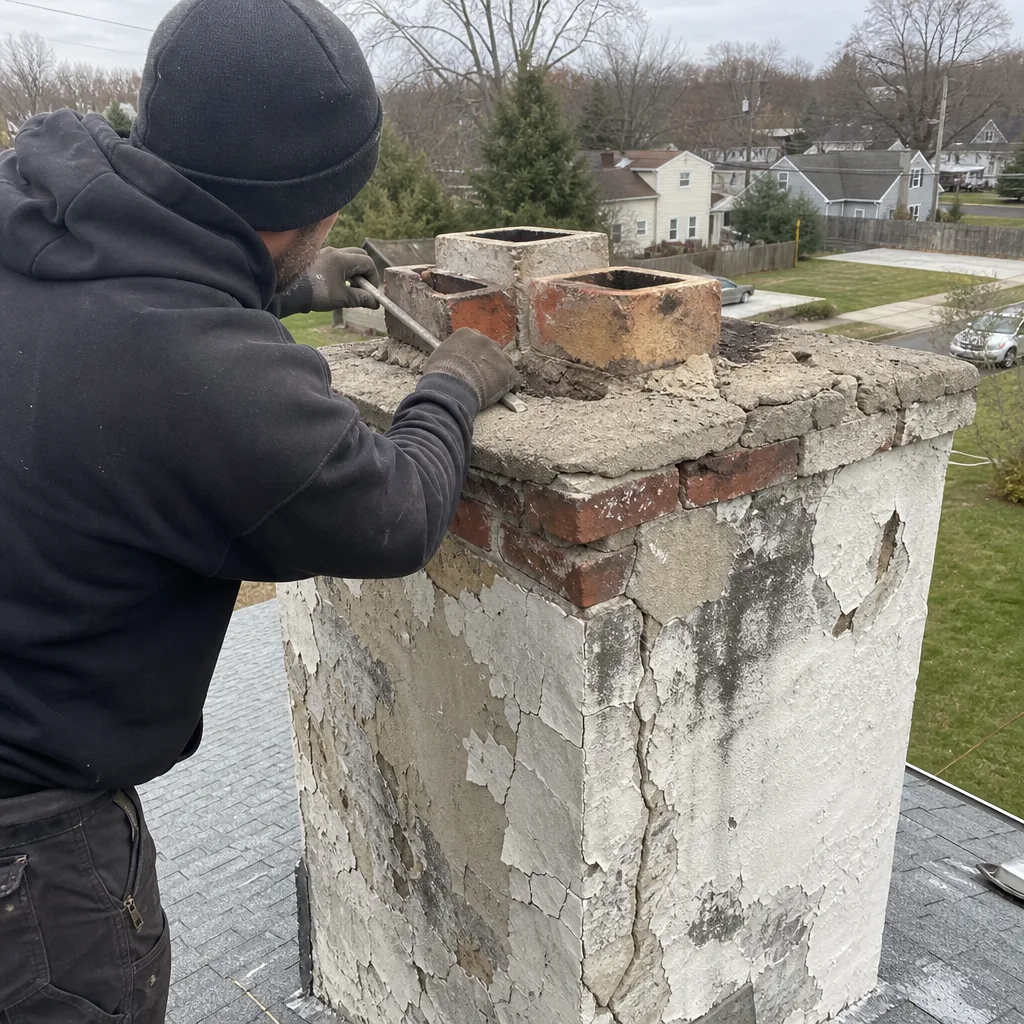 Before
 After
AfterChimney Cleaning & Sweep Maintenance Checklist for Hicksville Homeowners
Most chimney checklists online are written by people who have never been on a roof. They tell you to “schedule an annual cleaning” - which is like a car manual telling you to “drive safely.” After 42 years in this trade, we’ve learned that a useful checklist tells you what to look for before the sweep arrives, what to watch during the job, and what to demand before you write the check. In Hicksville, where many homes were built during the 1950s and 1960s suburban expansion, chimneys have seen decades of Long Island winters, summer humidity cycles, and the occasional nor’easter that tests every mortar joint. This guide gives you the same checklist our technicians use, adapted for the homeowner who wants to be an informed participant, not a passive bystander in their own home. For Chimney Cleaning Warning Signs: A Hicksville Homeowner’s Reference Guide, see our companion resource.
Quick Answer
A thorough Chimney Cleaning & Sweep checklist for Hicksville homeowners covers three phases: pre-appointment documentation of smoke behavior and service history, real-time verification of drop cloths, camera inspection, and damper function during the sweep, and post-job review of written photo reports with specific repair recommendations. Annual Level-2 inspections with camera documentation are recommended for homes with active fireplaces, while oil and gas flues should be checked for corrosion and blockages before each heating season.
Table of Contents
- Before the Sweep Arrives: What to Document
- During the Job: What You Should See
- After They Leave: What the Report Must Show
- Hicksville Seasonal Add-Ons: Sound-Side and Winter-Specific Checks
- Red Flags: Corner-Cutting Behaviors to Catch
- What It Costs in Hicksville and When to Book
- Common Mistakes to Avoid
- When to Call a Professional
- Frequently Asked Questions
Before the Sweep Arrives: What to Document
The best chimney sweep in the world cannot diagnose what they cannot see, and they cannot see what happened last February when you smelled something odd but forgot to mention it. Documentation before the appointment is the single most overlooked step in homeowner chimney maintenance. In Hicksville, where many homes have original masonry from the post-war building boom, historical context matters as much as current symptoms.
Here’s what to write down before you call:
- Fuel type and any changes. If you switched from oil to gas, or from cordwood to pellets, the flue requirements change. Combustion byproducts differ, and the inspection protocol should adjust accordingly.
- Last service date and company name. If the previous sweep left a report, have it ready. We regularly find Hicksville chimneys that were “cleaned” by a brush-only service with no camera inspection, missing critical deterioration in the flue liner.
- Smoke behavior patterns. Does smoke back up on windy days? Only when the furnace first kicks on? Only with the fireplace, not the boiler? Specificity saves diagnostic time.
- Odor history. A musty smell in summer often indicates a missing or failed chimney cap allowing water intrusion. A sharp, acrid smell during heating season suggests creosote buildup or a blocked flue.
- Visible exterior changes. New cracks in the crown, missing mortar between bricks, or a tilting cap - photograph these from the ground. Do not climb the roof.
- Appliance changes. New stove insert? New gas logs? The connection method and clearances must be verified against current codes.
One detail specific to Hicksville and surrounding Nassau County: many homes here have shared chimney structures between attached or semi-attached units. If your neighbor’s flue shares a wall with yours, note any work they’ve had done. We’ve seen cases where a neighbor’s liner installation compromised the separating wall between flues, a defect only visible with a camera.
Keep this documentation in a folder with your home records. When you sell, a documented chimney maintenance history is a material asset. When you stay, it prevents redundant work and catches patterns a single visit cannot reveal.
During the Job: What You Should See
A professional chimney sweep should work in a way you can verify from your living room. You do not need to follow them onto the roof - in fact, for liability reasons, most companies prefer you don’t. But you should observe enough to know whether the job is being done thoroughly or rushed through.
Arrival and setup (first 10 minutes):
- Technician should arrive in a marked vehicle, in uniform, with photo ID visible. Hearthstone technicians are background-checked and uniformed - this is basic accountability.
- Drop cloths should be laid from the entry door to the fireplace or appliance, and a protective cloth placed inside the firebox area. Soot does not belong on your carpet.
- A vacuum with HEPA filtration should be positioned before any brushing begins. Standard shop vacuums recirculate fine particulate; professional equipment captures it.
The inspection sequence (what to listen for):
- Exterior visual assessment. Even if the appointment is for “just a cleaning,” the technician should examine the crown, cap, flashing, and visible brickwork from the ground or roof. In Hicksville, where freeze-thaw cycles are severe and homes near the Sound face salt-air exposure, exterior deterioration is common.
- Damper operation check. The damper should be opened, closed, and assessed for proper seal and smooth operation. A stuck or warped damper wastes heat and can allow backdraft.
- Firebox inspection. Cracked refractory panels, deteriorating mortar, or rusted metal components should be noted before any cleaning begins. Cleaning conceals some defects; inspection must precede it.
- Camera inspection of the flue. This is non-negotiable for any Level-2 inspection, which is what every occupied home with a fireplace should receive annually. The camera should be a dedicated chimney inspection camera, not a phone on a stick. You should be offered the opportunity to view the feed in real time.
- Smoke chamber and smoke shelf evaluation. These areas above the damper collect the most creosote and are the most common sites of hidden fire hazards. The camera must reach here.
- Combustion appliance zone check. For oil and gas systems, the connector pipe, draft hood, and venting should be examined for corrosion, proper slope, and secure connections.
- Dated service record with technician name and company license information.
- Fuel type and appliance details as observed, not as assumed from your initial call.
- Condition assessment of all accessible components: crown, cap, flashing, brickwork, mortar joints, flue liner, damper, firebox, smoke chamber, smoke shelf, and connector pipes.
- Photo documentation of any defect, deterioration, or recommended repair. Not generic stock images - your actual chimney, with identifying features visible.
- Clear distinction between immediate safety concerns, maintenance items, and monitoring points. Not everything needs to be fixed today. A trustworthy sweep tells you what can wait and why.
- Specific repair recommendations with material specifications. If a liner is recommended, the report should state the proposed material (stainless steel, aluminum, or a cast-in-place system like HeatShield) and the applicable standard (NFPA 211, local building code).
- Estimated timeline for any recommended follow-up work. “Monitor annually” versus “address before next burning season” versus “do not use until repaired.”
- No camera inspection. A brush-only cleaning without flue camera documentation is like a dentist cleaning your teeth without X-rays. Insist on camera evidence of flue condition. If the sweep claims “we can tell by the brush resistance,” they are guessing.
- Drop cloths omitted or inadequate. Soot is fine particulate; it migrates. A sweep who doesn’t protect your floors doesn’t respect your home.
- Exterior inspection skipped. “We only do the inside” is a warning. The crown, cap, and flashing are integral to system function and safety. In Hicksville’s climate, exterior deterioration is often the first sign of problems to come.
- Recommendations without photo evidence. If you’re told you need a $3,000 liner replacement, you should see the crack, the gap, or the deterioration that justifies it. No photo, no work.
- Pressure to decide immediately. A legitimate safety hazard that requires immediate cessation of use is rare. Most repairs can be scheduled after you obtain a second opinion. At Hearthstone, we offer free second opinions on any written estimate - no obligation, no pressure.
- Vague material specifications. “We’ll put in a new liner” is insufficient. Stainless steel 316Ti for wood, 304 for gas, specific gauge and insulation values - these matter for longevity and code compliance. We use DuraFlex and Olympia Chimney products with documented specifications.
- No written report or verbal-only assessment. Verbal reports cannot be referenced, disputed, or transferred to the next owner. They also cannot be held against the company if the assessment proves wrong.
- Prices that seem too low to include proper procedure. In the Hicksville market, a legitimate Level-2 inspection with camera documentation and written report typically runs $200-$350. A $79 “special” that includes “full inspection” almost certainly excludes the camera, the report, or both.
- Assuming gas and oil flues don’t need inspection. Corrosion, blockages from deteriorated liners, and improper venting affect all fuel types. An oil flue with a perforated connector pipe is as dangerous as a creosote-packed wood flue.
- Burning unseasoned wood “just this once.” One load of green oak can deposit glazed creosote that requires mechanical removal. In Hicksville’s humidity, that deposit hardens faster than you might expect.
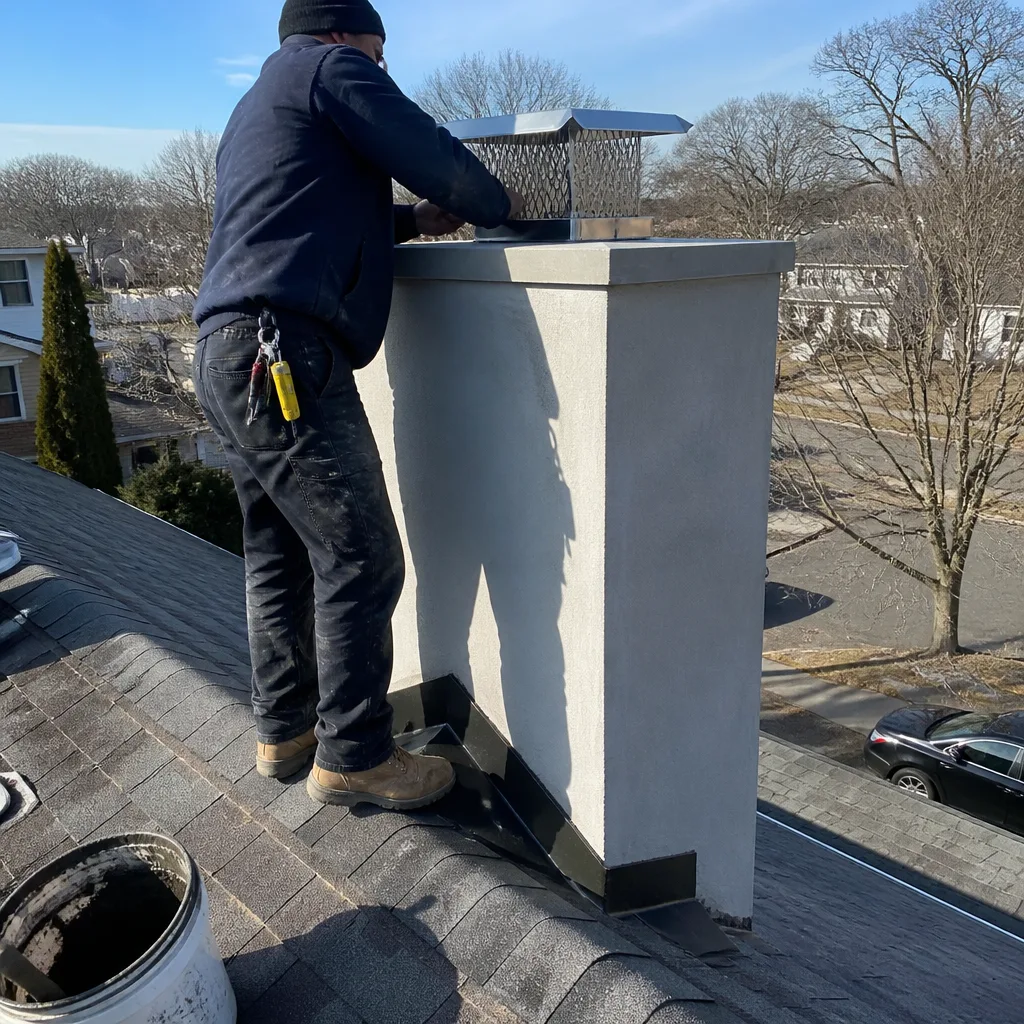
- Installing a chimney cap yourself without proper clearance knowledge. Caps must allow adequate draft for the appliance while excluding water and animals. An undersized cap can cause smoking problems or carbon monoxide backup.
- Ignoring a “small” crack in the crown. Water enters, freezes, expands, and turns a $400 reseal into a $3,000 rebuild. We’ve seen this progression repeatedly in Hicksville’s freeze-thaw climate.
- Hiring based on lowest price without verifying what’s included. The $99 sweep that omits the camera inspection may cost you thousands in undetected liner damage.
- Using the chimney after a known problem “just to test it.” If you suspect a blockage, crack, or draft issue, do not light a fire to confirm. The confirmation can be catastrophic.
- Neglecting to transfer documentation to the next owner. If you sell, your maintenance records support your asking price and protect you from post-sale disputes. Keep them organized.
During this process, the technician should explain what they are seeing in plain language. “Your flue liner has a vertical crack at the third course” is useful. “You need a new liner” without showing you the image is not. At Hearthstone, our Level-2 camera inspections end with photos you can see and a plain-English verdict - documented like an engineer, explained like a craftsman.
If the technician cannot or will not show you camera evidence of a recommended repair, that recommendation should not exist.
After They Leave: What the Report Must Show
The job is not complete when the brushes are put away. A proper chimney service delivers a written report that serves as both documentation and warranty support. Here’s what should be in your hands before you write the check:
The written report - minimum requirements:
The one question to ask before paying:
“If I do nothing you recommended, what’s the worst realistic outcome?”
A sweep who cannot answer this specifically - “The cracked liner could allow flue gases into the wall cavity, and carbon monoxide doesn’t announce itself” - is either unqualified or unwilling to be accountable. At Hearthstone, we answer this question directly, in writing, because our 90-Day Done Right Promise means we stand behind our assessments. If it’s not right, we make it right - in writing, no arguing.
Keep your report with your home records. When you call for service next year, the new technician should reference it. Continuity of care matters for chimneys as much as for medicine.
Hicksville Seasonal Add-Ons: Sound-Side and Winter-Specific Checks
Hicksville sits roughly midway across Nassau County, close enough to Long Island Sound that salt-air exposure affects homes in certain neighborhoods more than others. For full regional context, read The Complete Guide to Chimney Cleaning in Hicksville. The climate here - humid summers, freeze-thaw winters, and the occasional coastal storm - creates specific chimney stresses that a generic checklist misses.
Ice damming and chimney caps (late winter check):
After heavy snow followed by freeze-thaw cycles, ice can accumulate at the chimney crown and cap junction. This ice expands, loosens mortar, and can dislodge caps entirely. In neighborhoods like the area near Cantiague Park, where tree cover is lighter and wind exposure higher, we’ve seen caps shifted by ice leverage that went unnoticed until spring rains entered the flue. Check your cap visually after every significant thaw. If it looks tilted or the mesh is packed with ice, call for inspection.
Salt-air mortar erosion (annual assessment for Sound-proximate homes):
Homes within a few miles of the Sound, including parts of Hicksville’s northern reaches, experience accelerated mortar deterioration from airborne salt. The effect is subtle - slightly faster powdering of mortar joints, earlier spalling of brick faces - but cumulative. A chimney that would last 60 years inland may need repointing at 40 years here. Your sweep should note mortar condition relative to your home’s age and exposure.
Humidity and creosote composition (summer inspection timing):
Long Island’s summer humidity can transform light, brushable creosote into a glazed, tar-like deposit that standard sweeping cannot remove. If you burned wet wood last season and delayed your sweep until July, you may need mechanical removal rather than brushing. We recommend Hicksville homeowners schedule cleaning in late spring, before humidity peaks, or early fall, before first use.
Heating oil sulfur corrosion (pre-season for oil-heated homes):
Many Hicksville homes still heat with oil, and modern ultra-low-sulfur fuel behaves differently in flues than older high-sulfur oil. The reduced sulfur produces less acid condensation, but variable burner efficiency can still create corrosive condensate in cooler flue sections. An annual pre-heating-season inspection of the connector pipe and base of the flue catches this before it perforates.
Post-storm assessment (after nor’easters or tropical systems):
High winds can dislodge caps, crack crowns, and drive water past flashing. After any storm with sustained winds over 40 mph, a ground-level visual check is prudent. If you see fresh debris on the roof near the chimney, or water staining on the ceiling near the fireplace, schedule inspection before next use.
Red Flags: Corner-Cutting Behaviors to Catch
Every trade has shortcuts. In chimney work, the dangerous ones are often invisible to the homeowner until damage is extensive. Here are the checklist items dishonest or incompetent sweeps skip first, and how to catch them:
The common thread: accountability. A sweep who documents thoroughly, explains plainly, and permits you time to decide has nothing to hide. One who resists any of these is selling something other than service. Explore our more guides & resources for additional homeowner protection strategies.
What It Costs in Hicksville and When to Book
Pricing transparency matters, especially for homeowners who have been burned by contractors before. Here’s what chimney maintenance costs in the Hicksville market, based on our 42 years of local service:
| Service | Typical Range | What’s Included |
|---|---|---|
| Level-1 Visual Inspection | $100-$175 | Accessible areas only, no camera, basic condition summary |
| Level-2 Camera Inspection & Sweep | $225-$350 | Full flue camera documentation, written report with photos, firebox and damper check |
| Chimney Cap Replacement (standard) | $350-$650 | Stainless steel or copper cap, proper sizing, installation |
| Crown Repair/Reseal | $400-$900 | Crack repair, waterproof coating, or partial rebuild depending on condition |
| Stainless Steel Liner (average flue) | $2,800-$4,500 | Insulated 316Ti liner, proper sizing for appliance, installation, permit coordination |
| Firebox Refractory Panel Replacement | $450-$1,200 | Prefabricated panels, custom-cut if needed, proper clearances verified |
These ranges reflect Hicksville’s position in the Nassau County market - higher than some upstate areas due to labor and permit costs, but competitive with comparable Long Island communities. Material choices affect pricing significantly; a Gelco stainless cap costs more than galvanized steel but lasts decades longer in salt-air exposure.
Timing for booking:
The ideal window for chimney maintenance in Hicksville is April through September. Demand peaks in October and November; technicians are booked solid, and the urgency of “I need this before first fire” limits your ability to compare options or schedule follow-up work. Spring booking also means any water intrusion discovered can be addressed before the next rainy season.
That said, we do not recommend burning in a chimney that hasn’t been inspected within 12 months, regardless of season. If you missed the spring window, book now rather than risk it. Hearthstone’s phones are staffed by a live person 24 hours a day, 7 days a week - call (516) 259-3797 and we’ll find you an appointment.
Current standing offers: $50 off any repair over $250, our $89 Seasonal Tune-Up for gas and oil flues, and a permanent 5% Senior and Veteran discount. Free second opinions on any written estimate from another company.
Common Mistakes to Avoid
When to Call a Professional
Some situations require immediate professional assessment: smoke backing up into the room, a strong odor of gas or oil fumes, visible flame or sparking from the chimney exterior, or a chimney fire (roaring sound, dense smoke, hot exterior masonry). Do not attempt to diagnose these yourself.
Other scenarios warrant prompt but not emergency scheduling: white efflorescence on exterior brick indicating water intrusion, a tilting or missing cap, rust stains on the chimney breast, or a damper that no longer opens or closes fully. These conditions worsen with use and weather exposure.
For routine maintenance, annual Level-2 inspection is the standard for wood-burning systems; every two years is acceptable for gas and oil if no problems are suspected. In Hicksville’s climate, with its freeze-thaw stress and humidity, we lean toward annual for all active chimneys.
Hearthstone Chimney Co. offers free estimates in Hicksville - call (516) 259-3797. A live person answers every call, 24 hours a day, 7 days a week. Most jobs are completed in a single visit, with no-hassle upfront pricing: the number on the estimate is the number on the invoice.
Frequently Asked Questions
A professional Level-2 chimney inspection with camera documentation and sweep typically costs $225-$350 in the Hicksville market. Basic Level-1 visual inspections run $100-$175 but do not include flue camera access or written photo reports. Call (516) 259-3797 for an exact quote - estimates are free.
Active wood-burning fireplaces and stoves should receive Level-2 inspection and cleaning annually, per NFPA 211. Gas and oil flues should be inspected every one to two years depending on appliance age and usage. Hicksville’s freeze-thaw climate and humidity make annual inspection the safer choice for most homes.
You need a new liner only if the existing one is damaged, improperly sized, or absent - and this determination requires camera inspection evidence you can see. Cracked clay tile, gaps between tiles, or a liner that does not properly contain flue gases are legitimate reasons. “It’s old” is not. At Hearthstone, we show you the camera image and explain the specific defect before recommending replacement.
Skipped maintenance leads to creosote accumulation (fire hazard), undetected liner damage (carbon monoxide risk), water intrusion (structural deterioration), and blocked flues (backdraft of combustion gases). In Hicksville’s older housing stock, these risks compound because original construction may not meet current safety standards. The cost of prevention is always less than the cost of remediation or tragedy.
We do not recommend DIY chimney cleaning. Proper inspection requires specialized camera equipment and training to interpret what the camera reveals. More critically, working on roofs and with flue gases involves genuine hazards. For your safety and the integrity of your system, hire a certified professional.
A sweep removes combustible deposits from the flue and firebox. An inspection evaluates the system’s condition, safety, and code compliance. They are often performed together, but they are distinct services. A sweep without inspection is incomplete maintenance; an inspection without cleaning may be appropriate if the system is clean but due for evaluation.
Verify CSIA (Chimney Safety Institute of America) certification, request proof of insurance, ask about camera inspection capability, and insist on a written report with photos. A qualified sweep welcomes these questions. Hearthstone technicians are background-checked, uniformed, and trained to document every inspection with photos and a plain-English verdict.
We work exclusively with professional-grade materials from industry-trusted manufacturers: DuraFlex and Olympia Chimney for stainless steel liners, HeatShield for cast-in-place flue restoration, Gelco for caps and accessories, Famco for ventilation components, and Copperfield for specialty supplies. No builder-grade substitutes.
The Bottom Line
A chimney maintenance checklist is only as good as your willingness to use it. Document before the sweep arrives. Verify their procedure while they work. Demand written, photographic evidence before you approve repairs. In Hicksville’s demanding climate, with decades of wear on many home chimneys, informed participation is your best protection against both safety hazards and unnecessary expense.
The fundamentals do not change: annual inspection for active systems, camera documentation for all assessments, clear distinction between urgent and deferrable repairs, and a written guarantee that the company will stand behind its work. At Hearthstone, that’s the 90-Day Done Right Promise - in writing, no arguing. Done right, and we stand behind it.
Ready to schedule? Call (516) 259-3797 for a free estimate. A live person answers every call, 24 hours a day, 7 days a week. We’ll be there when we say, with no-hassle upfront pricing and photos you can see, explained in plain English.
Written by Russell Haines, Owner at Hearthstone Chimney Co., serving Hicksville since 2014.