
Last updated September 10, 2026
Level 1 sweep and inspection to the NFPA 211 annual standard - flue, crown, cap, and flashing checked and photographed
Chimney sweep logs do not sweep chimneys. They loosen some creosote - which then falls where a brush and vacuum still have to collect it.
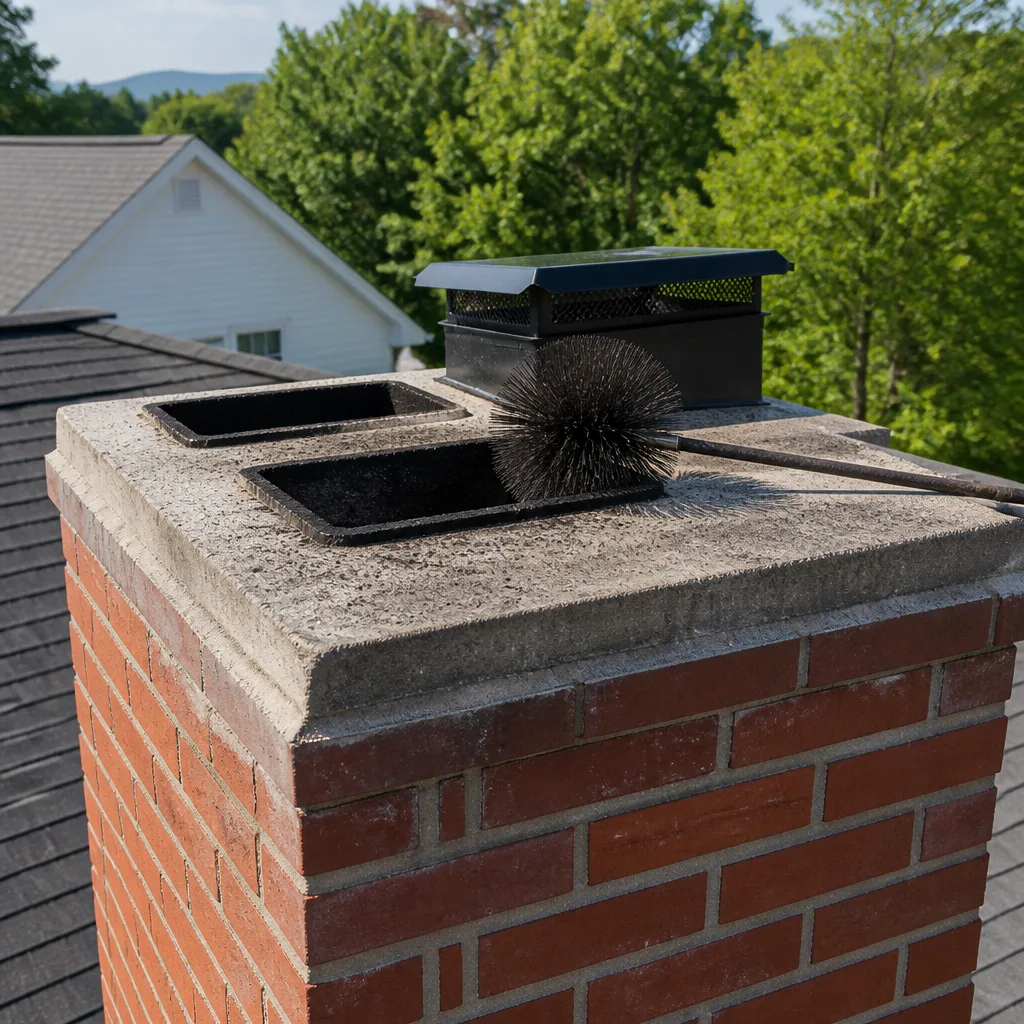
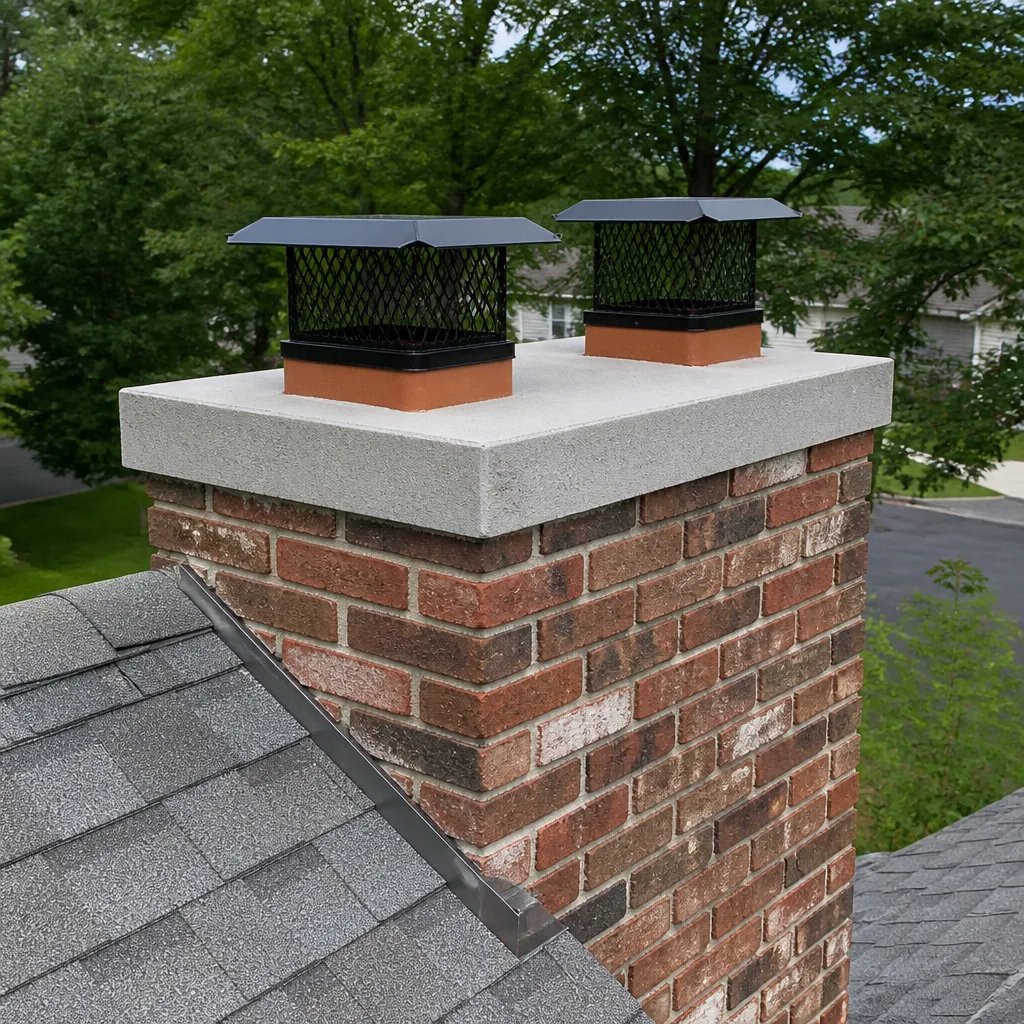
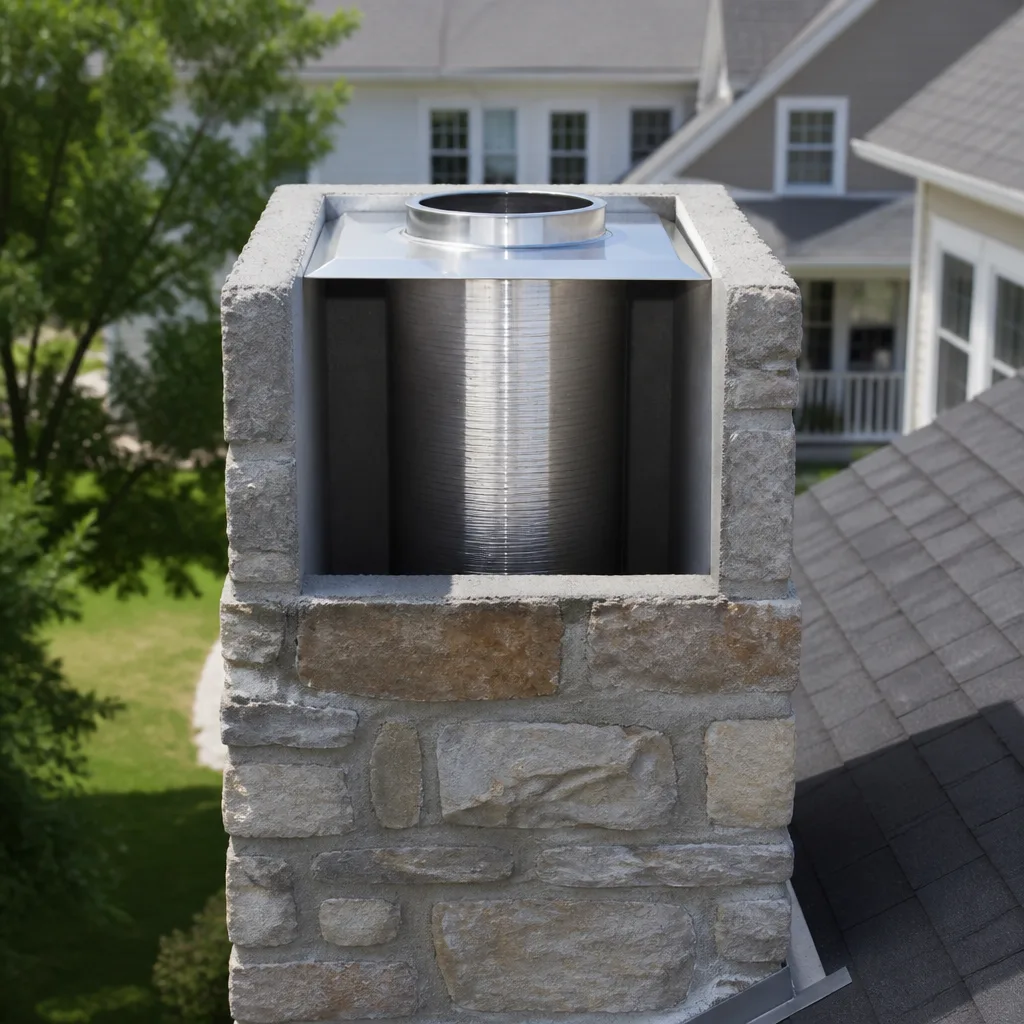
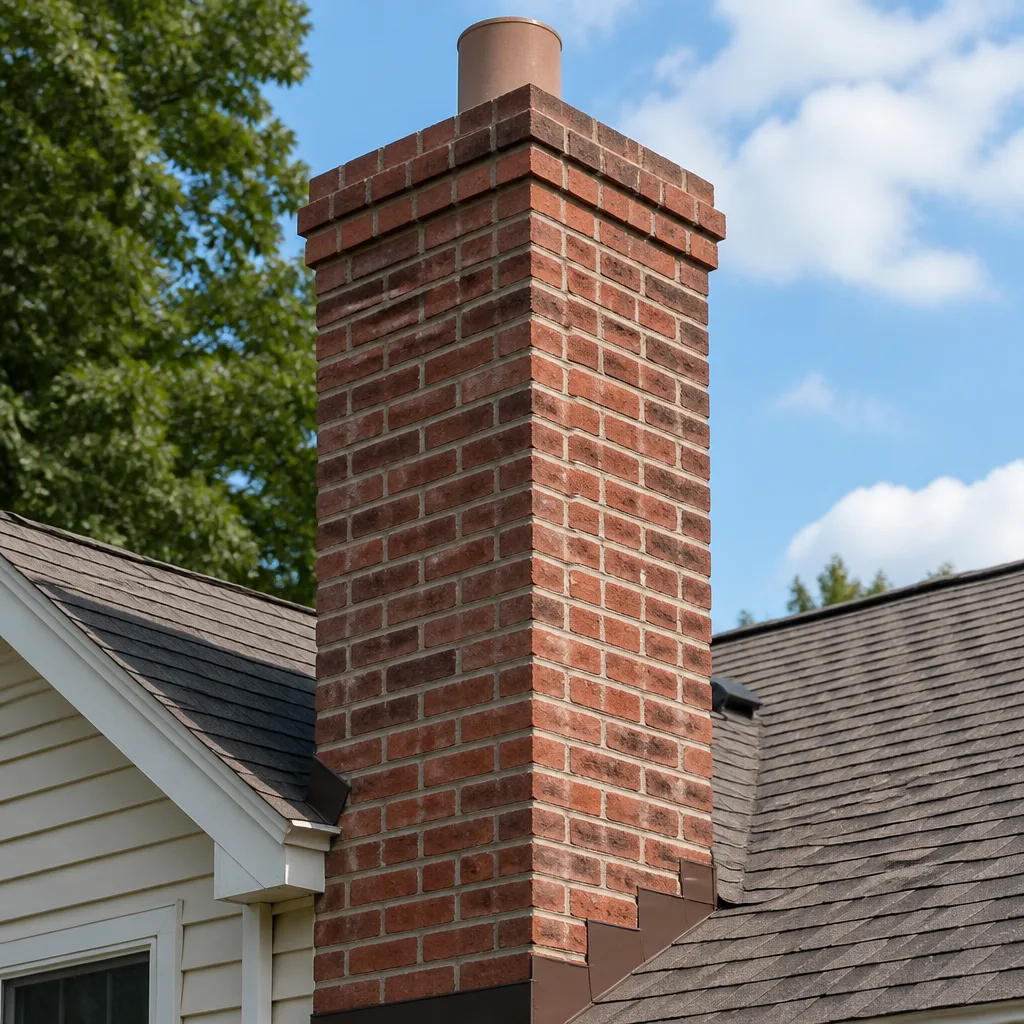
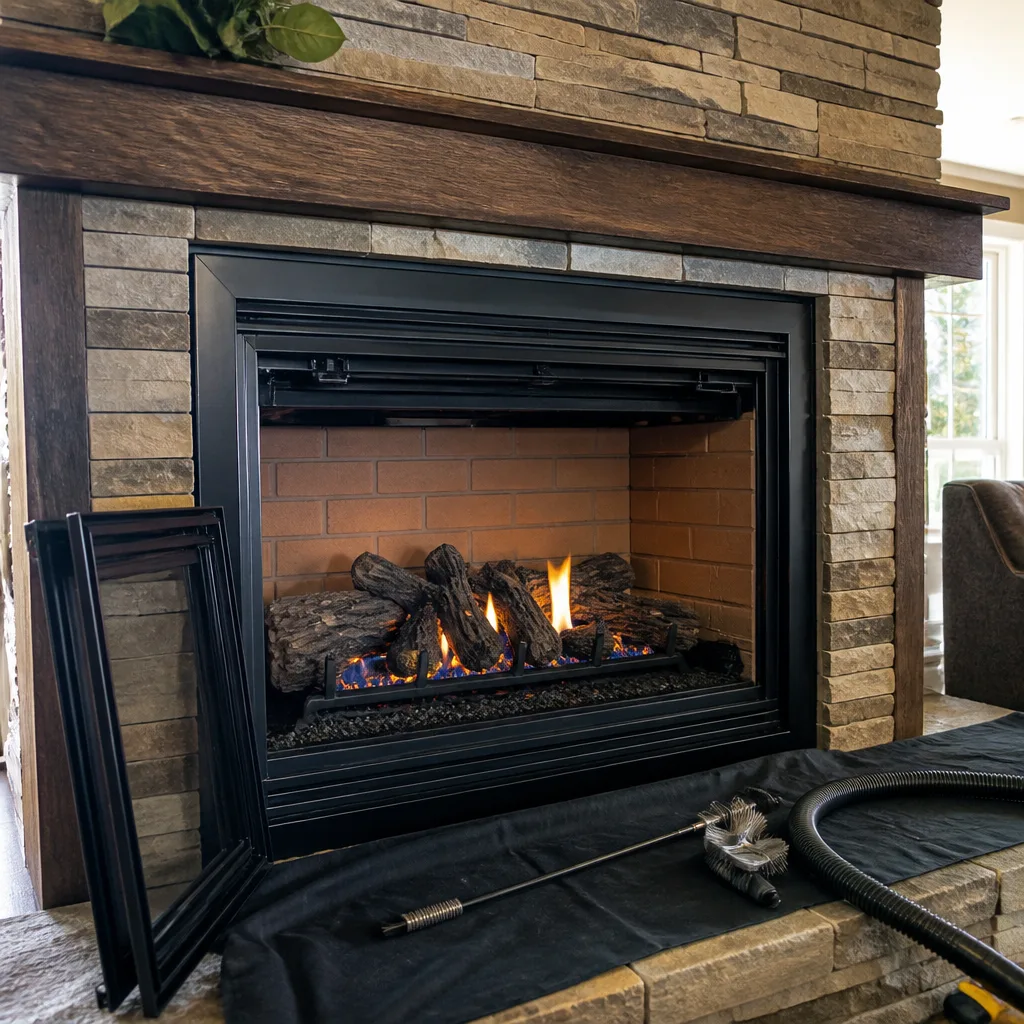
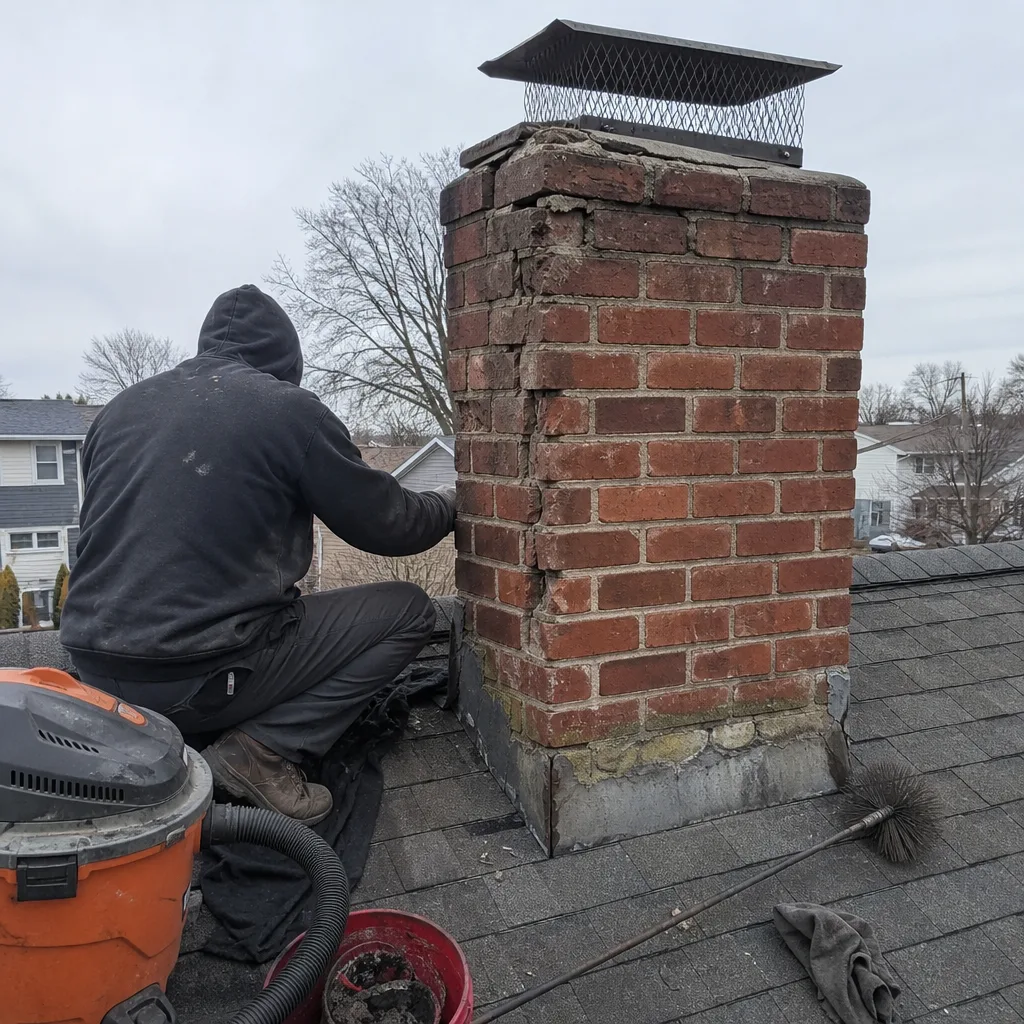 Before
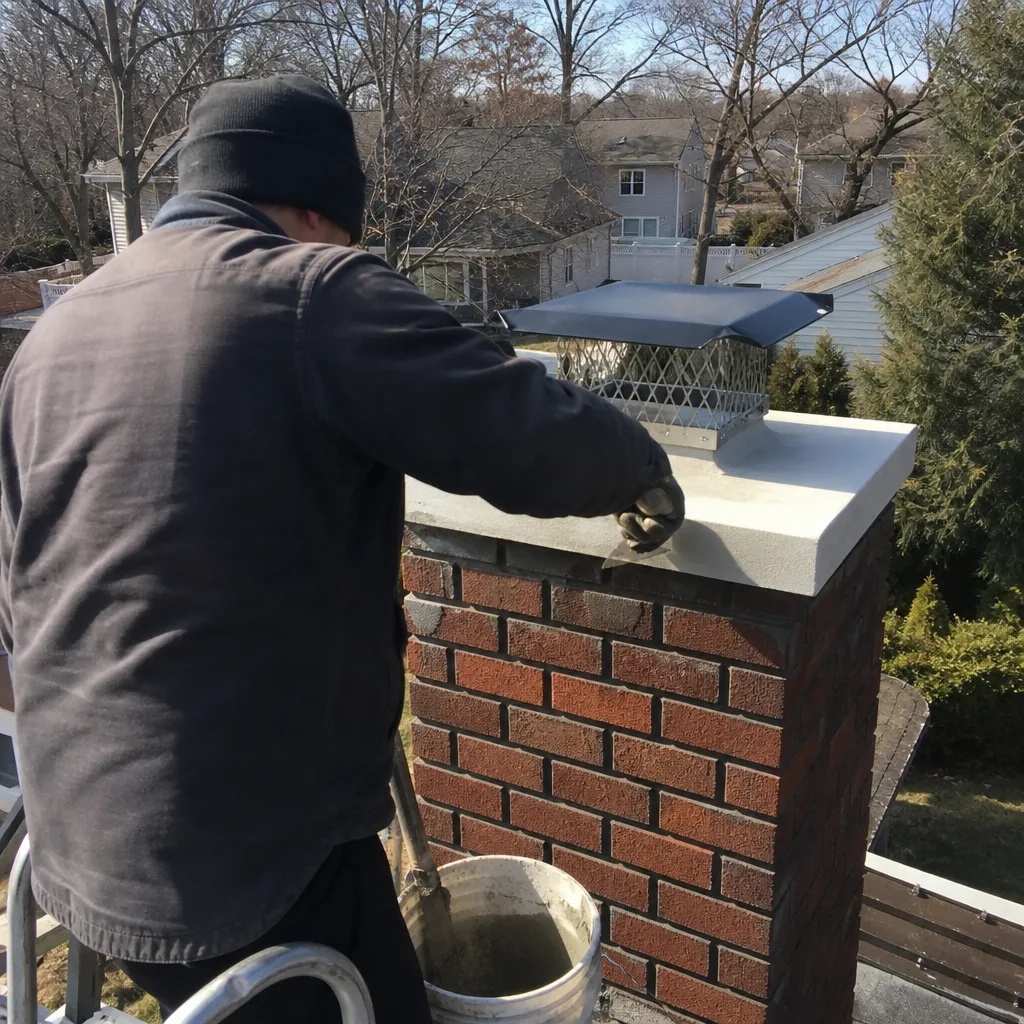 After
After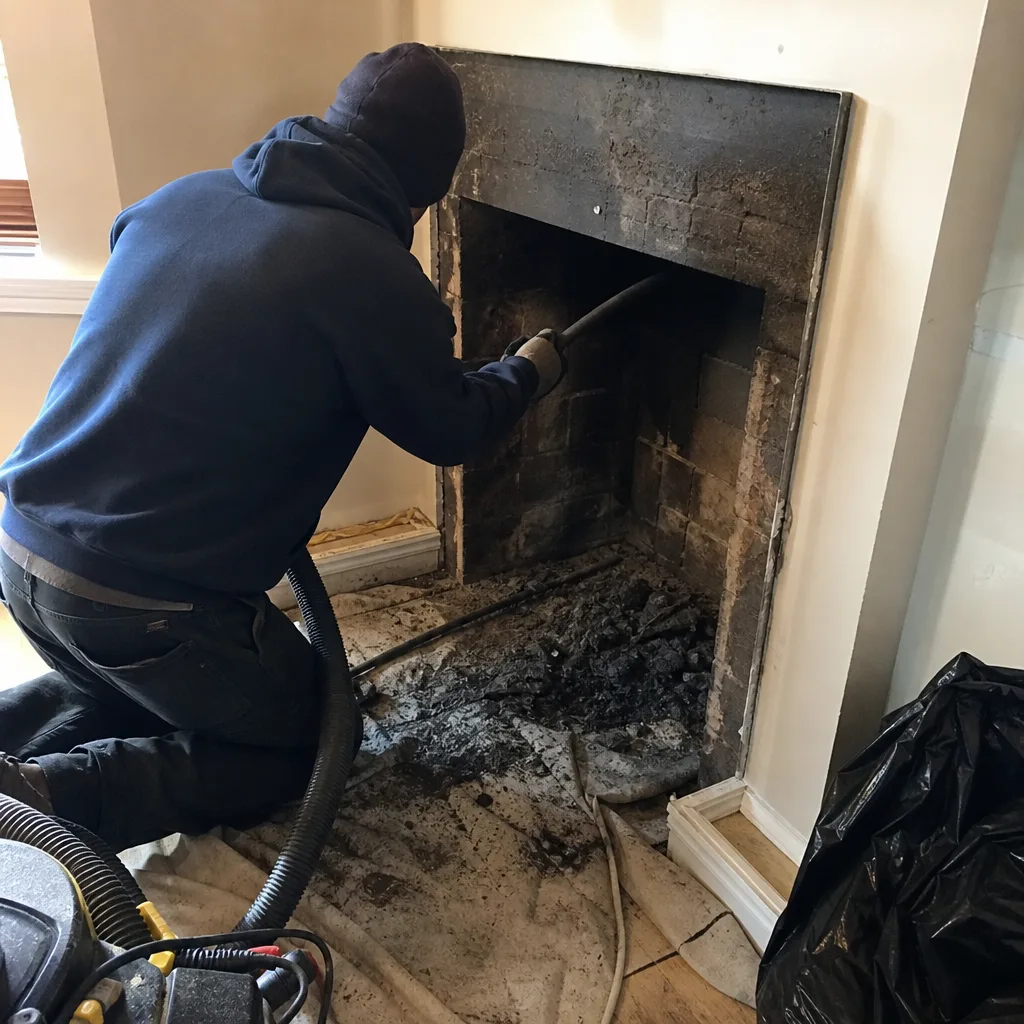 Before
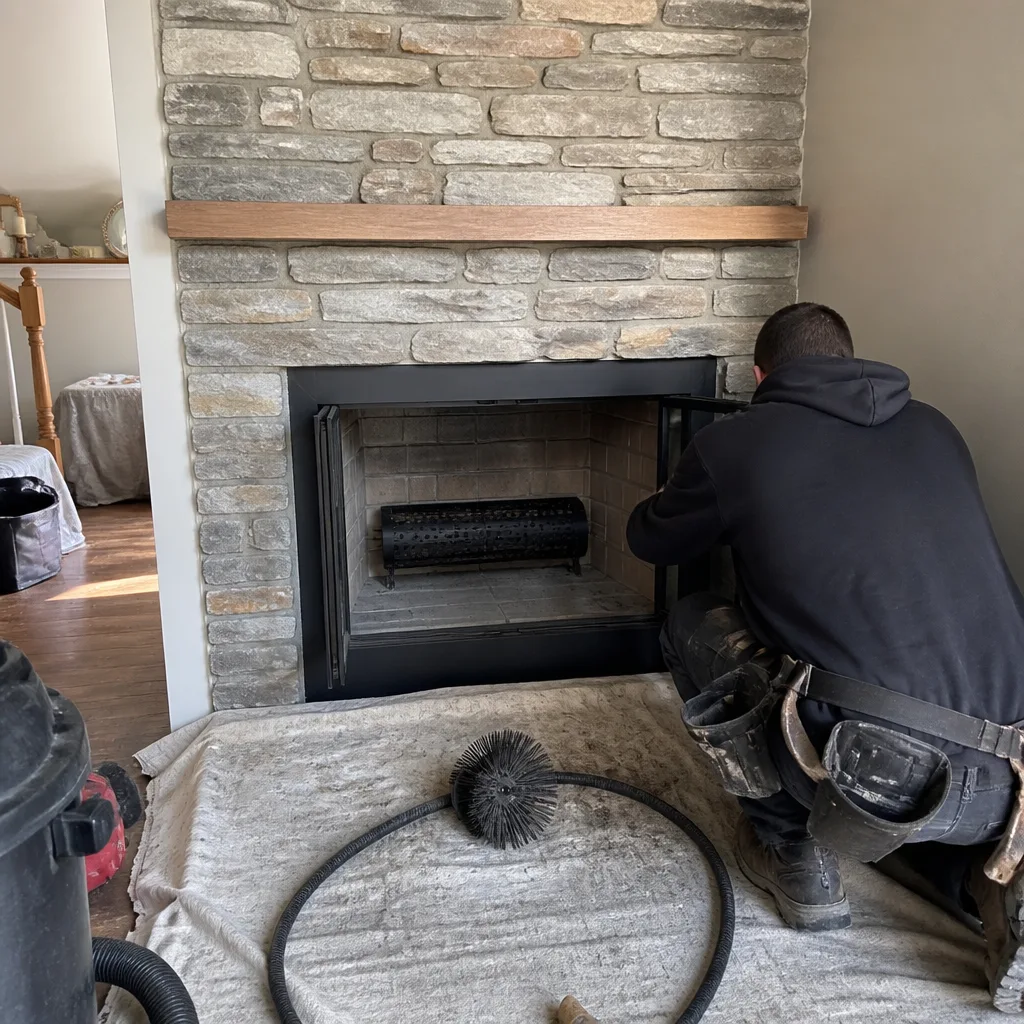 After
After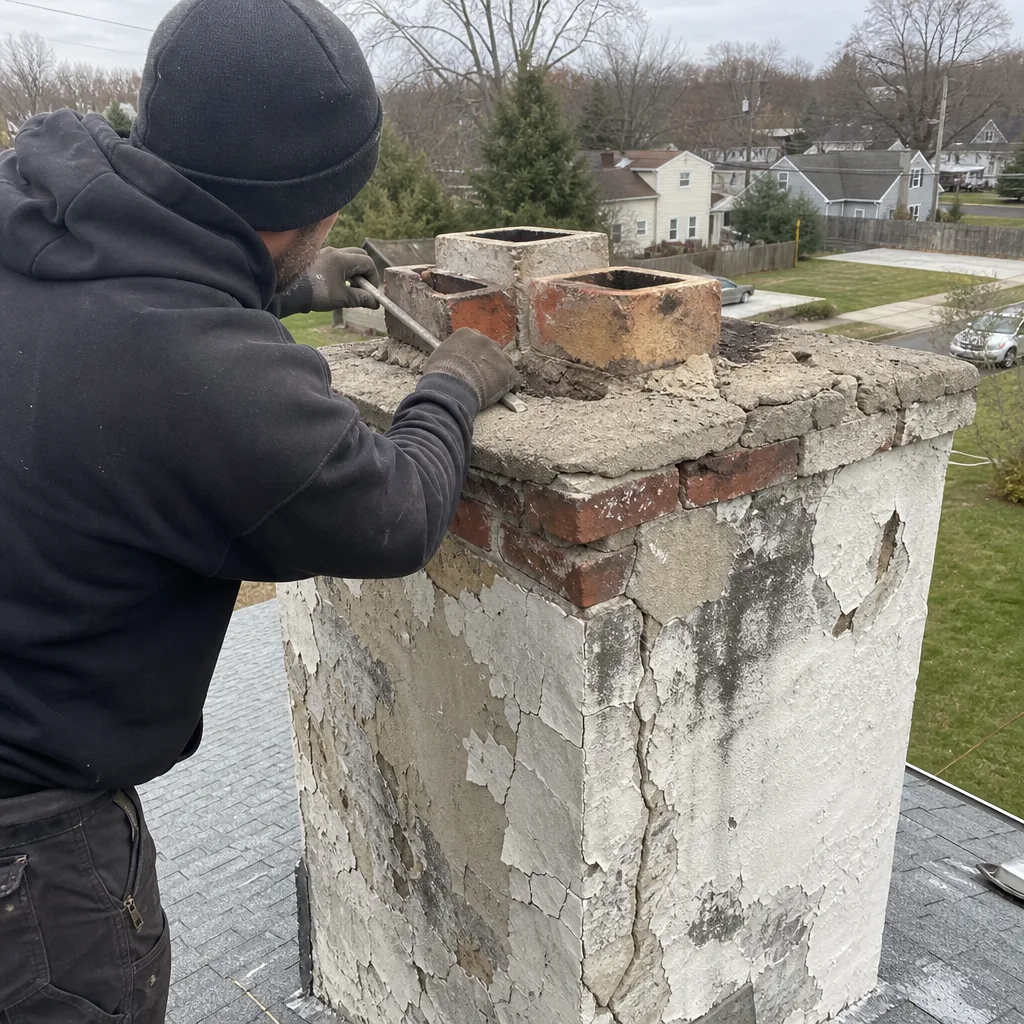 Before
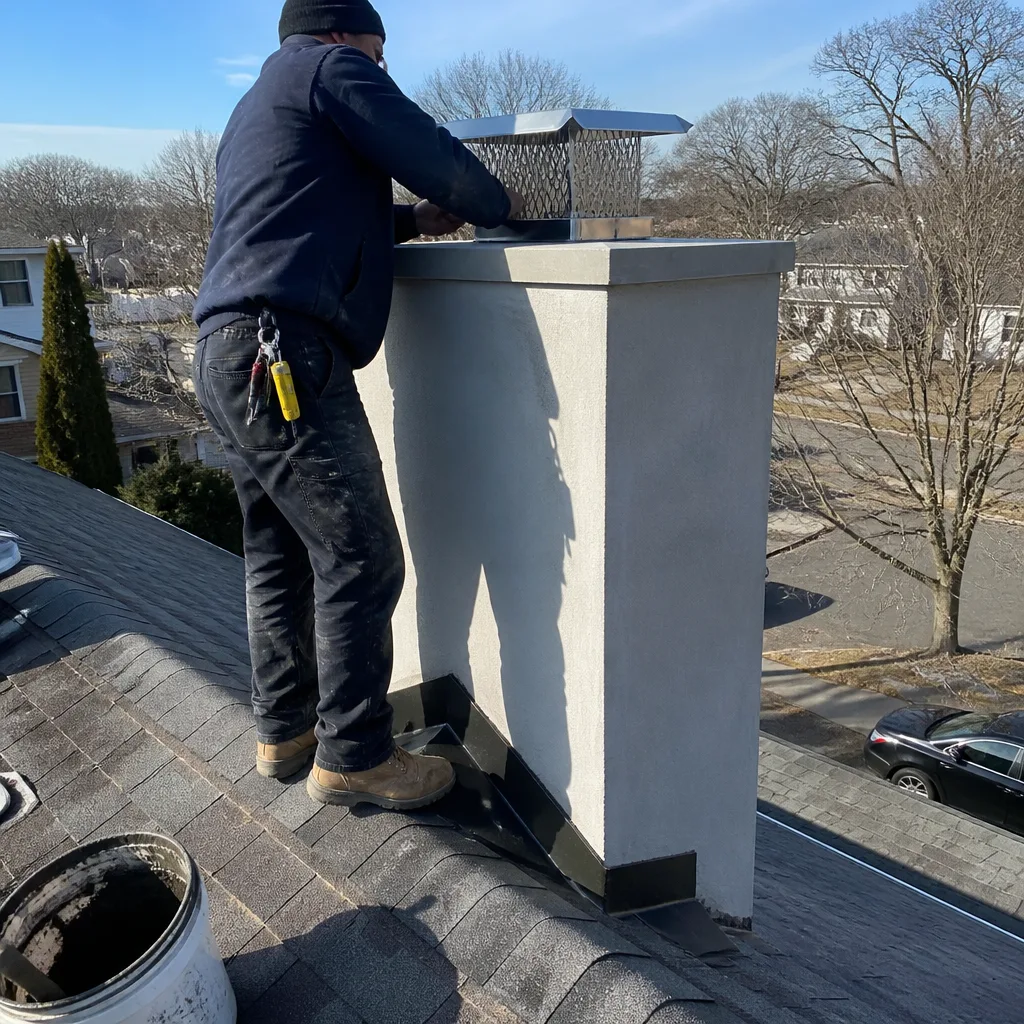 After
AfterChimney Cleaning Permits, Codes & Inspections in NY: What You Need to Know
A chimney relining job done without a permit in New York can void your homeowner’s insurance claim after a fire. The contractor is long gone; the liability stays with the house. Most chimney work in New York does not require a permit, but the exceptions are specific, consequential, and routinely ignored by contractors who want to keep things simple. In this guide, we’ll draw a clear line between what’s regulated, what’s not, and what you’re liable for if work gets done wrong without the right paperwork. Whether you own a 1920s colonial in Hicksville or a newer build in Levittown, the rules apply to your roofline, not your zip code.
Quick Answer
Routine chimney cleaning and sweeping in New York State do not require a building permit. Chimney liner replacements, structural rebuilds, and new fireplace installations typically do require permits and inspections under the New York State Building Code and local amendments. NFPA 211 serves as the practical standard for all chimney work, regardless of whether a permit is required.
Table of Contents
- Which Chimney Services Require Permits in New York?
- NFPA 211: The Practical Rulebook When Code Is Silent
- The Nassau County Inspection Process for Chimney Liner Replacements
- Insurance, Liability, and What Happens After a Fire
- When a Contractor Says ‘You Don’t Need a Permit’
- Chimney Inspection Levels Explained
- How Hicksville’s Climate and Housing Stock Affect Your Chimney
- Common Mistakes to Avoid
- When to Call a Professional
- Frequently Asked Questions
- The Bottom Line
Which Chimney Services Require Permits in New York?
New York State operates under the International Building Code with state-specific amendments, but permit authority sits at the local level. This means Hicksville follows the Town of Oyster Bay’s building department rules, which layer on top of state minimums. Understanding which category your project falls into can save you from a failed inspection, a stalled sale, or worse.
Maintenance-Only Work: No Permit Required
The following services are classified as routine maintenance and do not trigger permit requirements in Nassau County or anywhere in New York State:
- Chimney sweeping and cleaning - removal of creosote, soot, and debris from the flue and firebox
- Basic inspection - Level 1 visual inspection accessible without tools
- Cap and damper maintenance - cleaning, lubrication, and minor adjustments
- Firebox brick repointing under 25 square feet - purely cosmetic, non-structural
We’ve been sweeping chimneys in Hicksville for over four decades, and these maintenance visits make up roughly 70% of our annual calls. No paperwork, no inspection fee, no delay. The work still needs to be done correctly, which is why we document every sweep with photos and a written condition report.
Work That Requires a Permit
The Town of Oyster Bay Building Department requires permits for the following chimney work:
- Chimney liner replacement or installation - Any new liner, whether rigid stainless steel like DuraFlex or a cast-in-place system like HeatShield, requires a permit because it changes the appliance’s venting characteristics.
- Structural chimney rebuilds - Rebuilding more than 25% of the chimney structure, including crown replacement that involves forming and pouring new concrete.
- New fireplace or stove installation - Any new solid-fuel-burning appliance or conversion from one fuel type to another.
- Chimney height modifications - Extending or reducing chimney height, which affects draft and clearances.
- Through-wall penetrations - New thimble installations or modifications to exterior wall assemblies.
The permit fee in Oyster Bay typically runs between $150 and $400 depending on project value, with an additional inspection fee for each required visit. Most liner replacements require two inspections: rough-in (before closure) and final.
The Gray Area: Cap and Crown Replacement
Here’s where homeowners get tripped up. A simple cap replacement, the kind that slips over the flue tile, is maintenance. A custom-fabricated cap with a new mounting flange that requires masonry drilling may cross into permit territory. Similarly, a crown seal with topical coating is maintenance; forming and pouring a new cast-in-place crown is construction.
We err on the side of documentation. When we install a Gelco or Olympia Chimney cap that requires structural attachment, we flag it in our report and advise the homeowner to confirm with the building department. It takes five minutes and costs nothing. Skipping that step to save time is how problems start.
NFPA 211: The Practical Rulebook When Code Is Silent
The New York State Building Code references NFPA 211 (Standard for Chimneys, Fireplaces, Vents, and Solid Fuel-Burning Appliances) in multiple sections, but most homeowners have never heard of it. That’s a problem, because NFPA 211 fills the gaps where local code is vague or silent. It is not optional guidance. When an insurance adjuster or fire marshal evaluates chimney work, NFPA 211 is the standard they apply.
What NFPA 211 Actually Requires
The standard covers installation, maintenance, and inspection of chimney and venting systems. Key provisions that affect New York homeowners include:
- Annual inspection requirement - All chimneys, fireplaces, and vents shall be inspected at least once a year. This is not a suggestion; it is the baseline frequency.
- Cleaning when creosote exceeds 1/8 inch - The standard specifies measurable buildup thresholds, not vague “when needed” language.
- Clearance requirements - Minimum distances from combustible materials, which vary by appliance type and construction.
- Liner compatibility - The liner must be listed and labeled for the specific appliance and fuel type it serves.
- Documentation standards - Level 2 and 3 inspections require written reports with findings and recommendations.
In our experience across Hicksville and Nassau County, the NFPA 211 annual inspection requirement is the single most ignored provision in residential chimney care. Homeowners who miss these warning signs often face costly repairs. Homeowners who burn regularly often wait three to five years between inspections. When we arrive with our camera system, we regularly find liner deterioration, hidden creosote glazing, and clearance violations that have been developing for multiple seasons.
How NFPA 211 Interacts with Local Code
Here’s the practical hierarchy: New York State Building Code sets the floor. Local amendments, like those in the Town of Oyster Bay, can raise that floor. NFPA 211 provides the technical methodology. When local code says “chimneys shall be maintained in a safe condition,” NFPA 211 defines what “safe condition” means and how to verify it.
A contractor who does not reference NFPA 211 in their inspection report is either untrained or hoping you won’t ask follow-up questions. Our Level-2 camera inspections end with photos you can see and a plain-English verdict - documented like an engineer, explained like a craftsman. That documentation follows NFPA 211 protocols because that’s what holds up in court, in insurance claims, and in home sales.
The Nassau County Inspection Process for Chimney Liner Replacements
Chimney liner replacement is the most common permitted chimney project in Hicksville and the surrounding Nassau County communities. The process is straightforward if you know the steps, and opaque if your contractor keeps you in the dark. We’ve guided hundreds of homeowners through this process. Here’s exactly what happens.
Step-by-Step: Liner Replacement Permitting in Oyster Bay
- Application submission - The homeowner or contractor submits a building permit application to the Town of Oyster Bay Building Department, including manufacturer specifications for the liner (DuraFlex, Olympia Chimney, or equivalent), a scope of work description, and the contractor’s license and insurance documentation.
- Plan review - Building department staff review for code compliance, typically within 5-10 business days. Complex jobs or those in designated flood zones may take longer.
- Permit issuance - Upon approval, the permit is posted at the job site and work may commence.
- Rough-in inspection - After the liner is installed but before any closure or finishing work, the inspector verifies proper sizing, connections, clearances, and support. This is the critical checkpoint; if you cover it up, you risk failing final or being required to reopen.
- Final inspection - After completion, the inspector confirms proper termination, cap installation, and appliance connection. A passing final inspection generates a certificate of completion.
The entire process typically spans two to four weeks, depending on inspector availability. We schedule our Hicksville liner replacement jobs with this timeline built in. A contractor who promises to “knock it out this weekend” without mentioning permits is either doing maintenance-level work or cutting corners.
Documentation You Should Receive
After final inspection, you should have:
- The certificate of completion or approved inspection card from the building department
- Manufacturer’s warranty documentation for the liner (typically 10 years to lifetime for stainless steel)
- Contractor’s written warranty or guarantee
- Photo documentation of the installed liner from top to bottom
We provide all four, plus our 90-Day Done Right Promise in writing. If it’s not right, we make it right. No paperwork, no arguing. That’s the Keystone Standard we’ve operated under since 1984.
What Happens Without a Permit
Unpermitted liner work in Nassau County is discovered most often during home sales. The buyer’s inspector notes the new liner, asks for permits, and the closing stalls while the homeowner retroactively applies, pays double fees, and potentially opens walls for inspection. In worst cases, the work must be removed and redone. We’ve been called in to fix “completed” jobs that failed retroactive inspection because the liner was undersized or improperly supported.
Insurance, Liability, and What Happens After a Fire
This is where the abstract becomes concrete. Homeowner’s insurance policies contain standard language excluding coverage for damage resulting from work performed without required permits or in violation of building codes. The exclusion is not theoretical. We’ve seen it applied.
The Claims Denial Scenario
A homeowner in a Nassau County community, not far from Hicksville, had a chimney fire in January 2019. The fire department report noted moderate damage to the flue and surrounding framing. The homeowner filed a claim for $47,000 in structural repairs. The insurer’s adjuster requested permit history for all chimney work in the preceding ten years. A liner replacement from 2016 had been done without a permit. The claim was denied under the code violation exclusion. The contractor had dissolved his LLC in 2018. The homeowner paid out of pocket.
This is not an isolated case. Insurance defense attorneys routinely request permit and inspection records in fire claims involving chimneys. The cost of a $250 permit and two inspections pales against a denied $50,000 claim.
What Your Policy Actually Says
Standard ISO homeowner’s policy forms include language similar to: “We do not cover loss caused by… faulty, inadequate, or defective materials or workmanship… or by any ordinance or law regulating construction.” Some policies add specific chimney exclusions if annual inspection and cleaning are not documented. The NFPA 211 annual inspection standard becomes relevant here, because insurers increasingly reference it to define “reasonable maintenance.”
Liability Beyond Insurance
Even if insurance pays, unpermitted work can create liability exposure. If a fire spreads to a neighboring property, or if a guest is injured by carbon monoxide from a improperly vented appliance, the permit history becomes evidence in civil litigation. A permitted, inspected installation shifts liability to the contractor and the municipality’s inspection process. Unpermitted work leaves the homeowner as the responsible party.
We document everything. Photos you can see, a plain-English verdict. In writing, no arguing. Because when something goes wrong, the paper trail matters more than the handshake.
When a Contractor Says ‘You Don’t Need a Permit’
This phrase should trigger immediate skepticism, not relief. There are exactly two possibilities, and neither favors the homeowner.
Scenario One: The Contractor Is Uninformed
Chimney work spans multiple trades, and not every sweep or mason keeps current with code amendments. A contractor who last checked permit requirements in 2015 may genuinely believe liner replacements are maintenance. That ignorance does not protect you when the building department, insurer, or court evaluates the work. Incompetence is not a defense.
Scenario Two: The Contractor Is Avoiding Accountability
Permits create a record. They tie the contractor to the address, the date, and the scope of work. They require proof of insurance and often licensing. A contractor working without proper credentials, or one who plans to be unreachable if problems arise, has strong incentive to skip permitting. The “savings” they pass to you are often the cost of their own accountability.
How to Tell the Difference
Ask specific questions:
- “Will you pull the permit, or do I need to?” - A legitimate contractor either handles permitting or provides written guidance for owner-permitted work. Evasion is a red flag.
- “What is the permit number, and when is rough-in scheduled?” - Any permitted job has these details within days of application.
- “Can I see your certificate of insurance with the Town of Oyster Bay listed as additional insured?” - Required for permit pulling in most Nassau County jurisdictions.
- “What code edition do you build to, and how does NFPA 211 apply to this job?” - A trained professional answers without hesitation.
We’ve been answering these questions in Hicksville since 1984. For more guides & resources, explore our blog. We’re not offended by them. A homeowner who asks detailed questions is a homeowner who won’t be surprised later. That’s the kind of customer we built this business to serve.
The Price-Cutting Trap
Unpermitted work is often cheaper on the quote because it excludes permit fees, inspection scheduling, and the documentation time that protects the homeowner. We’ve reviewed competitor quotes that were $400-$800 lower than ours for liner replacement. The difference was almost always the permit and proper documentation. Saving that money trades a known, manageable cost for an unknown, potentially catastrophic exposure.
Chimney Inspection Levels Explained
NFPA 211 defines three inspection levels, and understanding which you need prevents both under-service and oversell. We’ve performed all three across Hicksville’s housing stock, from post-war ranches to century-old colonials.
Level 1: Visual, Accessible
Appropriate for annual maintenance when no changes have been made to the system. The technician examines readily accessible portions of the chimney exterior, interior, and connecting appliances. No tools required beyond a flashlight and mirror. This is what we perform during a standard chimney cleaning and sweep in Hicksville. Cost is typically included in the sweep fee or runs $89-$150 as a standalone service.
Level 2: Camera Inspection
Required when property is changing hands, after a chimney fire or weather event, or when any appliance is replaced or relined. This includes examination with video scanning equipment of internal surfaces, accessible attics, crawl spaces, and basements. Our Level-2 inspections use professional camera systems to document every inch of the flue, with photos you can see and a plain-English verdict. This is the inspection that catches hidden liner damage, improper construction, and creosote buildup invisible from below.
We recommend Level 2 for every Hicksville home with a chimney older than 30 years, regardless of apparent condition. The housing stock in neighborhoods like the original Levittown sections and the pre-war areas near Old Country Road has seen multiple heating system changes, often with undocumented flue modifications.
Level 3: Invasive Inspection
Reserved for suspected hazards that cannot be confirmed through Level 2 methods. May require removal of building materials, chimney crown destruction, or other invasive measures. We perform Level 3 inspections only when a clear hazard is suspected and the homeowner understands the scope. This is rare, perhaps 2% of our inspections annually.
Inspection Documentation Standards
A proper inspection report includes:
- Date, technician name, and weather conditions
- Appliance and chimney type, dimensions, and materials
- Clearance measurements to combustibles
- Condition of liner, mortar joints, crown, cap, and flashing
- Photo or video documentation
- Specific recommendations with priority ranking
- Signature of certified technician
Our reports meet or exceed these standards. We keep copies indefinitely. When a homeowner in Hicksville calls us ten years after an inspection, we can pull the file. That’s how a company that plans to be in town in thirty more years acts.
How Hicksville’s Climate and Housing Stock Affect Your Chimney
Chimney code is national and state law, but local conditions determine which problems actually develop. Hicksville sits on Long Island’s glacial outwash plain, with specific weather patterns, soil conditions, and housing stock that create predictable chimney issues.
Freeze-Thaw Damage
Nassau County averages 25-30 freeze-thaw cycles annually, with temperatures swinging above and below 32°F. Each cycle drives moisture deeper into masonry pores. When water freezes, it expands 9%, generating pressure that spalls brick faces and cracks mortar joints. We’ve replaced crowns and rebuilt chimney tops in Hicksville neighborhoods where the original construction used soft, absorbent brick unsuited to this climate. The New York State Building Code now requires freeze-thaw resistant materials for exterior chimney construction, but that amendment postdates much of our local housing stock.
Salt Air Corrosion
We’re not coastal, but Hicksville is close enough that prevailing winds carry marine aerosols. Stainless steel liners show accelerated corrosion within five miles of salt water. That’s why we specify higher-grade alloys from DuraFlex and Olympia Chimney for our liner installations, not the basic 304 stainless that suffices inland. The incremental cost is modest; the service life difference is decades.
Housing Stock Specifics
Hicksville’s development waves create distinct chimney profiles:
- Pre-1940s homes - Unlined or terra-cotta lined chimneys, often oversized for modern appliances, with significant clearance issues when converted to gas inserts.
- Levittown-era construction (1947-1951) - Factory-built metal chimneys or simple brick construction, frequently modified multiple times without documentation.
- 1950s-1970s expansion - Masonry chimneys with clay flue liners, now reaching end of design life for the liner if original.
- 1980s-present - Better construction standards, but often factory-built systems with specific manufacturer requirements that get ignored during “universal” repairs.
We tailor our inspection approach to the house. A 1940s colonial near Jerusalem Avenue gets different attention than a 1968 ranch off South Oyster Bay Road. Both get done right, but “right” means understanding what was built, what was changed, and what the code requires now.
Common Mistakes to Avoid
- Assuming all chimney work is maintenance. Liner replacement, structural rebuilds, and new installations require permits in Nassau County. Treating them as maintenance creates liability exposure and potential insurance denial.
- Accepting verbal assurance that “this town doesn’t enforce chimney permits.” Enforcement varies by inspector and complaint volume, but the permit requirement exists regardless of current enforcement intensity. Your insurance company does not care whether the town was actively enforcing in 2023.
- Not requesting inspection documentation. A sweep without a written report is a cleaning without accountability. You need photos, findings, and recommendations in writing to establish maintenance history for insurance and resale.
- Installing a liner without verifying appliance compatibility. A liner sized for a wood stove will not properly vent a gas furnace. Mismatched systems create draft problems, condensation damage, and carbon monoxide hazards. We see this regularly in Hicksville homes where previous owners made undocumented changes.
- Ignoring the crown until it fails completely. A cracked crown admits water that destroys the chimney from the top down. Crown sealing is maintenance; crown rebuilding is construction. Knowing which you need prevents both emergency repairs and unnecessary permitting.
- Hiring based on lowest quote without verifying permit inclusion. The low quote often excludes permits, proper materials, or documentation. We provide no-hassle upfront pricing - the number on the estimate is the number on the invoice - with all costs transparent, including permit fees when applicable.
- Skipping annual inspection because “we hardly use the fireplace.” Even unused chimneys deteriorate from moisture, pest intrusion, and freeze-thaw damage. Annual inspection catches problems before they become emergencies.
When to Call a Professional
Call a certified chimney professional when you notice any of the following: visible cracks in the exterior masonry, white efflorescence staining indicating moisture migration, rust stains on the chimney face from a deteriorating liner, smoke backup into the room, a persistent chimney odor, or if your chimney has not been inspected in over twelve months. These symptoms indicate conditions that exceed routine homeowner maintenance and require trained evaluation with proper equipment.
At Hearthstone Chimney Co. home, we provide chimney repair in Hicksville and throughout Nassau County, including Level-2 camera inspections, liner replacement with proper permitting, and structural repairs using professional-grade materials. Hearthstone Chimney Co. offers free estimates in Hicksville - call (516) 259-3797. Our phones are staffed by a live person 24 hours a day, 7 days a week. We’ll be there when we say.
Frequently Asked Questions
No. Routine chimney cleaning, sweeping, and basic maintenance do not require permits under New York State Building Code or local amendments in Nassau County. Permits are required for liner replacement, structural rebuilds, and new installations. Call (516) 259-3797 for a free estimate - we’ll tell you exactly what your project requires.
A stainless steel chimney liner replacement in Hicksville typically ranges from $2,800 to $5,500 depending on flue diameter, number of appliances served, accessibility, and whether the job requires a new connector or appliance adaptation. This includes permit fees, rough-in and final inspections, and our 90-Day Done Right Promise. We use DuraFlex and Olympia Chimney materials with lifetime warranties on the liner itself. Call (516) 259-3797 for an exact quote - estimates are free.
NFPA 211 is the National Fire Protection Association standard for chimneys, fireplaces, vents, and solid fuel-burning appliances. It applies to every chimney in New York, regardless of fuel type or age. The standard requires annual inspection, cleaning when creosote exceeds 1/8 inch, and specific clearance and construction standards. Even when local building code is silent, NFPA 211 provides the technical standard that insurance adjusters and fire marshals apply after an incident.
Annually, per NFPA 211. For Hicksville homeowners who burn wood regularly, we recommend sweeping before each burning season, typically September or October. Gas appliance chimneys should be inspected annually and swept as needed based on inspection findings. The freeze-thaw cycles and salt air in our climate accelerate deterioration, making regular inspection particularly important for masonry chimneys. Our $89 Seasonal Tune-Up includes inspection and basic maintenance.
Skipped maintenance leads to creosote accumulation, which increases chimney fire risk; moisture intrusion causing masonry deterioration; liner corrosion or cracking that can allow combustion gases into living spaces; and blocked flues from nesting animals or debris. In Hicksville, we’ve restored chimneys where five years of deferred maintenance turned a $200 sweep into a $4,000 rebuild. The 5% Senior and Veteran discount we offer applies to all services, making maintenance accessible for homeowners on fixed incomes.
Some liners can be repaired with systems like HeatShield for minor mortar joint deterioration or small cracks. However, clay tile liners with cracked tiles, shifted sections, or significant spalling require replacement. Stainless steel liners cannot be repaired; they must be replaced if damaged. We make this determination with camera evidence you can see, not a sales pitch. If work can safely wait, we say so plainly. Nothing is recommended without documentation you can review yourself.
Keep all inspection reports with photos, permits and certificates of completion for any construction work, manufacturer warranties for liners and caps, and contractor warranties or guarantees. We provide organized documentation for every job, and we keep backup copies indefinitely. When you sell your Hicksville home, this paperwork demonstrates proper maintenance and code compliance to buyers and their inspectors.
The Bottom Line
Most chimney work in New York is maintenance, not construction, and requires no permit. The exceptions - liner replacement, structural rebuilds, new installations - are consequential, and skipping permits transfers liability from the contractor to you. NFPA 211 provides the technical standard that fills gaps in local code. Nassau County’s inspection process for permitted work protects homeowners who follow it and exposes those who don’t. Documentation is your defense in insurance claims and home sales. A contractor who discourages permitting is avoiding accountability, not saving you money. In Hicksville and across Nassau County, we’ve built our reputation on doing it right, documenting it thoroughly, and standing behind it with the 90-Day Done Right Promise. That’s the Keystone Standard. Done right - and we stand behind it.
Written by Russell Haines, Owner at Hearthstone Chimney Co., serving Hicksville since 2014.