
Last updated September 10, 2026
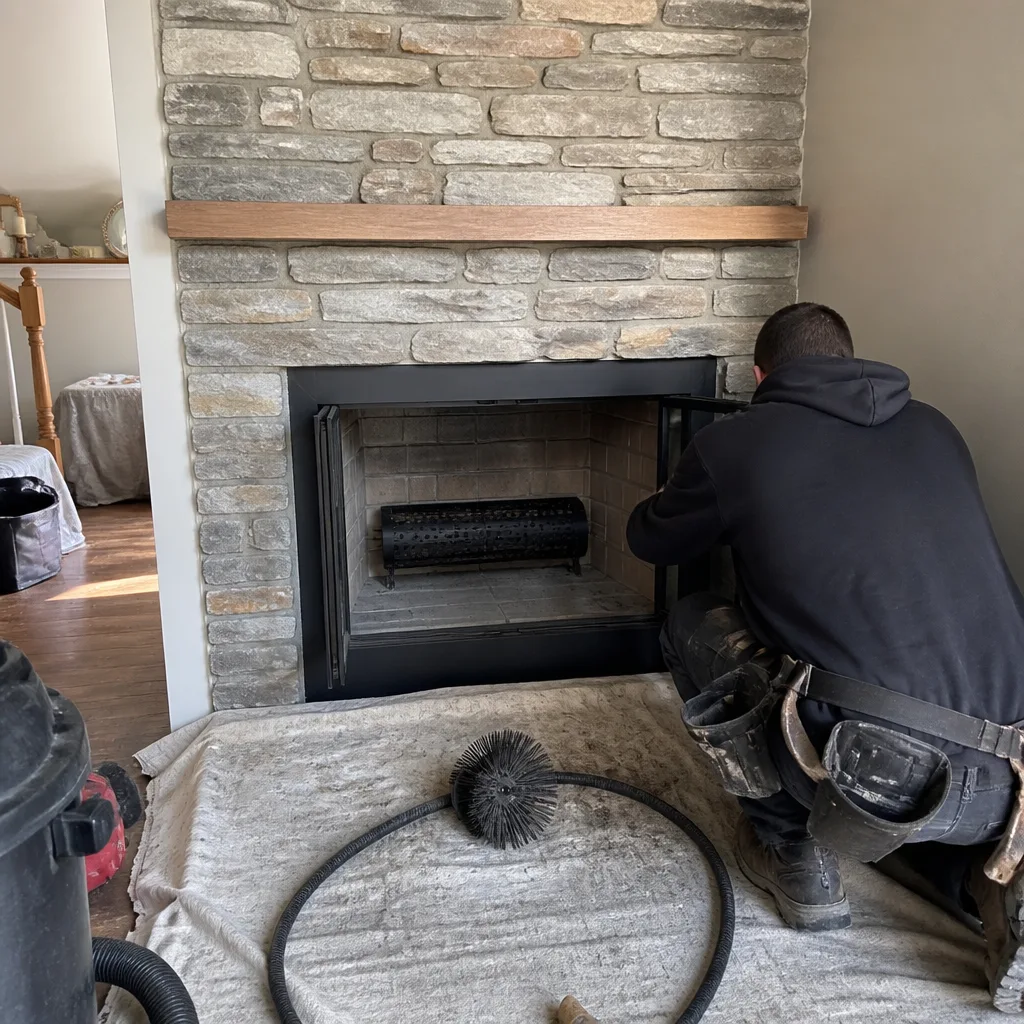
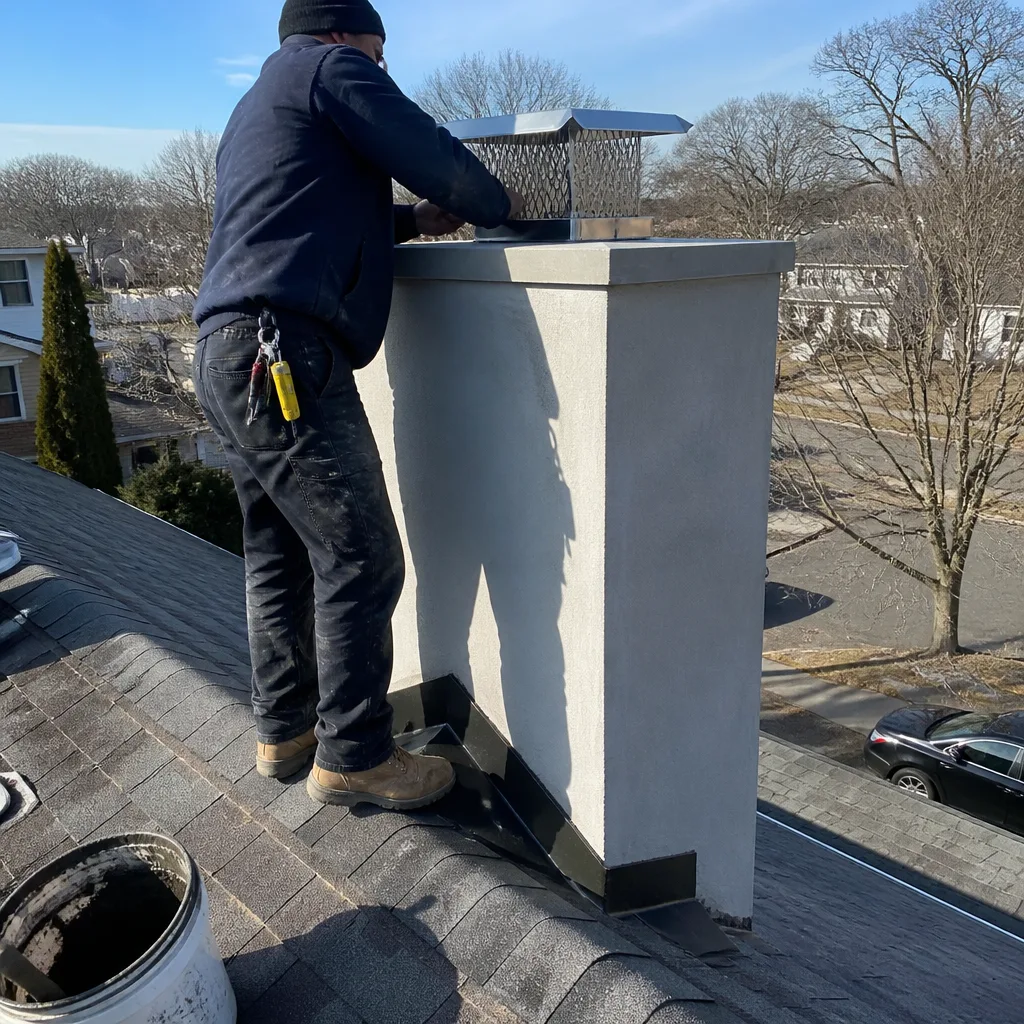
Level 1 sweep and inspection to the NFPA 211 annual standard - flue, crown, cap, and flashing checked and photographed
Chimney sweep logs do not sweep chimneys. They loosen some creosote - which then falls where a brush and vacuum still have to collect it.
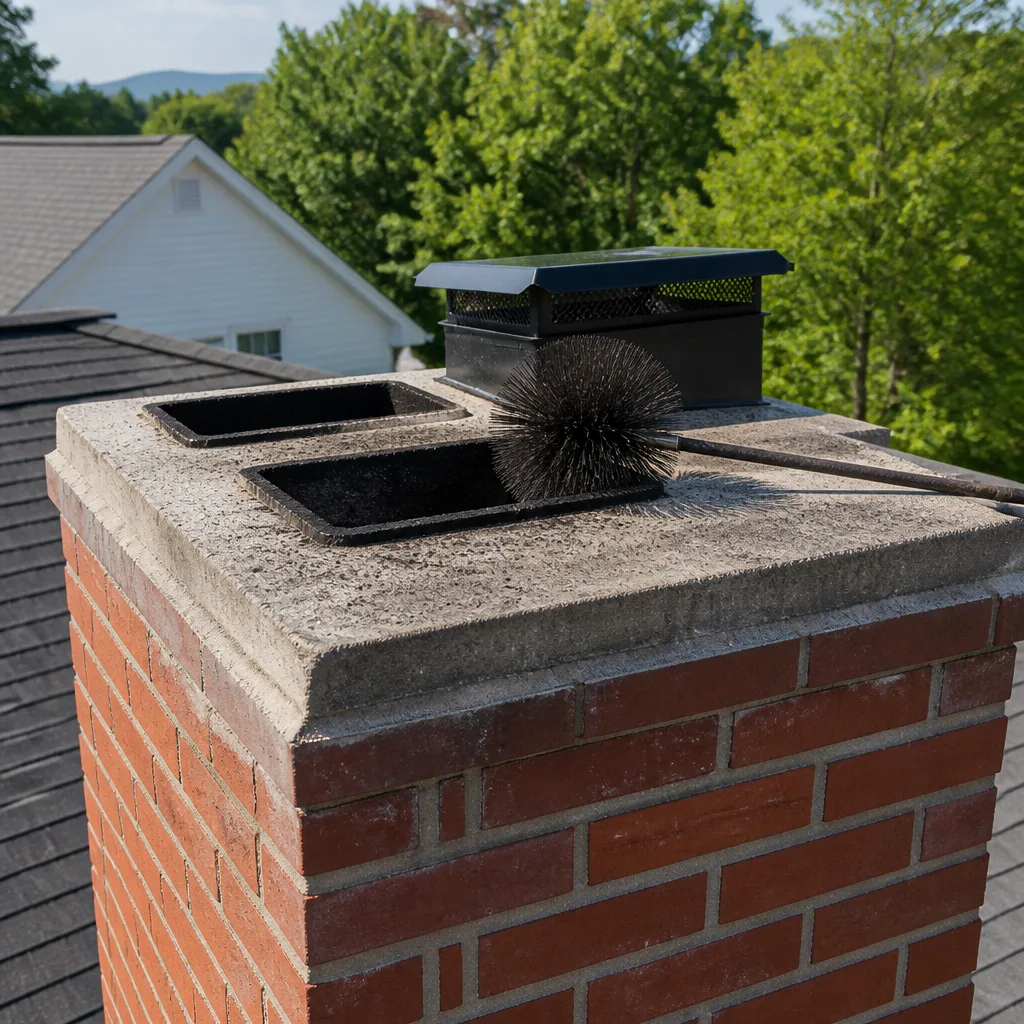
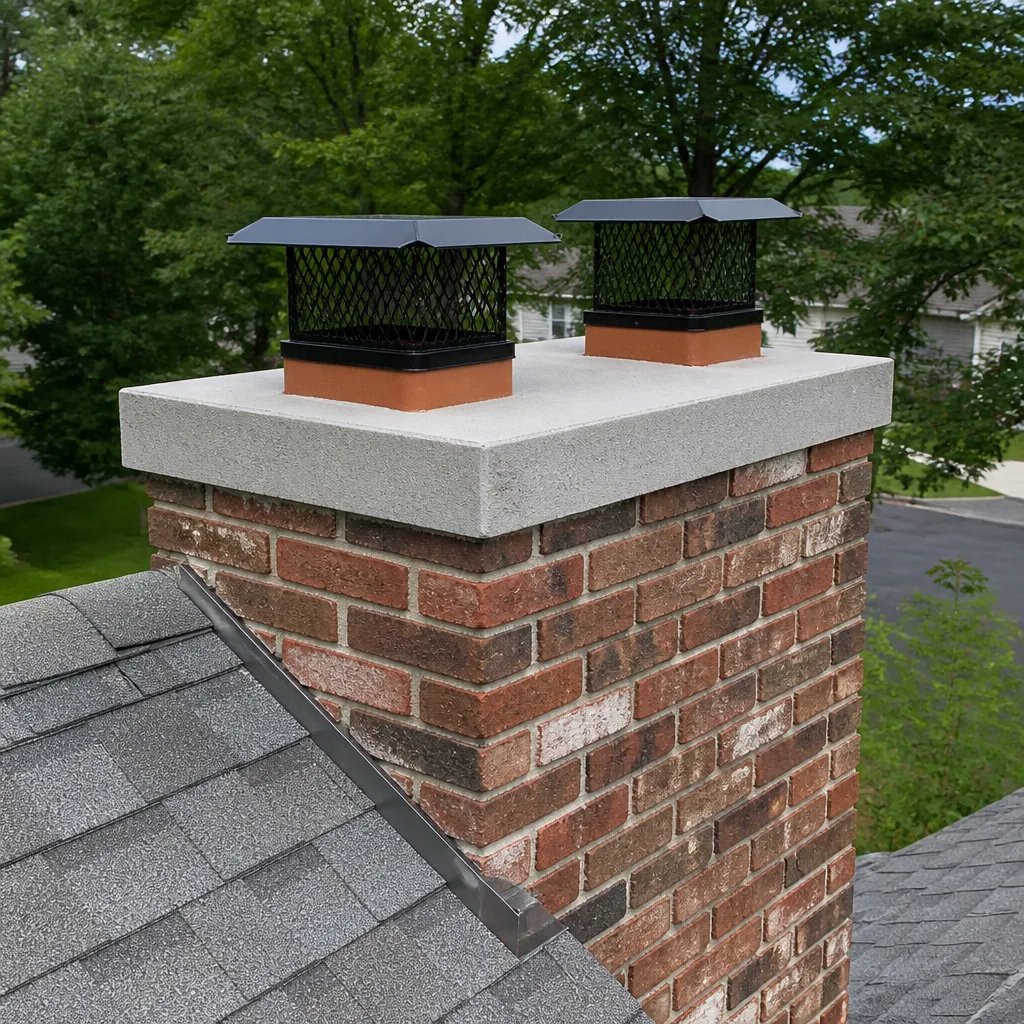
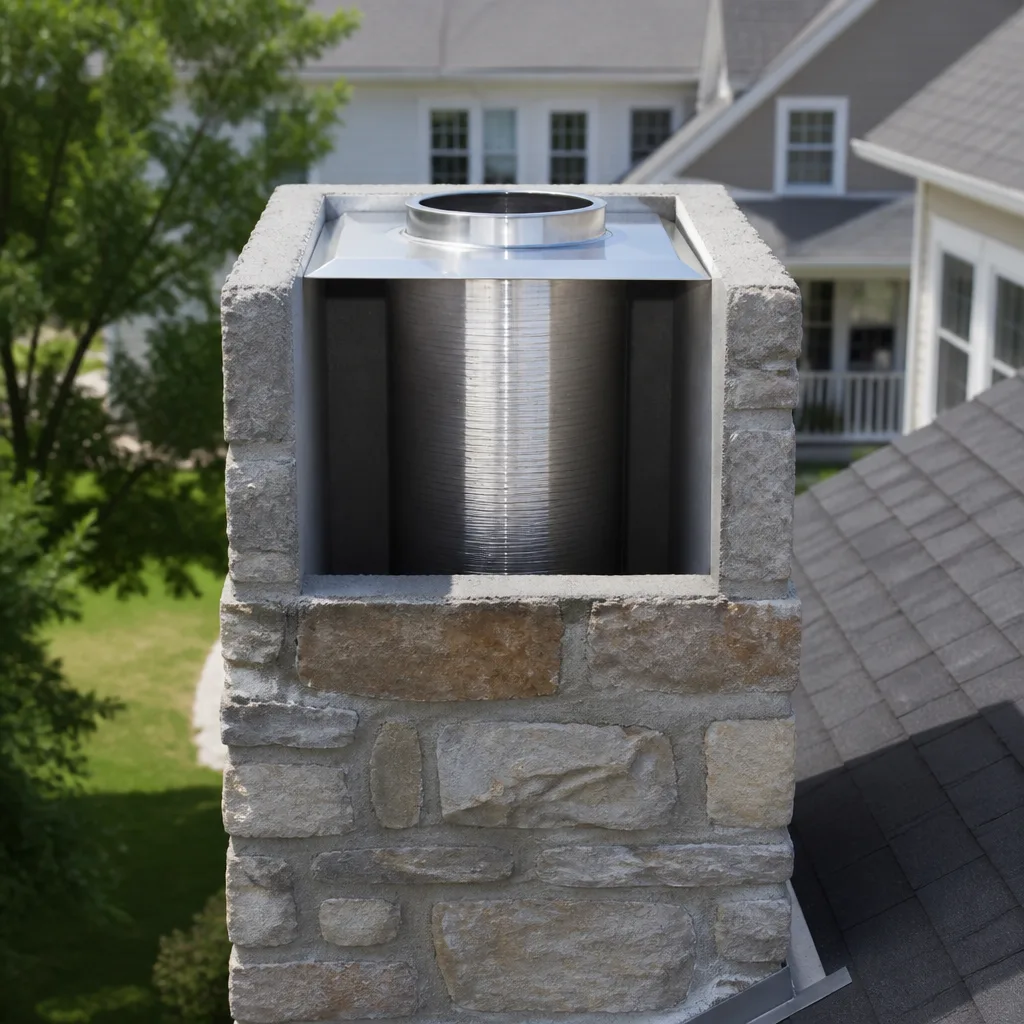
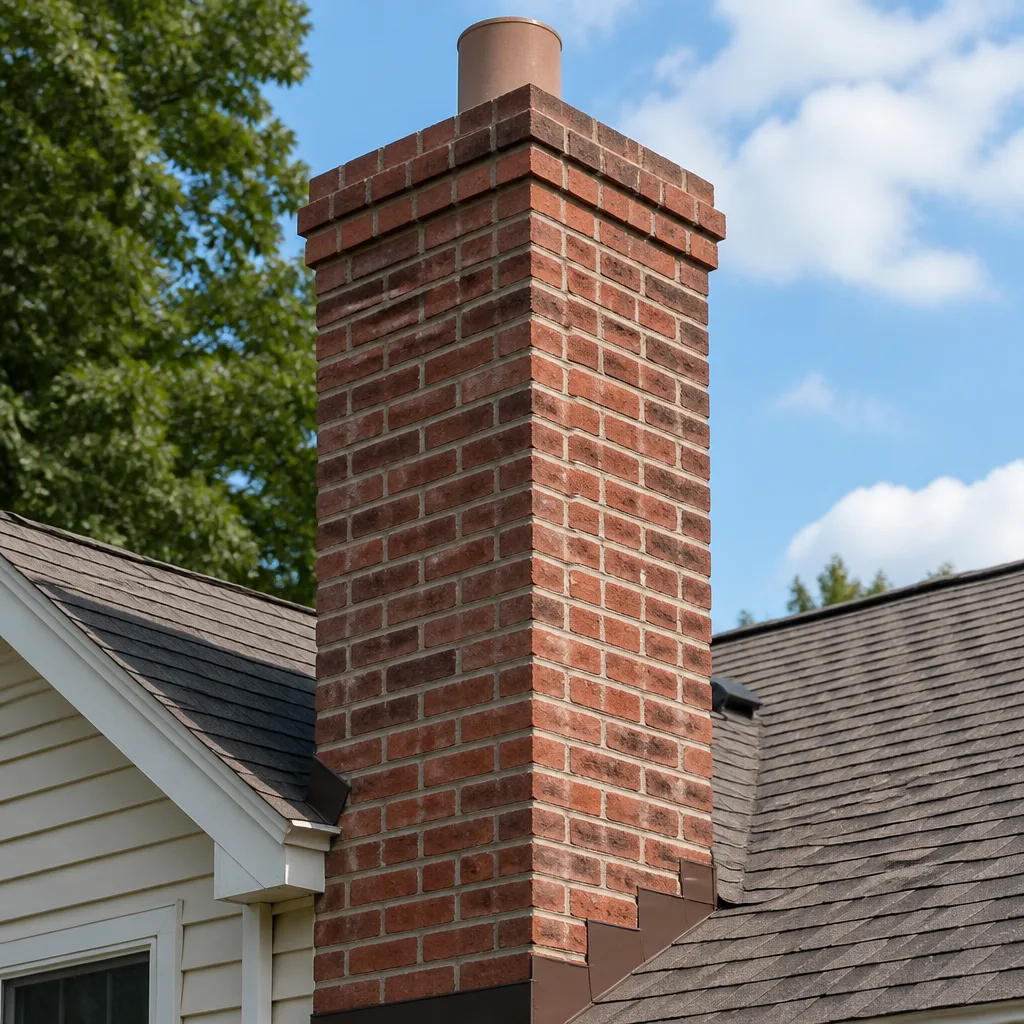
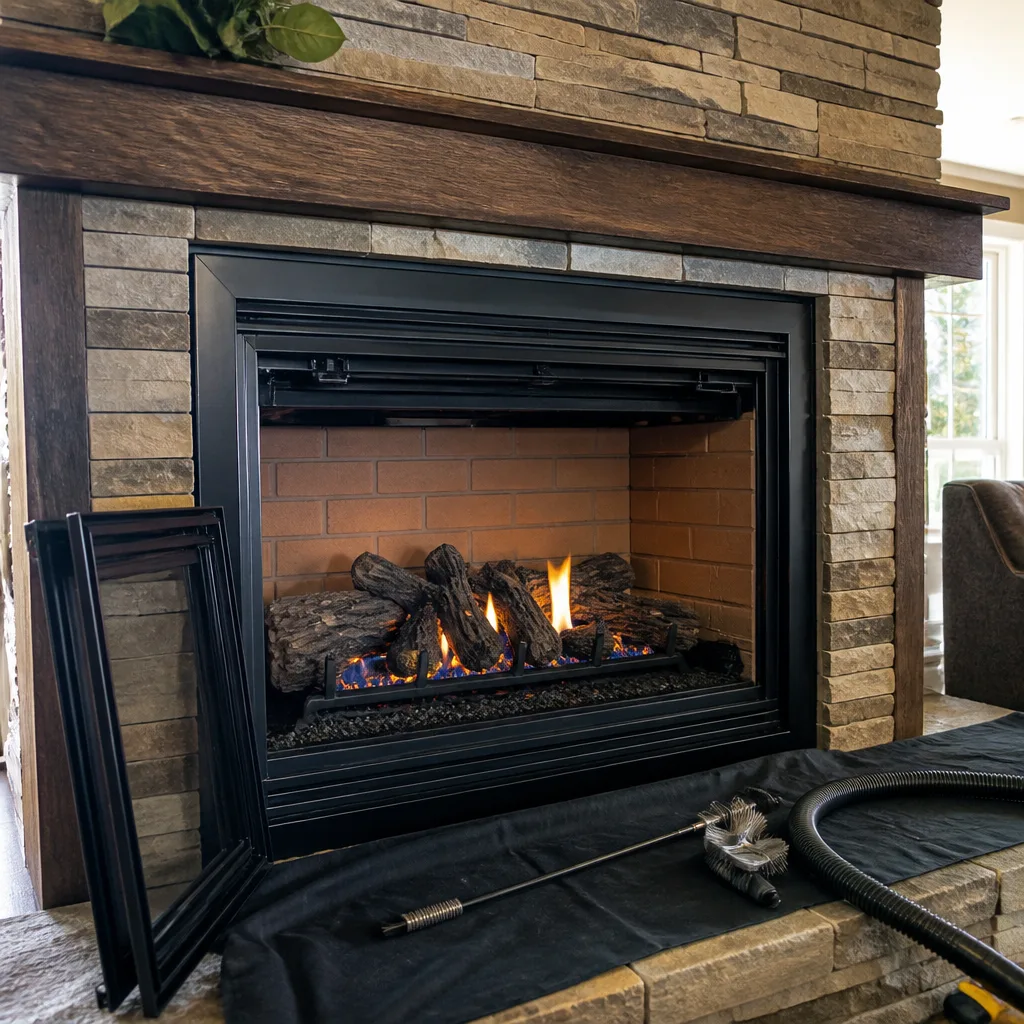
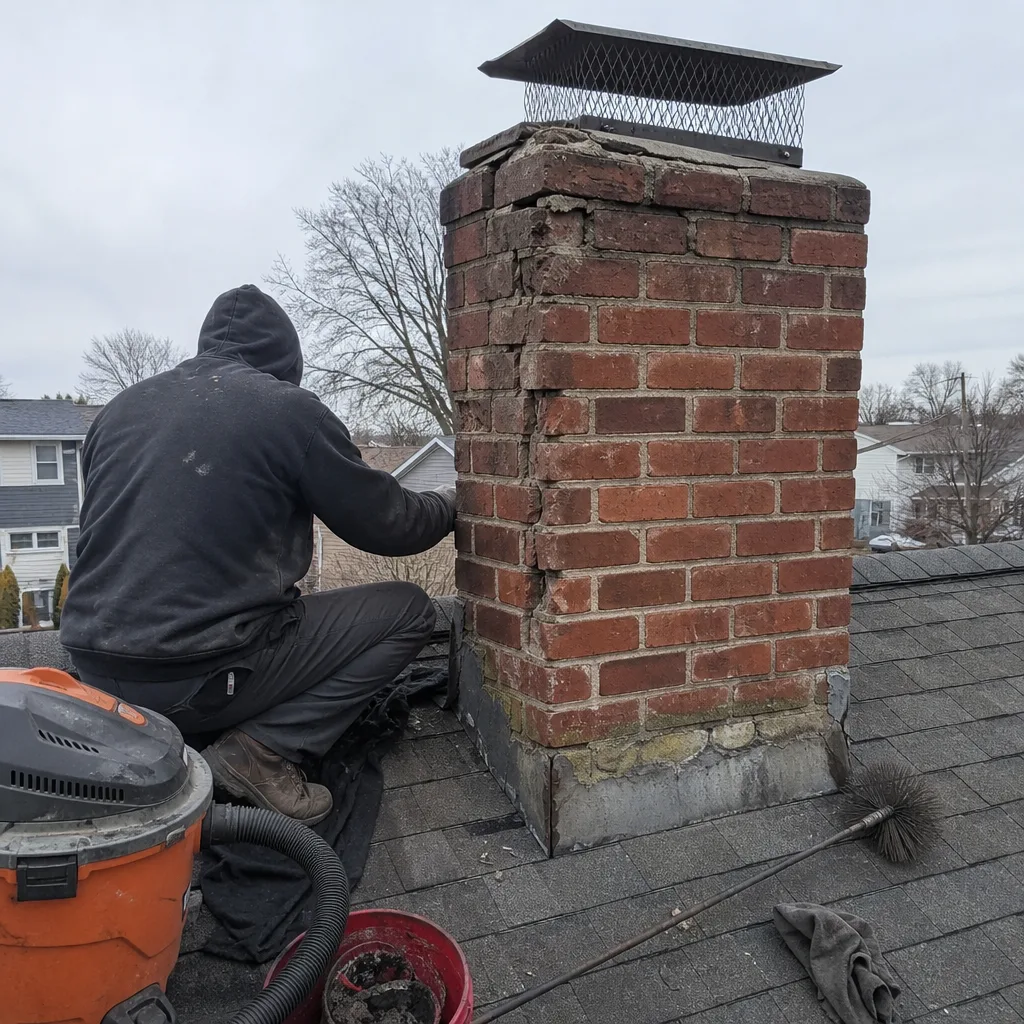 Before
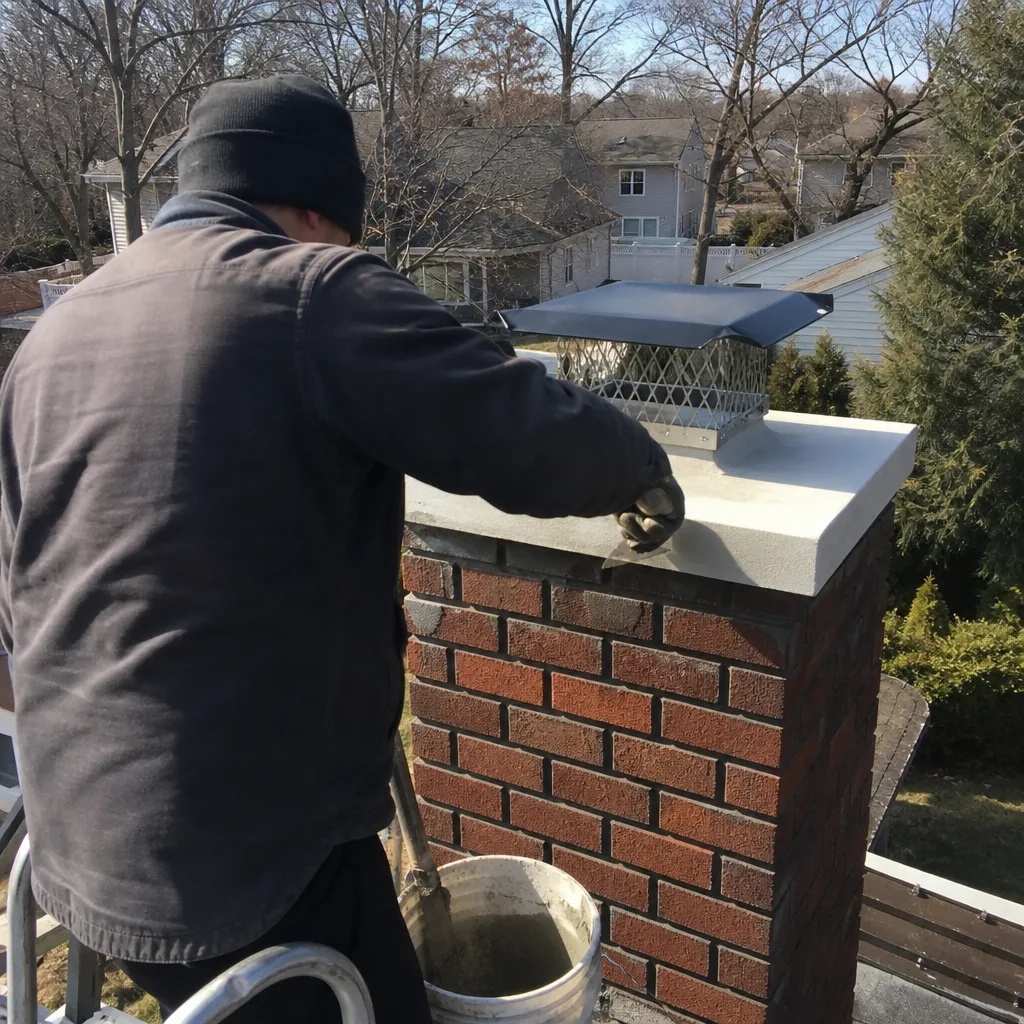 After
After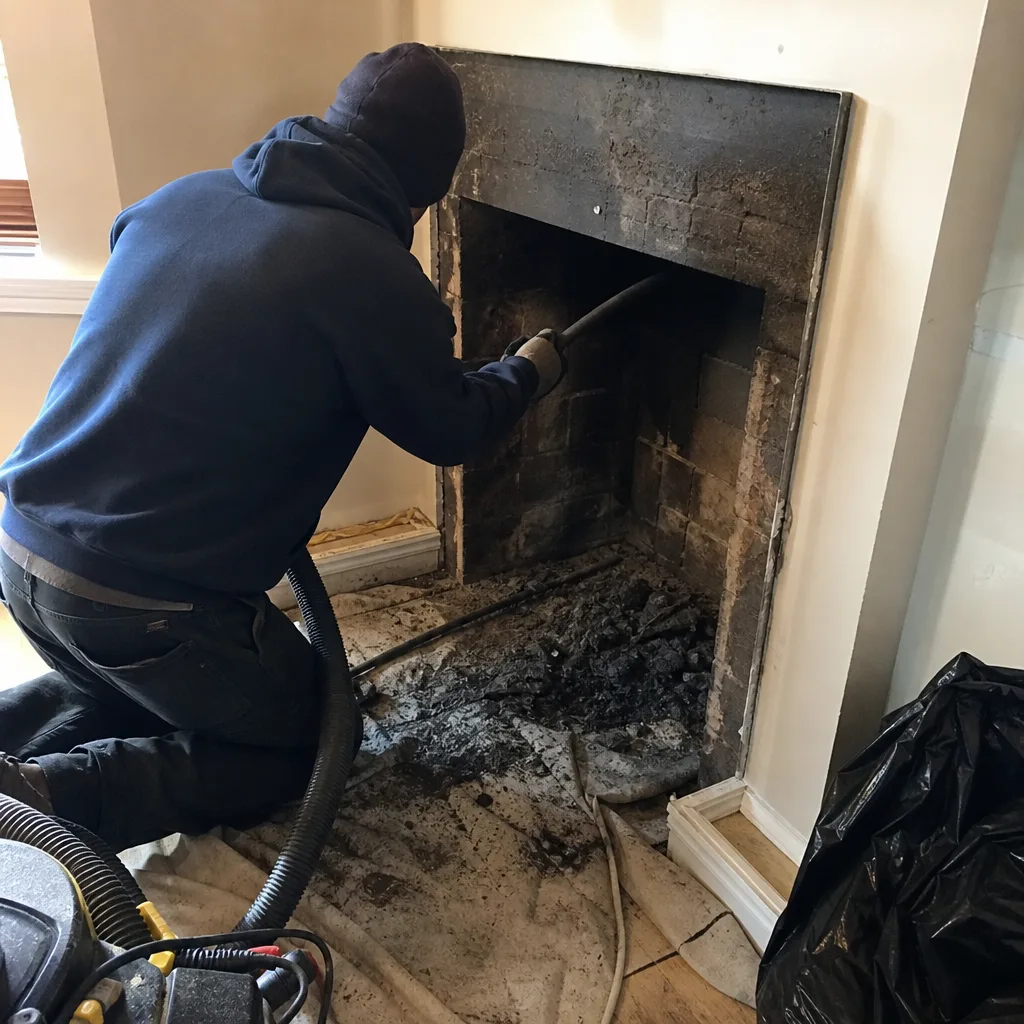 Before
 After
After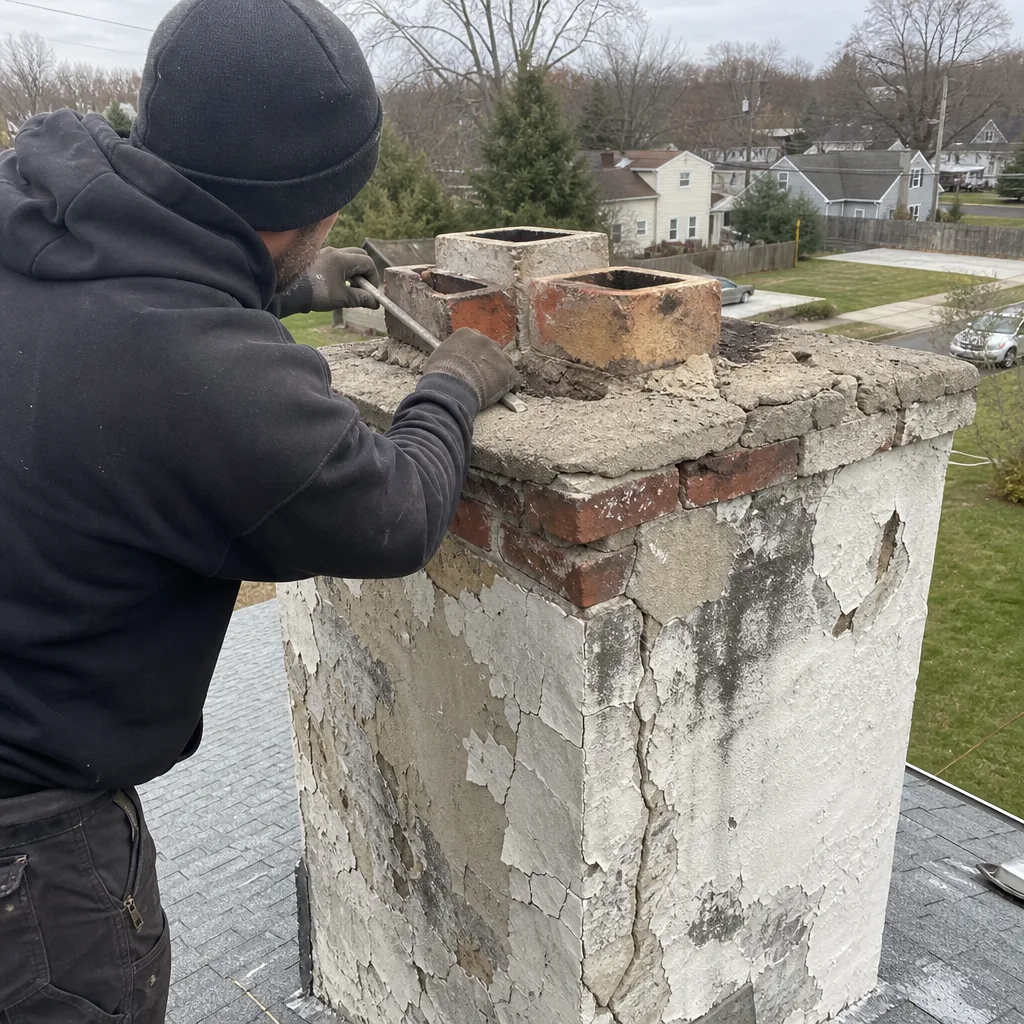 Before
 After
AfterChimney Cleaning Warning Signs: A Hicksville Homeowner’s Reference Guide
A strong campfire smell in your Hicksville living room in July, with no fire lit, is not a seasonal quirk. It is your chimney telling you the damper seal has failed and the liner may be compromised. Most homeowners open a window. We’ve been called to homes in the Levittown sections and along South Oyster Bay Road where that smell had been ignored for two seasons before the first backdraft of smoke into the room. The chimney does not fail silently. It gives specific warnings, in specific places, and it gives them early enough to prevent the damage that costs thousands. This guide names every sign we’ve documented in 42 years of sweeping Hicksville chimneys, explains what each one indicates structurally, and tells you which three mean you must stop using the fireplace today. For a deeper dive into maintenance, see our The Complete Guide to Chimney Cleaning in Hicksville.
Quick Answer
The most critical chimney warning signs are: persistent odors (musty, campfire, or acrid chemical), smoke that won’t draft properly or back-puffs into the room, visible white staining or crumbling brick in the firebox, and exterior damage to the cap, crown, or mortar joints. Three signs demand immediate cessation of fireplace use: acrid chemical odors indicating Stage 3 creosote or liner failure, smoke filling the room on ignition, and visible gaps or holes in the flue liner. These present active fire or carbon monoxide hazards regardless of season.
Table of Contents
- Odor Signs: What Your Chimney Smells Like and Why It Matters
- Smoke Behavior: Reading Draft Problems as Diagnostic Symptoms
- Visual Signs at the Firebox: Efflorescence, Spalling, and White Staining
- Exterior Signs You Can Check from the Ground
- The Three Signs That Mean Stop Using the Fireplace Today
- How Hicksville’s Climate Accelerates Chimney Damage
- What a Level-2 Camera Inspection Actually Reveals
- How Often Hicksville Chimneys Need Professional Attention
Odor Signs: What Your Chimney Smells Like and Why It Matters
The nose is the most underused diagnostic tool in home maintenance. In our experience across Hicksville, from the split-levels near Cantiague Park to the colonials off Jerusalem Avenue, homeowners dismiss chimney odors as “just how old houses smell” until the problem has progressed to visible damage. The specific character of the smell tells us exactly what is happening inside the flue.
Musty, damp smell: This indicates moisture intrusion combined with organic debris. Leaves, animal nesting material, or accumulated soot have gotten wet, and the resulting microbial growth produces that basement-like odor even on dry days. In Hicksville, where Long Island’s humidity sits heavy from June through September, a missing or damaged chimney cap allows rain directly into the flue. The moisture doesn’t just smell bad. It degrades masonry from the inside, accelerates rust on metal components, and compromises the very structure meant to contain 2000-degree exhaust gases. If you smell mustiness near the fireplace in summer, the cap needs inspection.
Campfire smell with no fire lit: This is the signature of a failed damper seal combined with significant creosote accumulation. The damper, when closed, should create a metal-on-metal seal that isolates the flue from your living space. When the seal warps or corrodes, air moves freely between the flue and the room. That July campfire smell in Hicksville? It’s creosote, heated by attic temperatures, volatilizing into your air. The presence of this smell tells us two things: the damper is not sealing, and there is enough creosote buildup to produce detectable odor at ambient temperature. Both conditions require correction before the next burning season.
Acrid, chemical, or asphalt-like smell: This is the most serious odor sign. Stage 3 creosote, also called glazed creosote, has a distinct sharp chemical odor. It forms when fresh creosote deposits are repeatedly heated and cooled without proper sweeping, creating a hard, glossy, tar-like layer that is extremely combustible. In some cases, this smell indicates liner damage, where combustion gases are leaking into surrounding masonry before reaching the open air. Either condition presents an active fire hazard. We have removed glazed creosote deposits from Hicksville chimneys that measured three-quarters of an inch thick. The homeowner smelled it for months before calling.
What each odor demands:
- Musty smell: Cap inspection and flue cleaning to remove debris and moisture sources
- Campfire smell: Damper repair or replacement, plus full sweep to remove odor-producing creosote
- Acrid chemical smell: Immediate Level-2 camera inspection to assess creosote severity and liner integrity; fireplace must not be used until cleared
Smoke Behavior: Reading Draft Problems as Diagnostic Symptoms
Smoke that doesn’t behave properly is not an inconvenience. It is the chimney reporting a specific mechanical or structural problem. The way smoke moves, or fails to move, tells a trained sweep what to inspect first.
Slow-to-draw fires: You light the kindling, the paper catches, and smoke lingers in the firebox before slowly pulling upward. This indicates insufficient draft, which has several possible causes in Hicksville homes. The chimney may be too short for the house configuration, a problem we see in ranch-style additions where the original chimney was not extended. The flue may be partially obstructed by creosote buildup or a bird nest. Or the house itself may be negatively pressurized, a common issue in modernized older homes where bath fans, range hoods, and clothes dryers compete for air. In Hicksville’s tighter subdivisions, neighboring houses and mature tree canopies can also create wind turbulence that disrupts draft at the cap.
Back-puffing: Smoke exits the fireplace opening into the room, often in discrete puffs that coincide with gusts of wind. This is frequently a cap problem. A missing cap, a damaged cap with missing mesh, or the wrong cap design for the flue size allows wind to blow directly down the chimney. We’ve replaced ineffective caps on Hicksville homes with proper chimney cleaning and sweep specifications, using professional-grade components from Famco and Copperfield, and seen back-puffing eliminated immediately. Back-puffing can also indicate a blocked flue or severe creosote narrowing.
Smoke that fills the room on ignition: This is not a draft problem. This is a blockage or liner failure, and it is one of our three stop-now signs detailed below. If lighting a fire produces immediate smoke in the living space, extinguish the fire and do not relight until inspected.
Smoke staining above the fireplace opening: Even if smoke doesn’t fill the room, faint staining on the mantel or wall above the opening indicates that small amounts of smoke are escaping during normal operation. This is often the first visible sign of a deteriorating smoke chamber or a liner that has shifted out of position.
Diagnostic steps for smoke problems:
- Check the cap from the ground with binoculars. Is it present, intact, and properly sized?
- Note whether the problem occurs only on windy days or consistently. Wind-only suggests cap or exterior configuration; consistent suggests flue obstruction or liner issue.
- Test with a window cracked open in the same room. If draft improves, the house is negatively pressurized and needs make-up air solutions.
- If smoke behavior changes suddenly after years of normal operation, suspect obstruction or structural shift, not environmental conditions.
Visual Signs at the Firebox: Efflorescence, Spalling, and White Staining
The firebox is where combustion happens, and it is where the most heat-stressed materials in your home live. What you see on these surfaces is not cosmetic. It is structural telemetry.
Efflorescence: White, powdery deposits on the exterior of firebrick or masonry. This is mineral salt left behind when moisture moves through the masonry and evaporates at the surface. In a firebox, efflorescence means water is getting into the structure from somewhere, and it means the masonry is porous enough to wick that water through. The salts themselves are mildly acidic and accelerate deterioration of mortar joints. In Hicksville, where freeze-thaw cycles are real from November through March, water-saturated masonry that freezes expands and cracks. Efflorescence today predicts spalling next season.
Spalling firebrick: The surface of the brick flakes, chips, or crumbles, often exposing a softer interior. This is direct thermal damage. Firebrick is rated for specific temperature ranges, and when a chimney has been operated with a damaged liner or excessive creosote buildup, the firebox experiences temperatures it was not designed for. Spalling brick loses its insulating properties, allowing more heat to reach surrounding combustible framing. We have replaced fireboxes in Hicksville homes where spalling had progressed to the point that the back wall was visibly concave from material loss.
White staining on the back wall: Distinct from powdery efflorescence, this appears as a hard, glazed white or gray deposit. This is typically condensed flue gases, including sulfur compounds, that have leaked through cracks or liner gaps and deposited on the cooler back wall of the firebox. It indicates that the flue gases are not being fully contained by the liner, and that combustion byproducts are migrating into the chimney structure itself. This is a precursor to more serious liner failure and presents both fire and corrosion risks.
Cracked or missing mortar between firebricks: Mortar in a firebox is a refractory material, not standard masonry mortar. When it crumbles or falls out, heat reaches places it should not, and the structural integrity of the firebox assembly is compromised. Small cracks can be repaired with proper refractory materials like HeatShield. Extensive damage requires rebuilding.
Any of these conditions visible in your firebox warrant professional evaluation-our How to Hire a Chimney Cleaning Contractor in Hicksville: A Step-by-Step Guide can help you choose qualified help. They do not improve with time, and the seasonal heating cycle in Hicksville accelerates their progression.
Exterior Signs You Can Check from the Ground
You do not need a ladder to perform meaningful preliminary inspection. From the ground, with binoculars or a zoom camera, you can identify several conditions that predict interior problems.
Cap damage or absence: The cap is the chimney’s only defense against rain, animals, and debris. A missing cap is an emergency waiting for the next storm. A damaged cap, with bent mesh, dislodged lid, or missing fasteners, is only slightly better. In Hicksville’s mature neighborhoods, squirrels and raccoons are persistent cap-testers. We install caps from Copperfield and Famco that are specifically designed to resist animal intrusion while maintaining proper draft.
Mortar joint cracking or receding: Look for gaps between bricks where mortar has fallen out, or cracks running through the mortar itself. This is not normal aging. It is water intrusion and freeze-thaw damage, and it means water is getting into the chimney structure. In Hicksville’s climate, a cracked mortar joint in October becomes a spalled brick by April. Tuckpointing, done before winter, prevents the exponential cost of rebuilding.
White staining on the crown: The crown is the concrete slab that seals the top of the chimney between the flue liner and the brick edge. White staining here indicates that water is passing through the crown, carrying salts with it. Eventually, the crown cracks, and water enters the space between flue liner and brick, where it destroys the chimney from the inside. Crown repair with proper materials, or full replacement with engineered crown formulations, stops this progression.
Chimney lean or separation from the house: Any visible tilt, or a gap between chimney and siding, indicates foundation or structural failure. This is not a sweeping issue. It is a structural emergency requiring immediate professional assessment.
Missing or damaged flashing: The metal where chimney meets roof should lie flat and sealed. Lifted, rusted, or missing flashing allows water directly into the attic and wall cavities. Water stains on ceilings near the chimney often trace to flashing failure, not roof failure.
Rust stains on the exterior: Orange or brown streaking down the brick indicates corroded metal components, typically the damper frame or a rusting metal chimney cap. Rust expands as it forms, cracking surrounding masonry and accelerating deterioration.
The Three Signs That Mean Stop Using the Fireplace Today
Most warning signs indicate problems that need attention within days or weeks. Three indicate active hazards that do not permit safe operation regardless of temperature outside or how much firewood you have stacked.
1. Acrid chemical or asphalt-like odor, especially when the fireplace is not in use.
This is Stage 3 glazed creosote or liner damage. Glazed creosote ignites at approximately 450 degrees, far below normal flue operating temperatures. A single hot fire can transform it into a chimney fire that reaches 2000 degrees in minutes. Liner damage allows combustion gases, including carbon monoxide, to leak into wall cavities and living spaces. The chemical smell is your only warning before either event. Do not use the fireplace. Call for inspection.
2. Smoke filling the room on ignition, or at any time during operation.
This indicates complete flue blockage, liner collapse, or a disconnected liner section. There is no partial exception. Even if the smoke seems to clear after a few minutes, the underlying condition has not changed, and the next ignition may produce lethal carbon monoxide levels in the room. Extinguish any active fire. Do not relight.
3. Visible gaps, holes, or daylight through the flue liner, observed from the firebox or reported from any inspection.
A liner with any breach cannot contain combustion gases or sparks. The National Fire Protection Association standard is clear: damaged liners must be repaired or replaced before use. In Hicksville, we have documented liner breaches where homeowners continued to use the fireplace because the breach was “small” or “only on one side.” There is no acceptable breach size. HeatShield and DuraFlex liner systems are designed specifically to restore safe containment without full rebuild when appropriate.
If you observe any of these three signs, the fireplace is out of service until professionally cleared. No exception for weather, for holidays, for “just one fire.” The risk is not theoretical. We’ve documented chimney fires in Hicksville homes where the homeowner knew something was wrong and used the fireplace anyway. Not sure whether to tackle it yourself? Read our DIY vs Professional Chimney Cleaning: The Hicksville Homeowner’s Decision Guide.
How Hicksville’s Climate Accelerates Chimney Damage
Long Island’s coastal climate is harder on chimneys than inland homeowners realize. The specific conditions around Hicksville create damage patterns we don’t see in drier or more stable climates.
Freeze-thaw cycling: Hicksville experiences repeated freeze-thaw events through winter, with temperatures oscillating above and below 32 degrees for weeks at a time. Water enters masonry through capillary action and the smallest cracks. Each freeze expands that water by 9 percent, exerting pressure that cracks mortar and spalls brick. A chimney that would last thirty years in a stable climate may need major repair in fifteen here.
Coastal humidity and salt air: The marine layer that moves across Nassau County carries salt, which is hygroscopic, attracting and holding moisture against metal and masonry surfaces. Stainless steel liners resist this better than galvanized, which is why we specify DuraFlex and other professional-grade materials, not builder-grade alternatives. Salt acceleration of corrosion is real and measurable.
Leaf and debris loading: Hicksville’s mature oak and maple canopies produce heavy leaf fall, and without a proper cap, that organic material enters the flue, holds moisture, and creates acidic decomposition products that attack mortar from the inside. We’ve removed flue loads of wet leaves that had reduced effective flue diameter by half.
Summer humidity and off-season odor: The high humidity of July and August activates creosote odors that go unnoticed in dry winter air. That July campfire smell is not imaginary. It is chemistry, and it is telling you the flue condition before you need to light a fire.
These climate factors mean Hicksville chimneys benefit from more frequent inspection than national averages suggest. The one-year interval in the NFPA standard is a minimum, not a recommendation for optimal longevity.
What a Level-2 Camera Inspection Actually Reveals
Many homeowners ask what we could possibly see that they cannot. The answer is: the interior surface of the flue liner, from firebox to crown, in photographic detail.
A Level-2 inspection, as defined by the National Fire Protection Association, includes visual examination of accessible portions of the chimney exterior and interior, and evaluation by video scanning or other means of the flue liner’s internal surfaces. This is not a flashlight glance up the flue. It is a documented, photographed, reviewable record.
What the camera reveals that eyes cannot:
- Hairline cracks in clay tile liners that are invisible from the firebox but open under thermal stress
- Shifting or settled liner sections that have opened gaps at joints
- Creosote buildup patterns that indicate improper combustion or venting
- Moisture staining on liner surfaces that tracks to cap or crown failure
- Animal nests, debris, or structural intrusions that block or partially block the flue
- Corrosion or deterioration of metal liner connections and components
At Hearthstone Chimney Co., every Level-2 inspection ends with photos the homeowner can see and a plain-English verdict. We document like engineers and explain like craftsmen. You receive a written report with images, not a verbal summary that you cannot reference or share. This documentation becomes part of your home’s maintenance record and supports any future real estate transaction.
The camera also reveals when work can safely wait. Not every finding demands immediate action, and we say so plainly when a condition is stable and monitorable. The goal is accurate information, not maximum billing. Explore more guides & resources to stay informed about your chimney’s care.
How Often Hicksville Chimneys Need Professional Attention
The National Fire Protection Association Standard 211 recommends annual inspection of all chimneys, fireplaces, and vents, and cleaning as needed based on deposit accumulation. This is the baseline. Hicksville’s specific conditions suggest a more nuanced schedule.
Annual inspection: Every wood-burning system, without exception, every year before the burning season. Gas systems every two years, though annual is prudent given the corrosion acceleration from coastal humidity.
Sweeping frequency: Depends on use and fuel. A cord of seasoned hardwood produces approximately enough creosote to warrant sweeping. If you burn two cords per winter in Hicksville, you likely need annual sweeping. If you burn occasionally, inspection may show that sweeping every two years is adequate. The inspection determines the need; we do not sweep on schedule regardless of condition.
After any chimney fire or unusual event: Even a minor chimney fire, often heard as a roaring or popping sound, causes thermal shock to liners and masonry. Inspection is mandatory before next use. Similarly, after any earthquake, major wind event, or impact (falling tree limb, etc.), structural assessment is warranted.
Upon change of ownership or fuel type: New homeowners should never assume the previous owner maintained the chimney properly. Conversion from wood to gas, or vice versa, requires inspection and often liner modification for safe operation.
When warning signs appear: The subject of this entire guide. Odor, smoke behavior, visual changes, or exterior damage all accelerate the schedule. Waiting for the annual date when a warning sign is present is not prudent maintenance. It is deferred repair, and it costs more.
Common Mistakes to Avoid
- Opening windows instead of investigating odors. A campfire smell in July is not solved by ventilation. It is a damper and creosote problem that will worsen until addressed. We’ve found glazed creosote deposits in Hicksville chimneys that the homeowner had been airing out for two years.
- Assuming gas fireplaces need no maintenance. Gas produces corrosive condensation, and ceramic logs degrade and obstruct proper flame patterns. Annual inspection prevents the carbon monoxide incidents that make headlines.
- Using the fireplace “just once more” after noticing smoke problems. Smoke in the room is not a draft quirk to work around. It is a blockage or liner failure, and the next fire may be the one that causes injury.
- Hiring based on the lowest quote without verifying scope. A sweep that does not include camera inspection, that does not access the roof, or that completes in twenty minutes has not inspected your chimney. They have performed a ritual. We provide free second opinions on any written estimate for this reason.
- Ignoring exterior damage until interior damage appears. By the time a crown crack produces a ceiling stain, the damage between flue and brick is extensive. Exterior maintenance prevents interior destruction.
- Attempting DIY creosote removal with chemical logs or brushes. Chemical logs modify creosote but do not remove it. Consumer brushes do not reach the full flue length and cannot assess liner condition. More importantly, working on a roof or with chimney components involves fall hazards and exposure to carcinogenic materials. This is trained professional work.
- Deferring maintenance because the chimney “looks fine.” The most dangerous liner damage is invisible from every accessible vantage. Camera inspection reveals what appearance conceals.
When to Call a Professional
Call when you observe any warning sign described in this guide, when your last inspection or sweep exceeds one year, or when you are purchasing a home with a fireplace you have not personally maintained. The cost of inspection is modest. The cost of deferred maintenance is not.
Hearthstone Chimney Co. offers free estimates in Hicksville. A live person answers every call, 24 hours a day, 7 days a week. Our background-checked, uniformed technicians complete most jobs in a single visit, with no-hassle upfront pricing. The number on the estimate is the number on the invoice. Call (516) 259-3797 to schedule.
Frequently Asked Questions
Chimney sweeping in Hicksville typically ranges from $200 to $350 for a standard wood-burning fireplace, depending on creosote accumulation and accessibility. A Level-2 camera inspection adds $150 to $250 but provides documented condition assessment that a sweep alone cannot. Our $89 Seasonal Tune-Up, available during pre-season scheduling windows, includes basic inspection and maintenance for qualifying systems. Call (516) 259-3797 for an exact quote. Estimates are free.
Many liners can be repaired rather than replaced. Clay tile liners with isolated cracks or joint gaps often qualify for HeatShield resurfacing, a ceramic repair system that restores smooth, sealed surfaces without full replacement. Metal liners with localized corrosion may be patchable. The determination requires camera inspection to assess damage extent and location. We do not recommend replacement without photographic evidence you can see, and we plainly state when repair is adequate and when replacement is necessary for safety. Our free second opinion on any written estimate ensures you have accurate information before committing.
Annual inspection is the minimum for all wood-burning systems. Sweeping frequency depends on use: one cord of seasoned hardwood per winter typically warrants annual sweeping, while occasional use may allow two-year intervals if inspection confirms minimal accumulation. Hicksville’s coastal humidity and freeze-thaw climate accelerate deterioration, making adherence to this schedule more important than in drier regions. Gas systems require inspection every one to two years for corrosion and debris assessment. Call (516) 259-3797 to discuss your specific burning pattern.
Skipped maintenance leads to progressive, predictable damage. Creosote accumulates, narrowing the flue and increasing fire risk. Moisture enters through deteriorating caps and crowns, spalling brick and rusting metal components. Liners crack or shift, allowing combustion gases into living spaces. The chimney fire risk rises from rare to probable. Repair costs escalate from hundreds for preventive sweeping to thousands for liner replacement or rebuild. In worst cases, carbon monoxide intrusion causes injury or death. The cost of maintenance is always lower than the cost of repair, and vastly lower than the cost of emergency. Call (516) 259-3797 to schedule before the burning season.
That smell indicates a failed damper seal and significant creosote accumulation. The damper should isolate the flue from your living space when closed. When the seal deteriorates, summer attic heat volatilizes creosote deposits, carrying odor into the room. It is not normal, not seasonal, and not harmless. The damper needs repair or replacement, and the flue needs sweeping to remove odor-producing deposits. In Hicksville’s humid summers, this condition is common in systems that have not been properly maintained. Schedule inspection to identify the specific components involved.
We do not recommend it. Roof work involves fall hazards, particularly on pitched surfaces or near edges. Chimney inspection also requires specific knowledge to distinguish normal wear from dangerous conditions, and consumer-grade equipment cannot document findings adequately. What you can do from the ground, with binoculars, is meaningful preliminary observation of cap, crown, and mortar condition. For interior flue assessment and documented evaluation, professional inspection is the appropriate choice. Our technicians are trained, equipped, and insured for this work.
The Bottom Line
Your chimney communicates through specific, readable signs: odors that vary in character and severity, smoke behavior that diagnoses draft or blockage, visual changes in the firebox that track moisture and thermal damage, and exterior deterioration that predicts interior failure. The three stop-now signs, acrid chemical odor, smoke in the room on ignition, and visible liner breaches, override all other considerations. Hicksville’s coastal climate accelerates damage patterns that inland homeowners may not recognize. Annual inspection, camera documentation, and maintenance performed when needed rather than deferred, preserve both safety and value. The chimney does not fail without warning. The warnings are there for homeowners who know what to observe.
Written by Russell Haines, Owner at Hearthstone Chimney Co., serving Hicksville since 2014.