
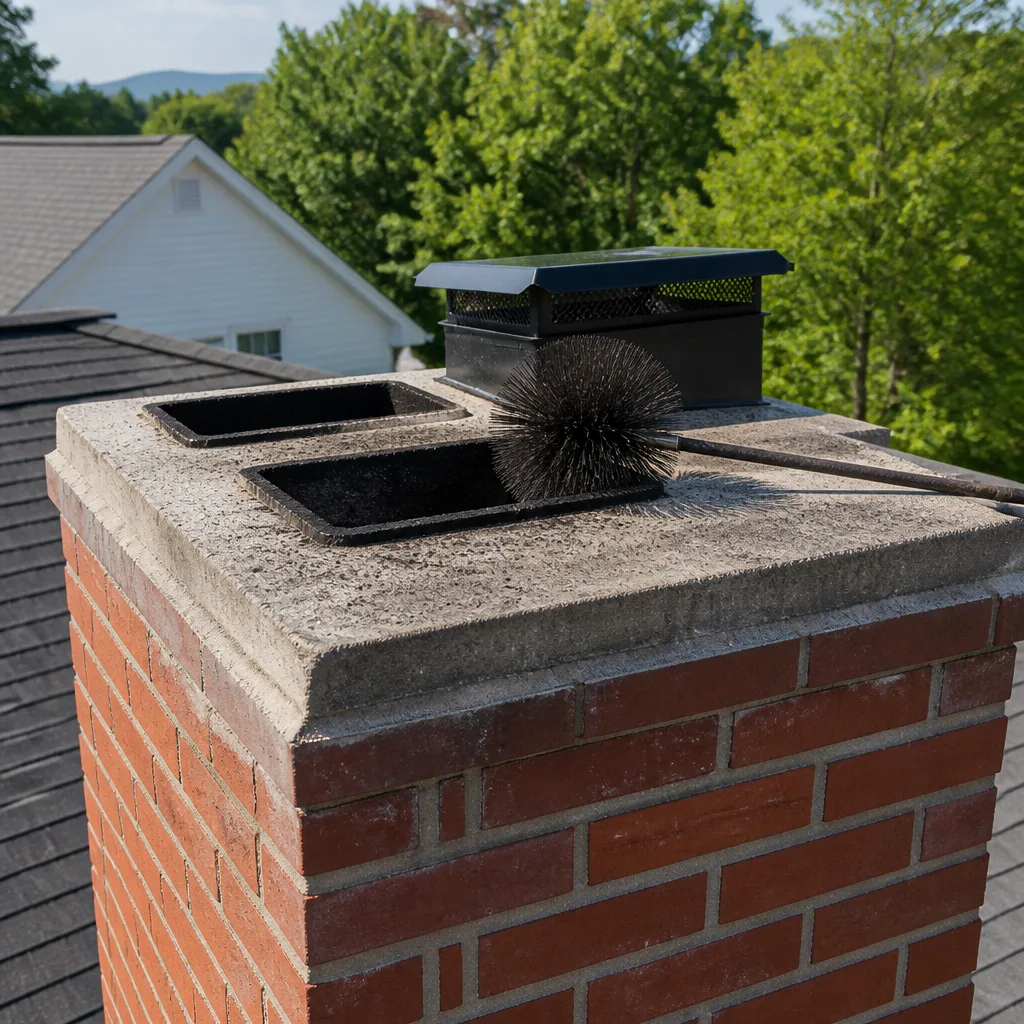
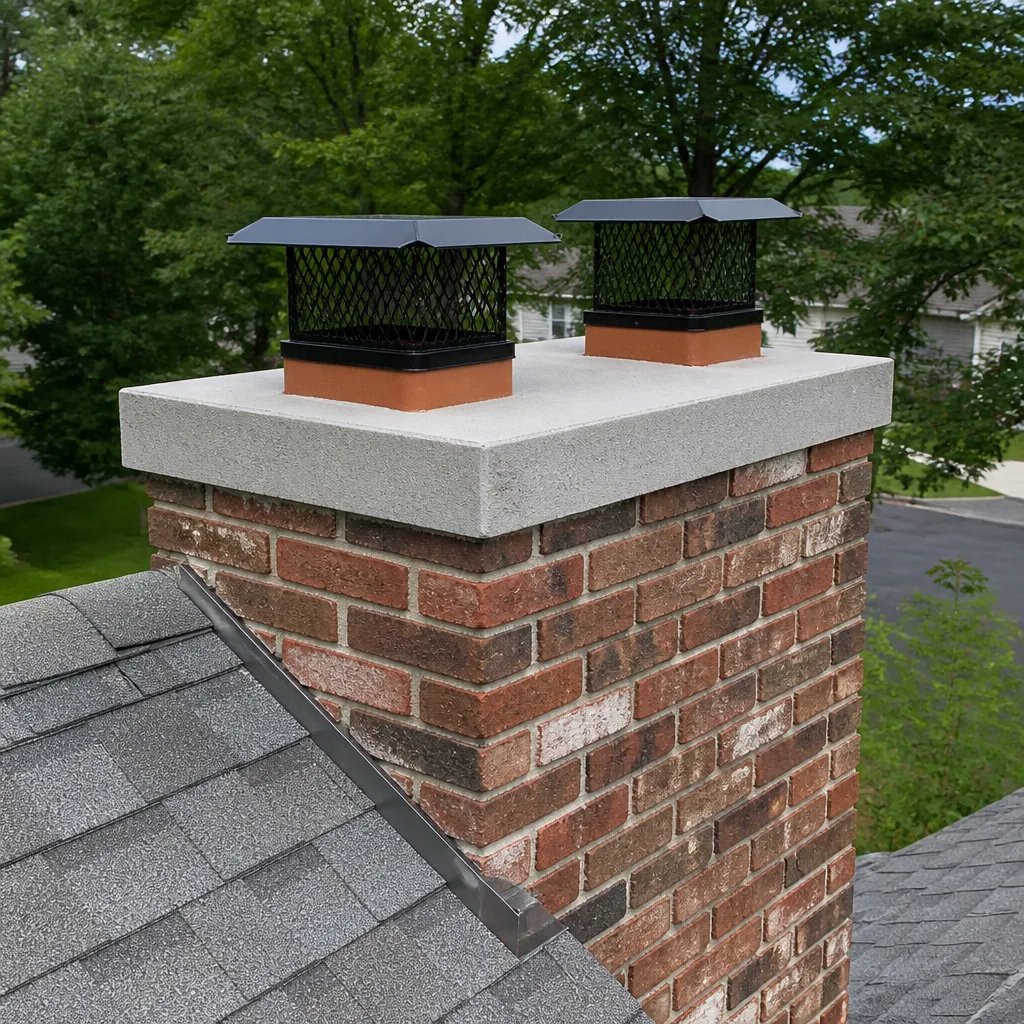
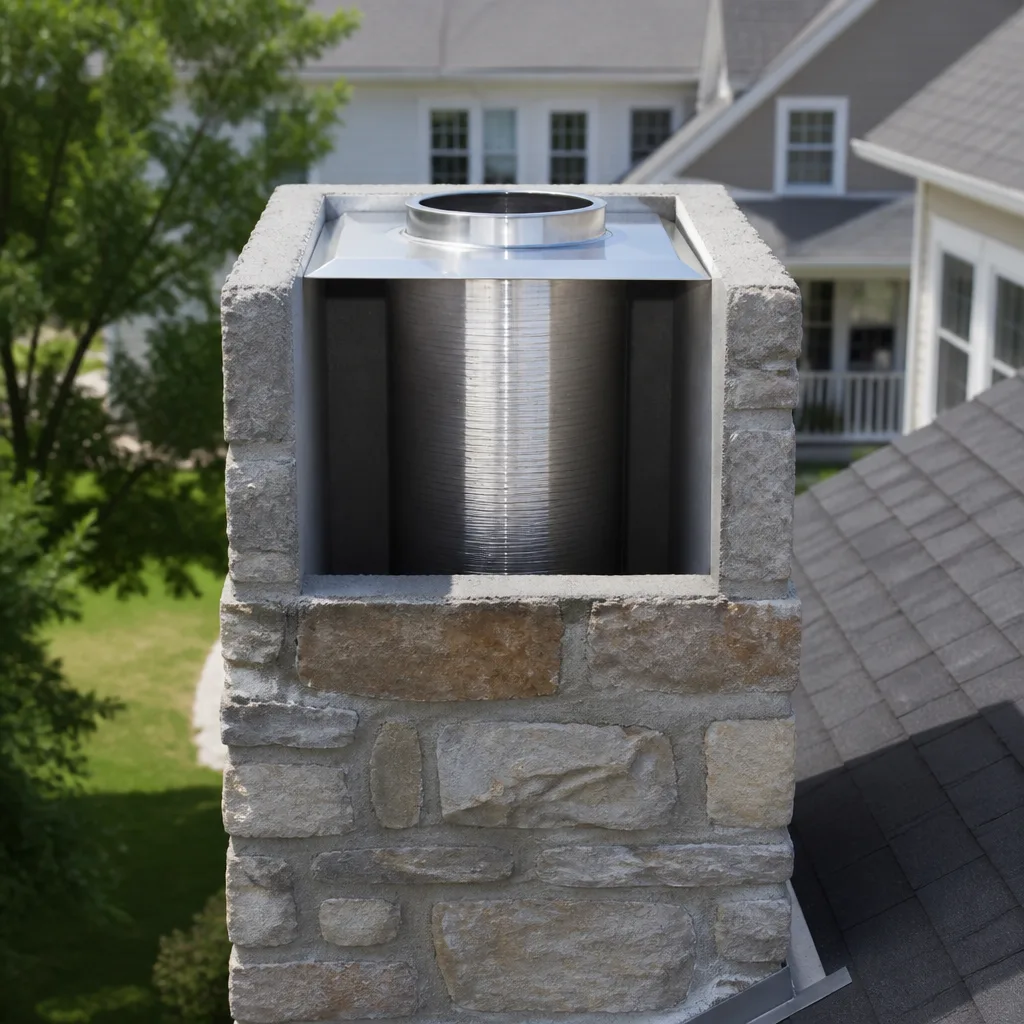
Level 1 sweep and inspection to the NFPA 211 annual standard - flue, crown, cap, and flashing checked and photographed
Chimney sweep logs do not sweep chimneys. They loosen some creosote - which then falls where a brush and vacuum still have to collect it.
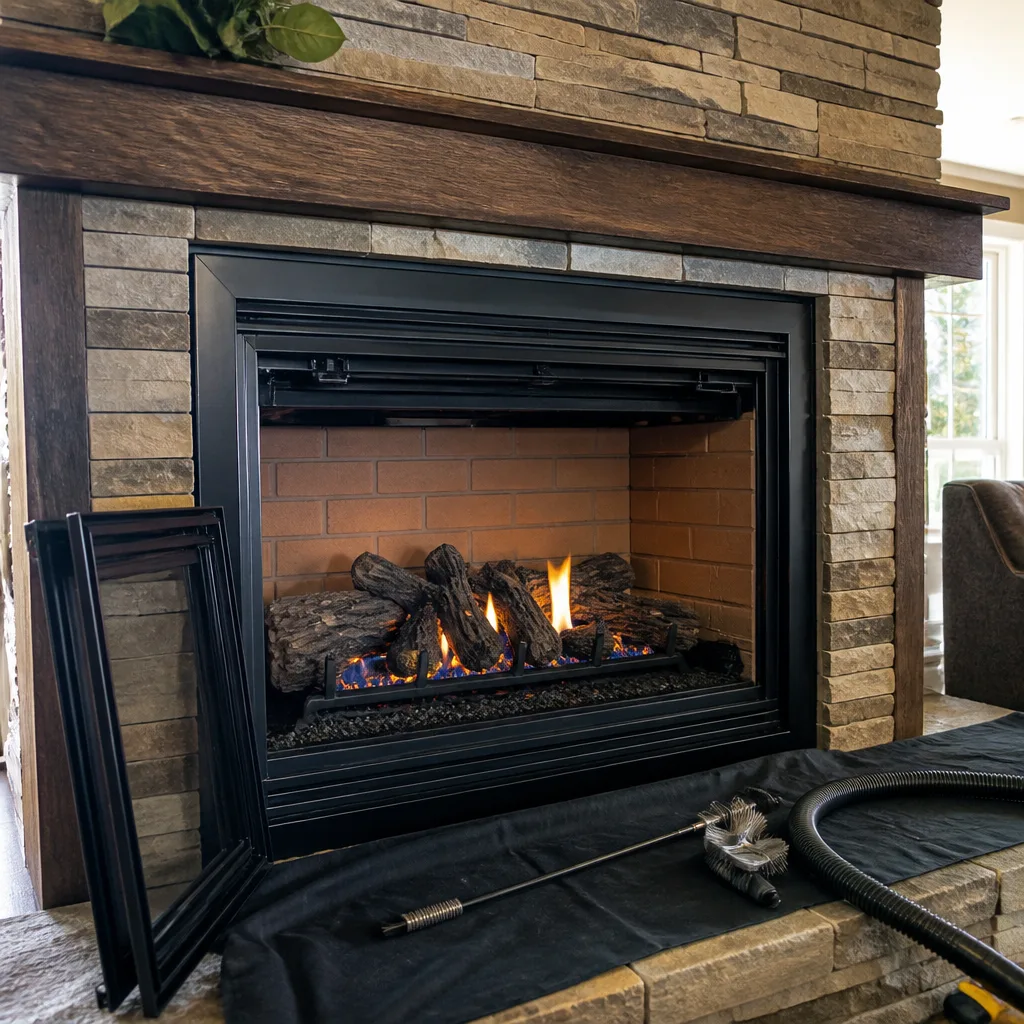
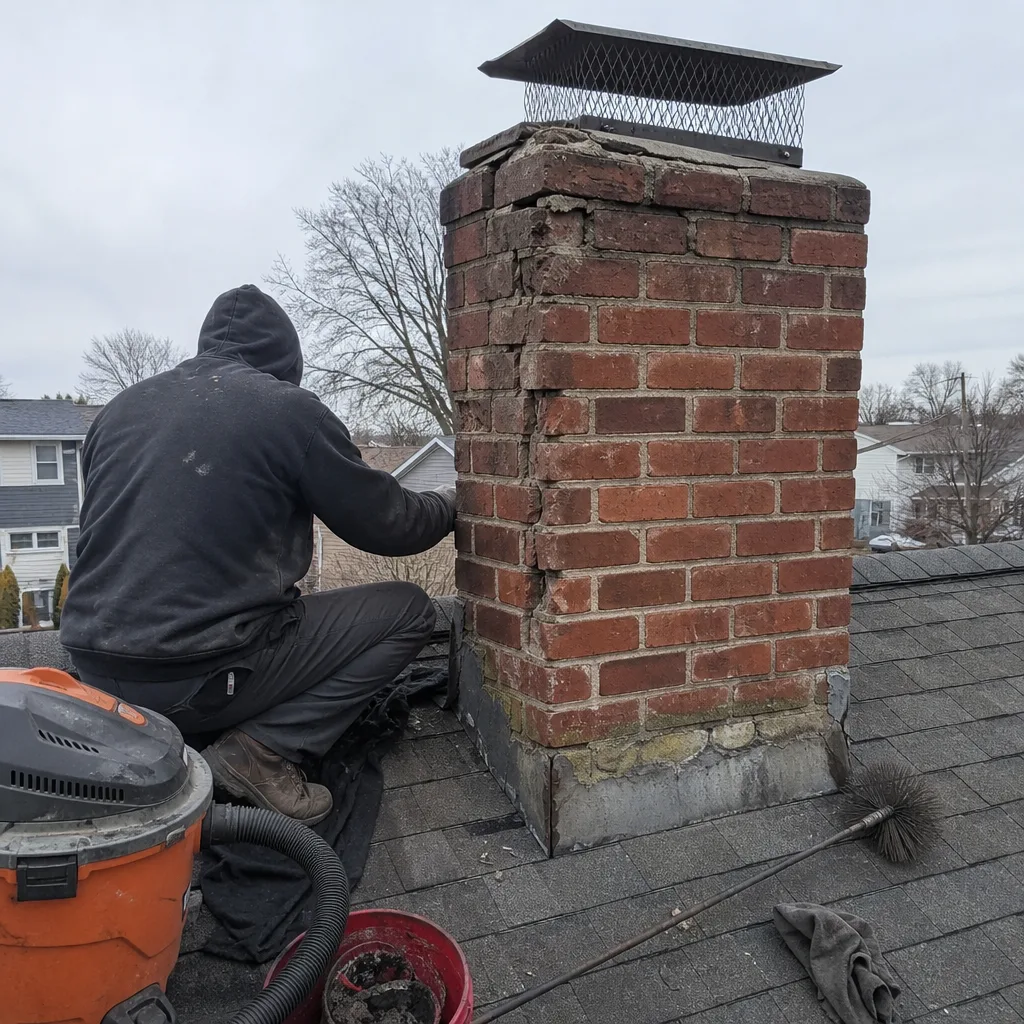 Before
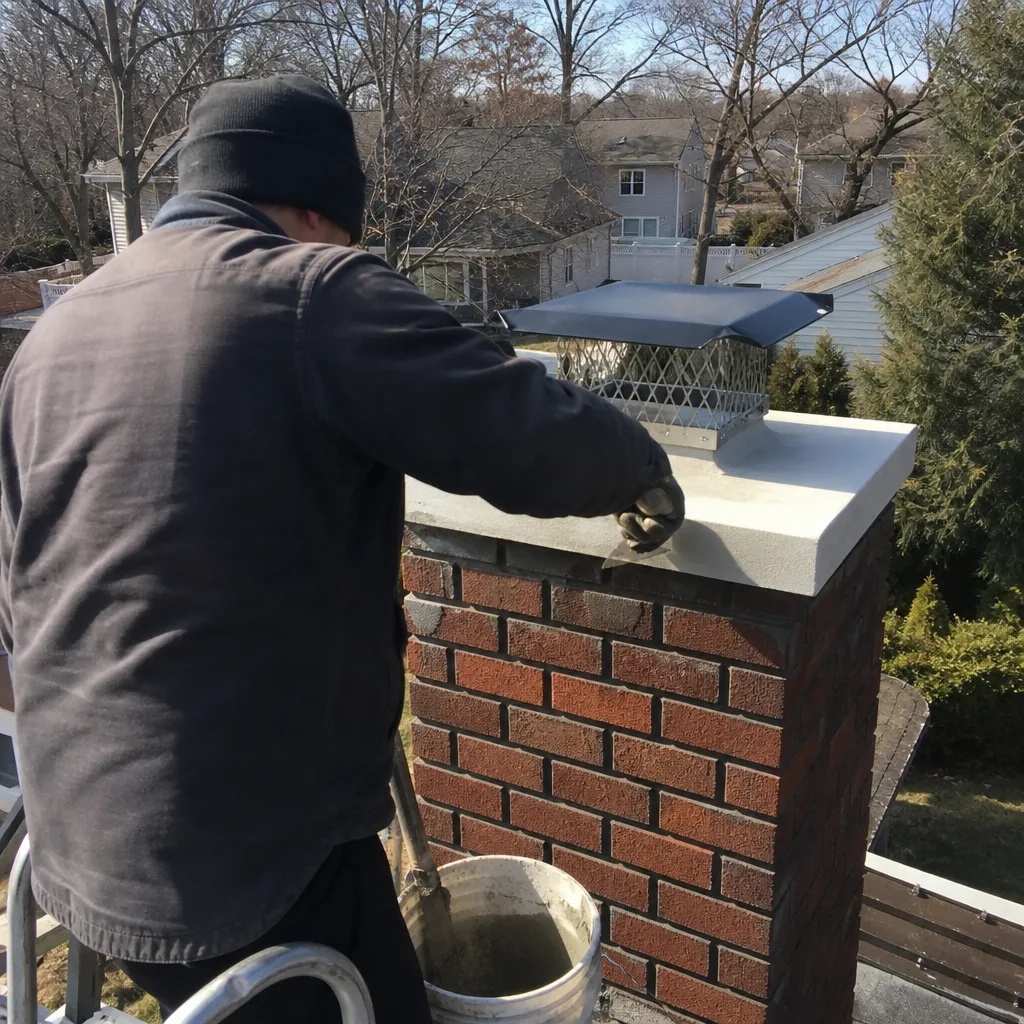 After
After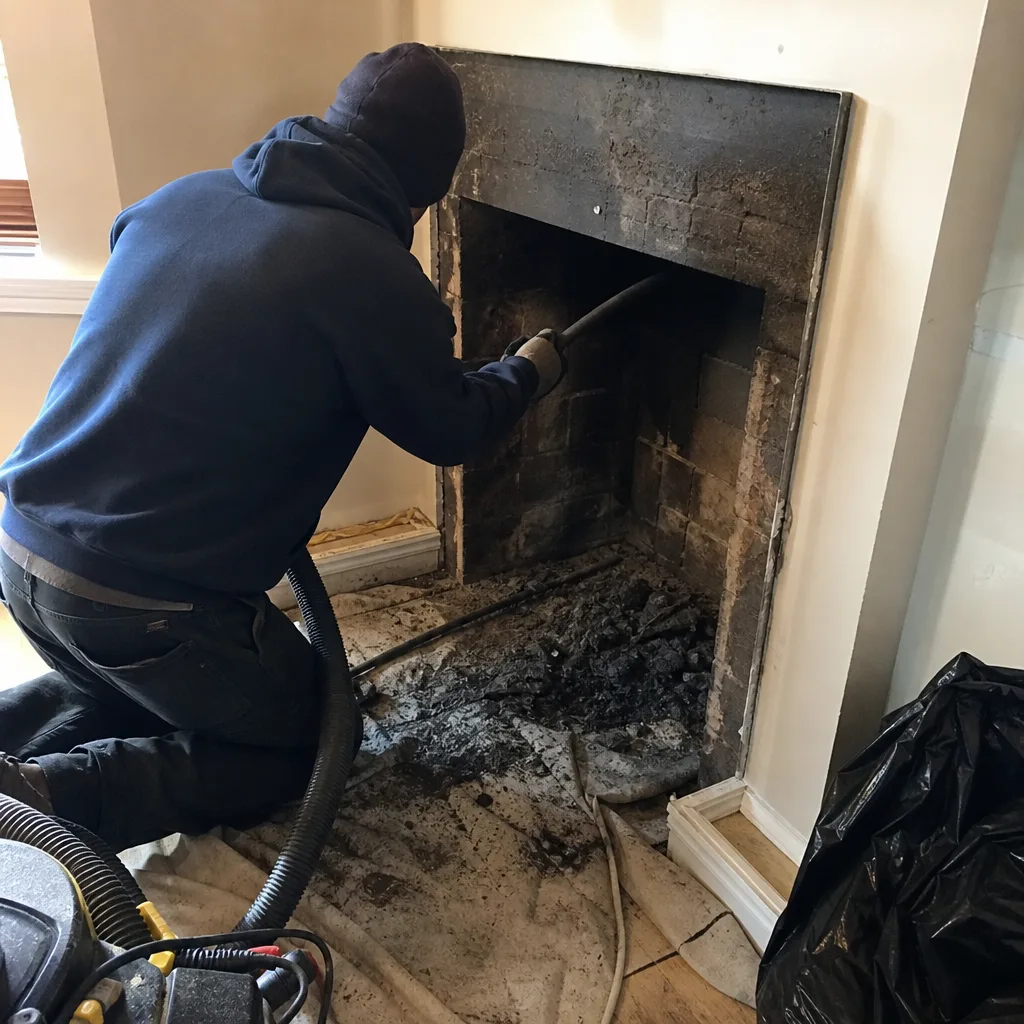 Before
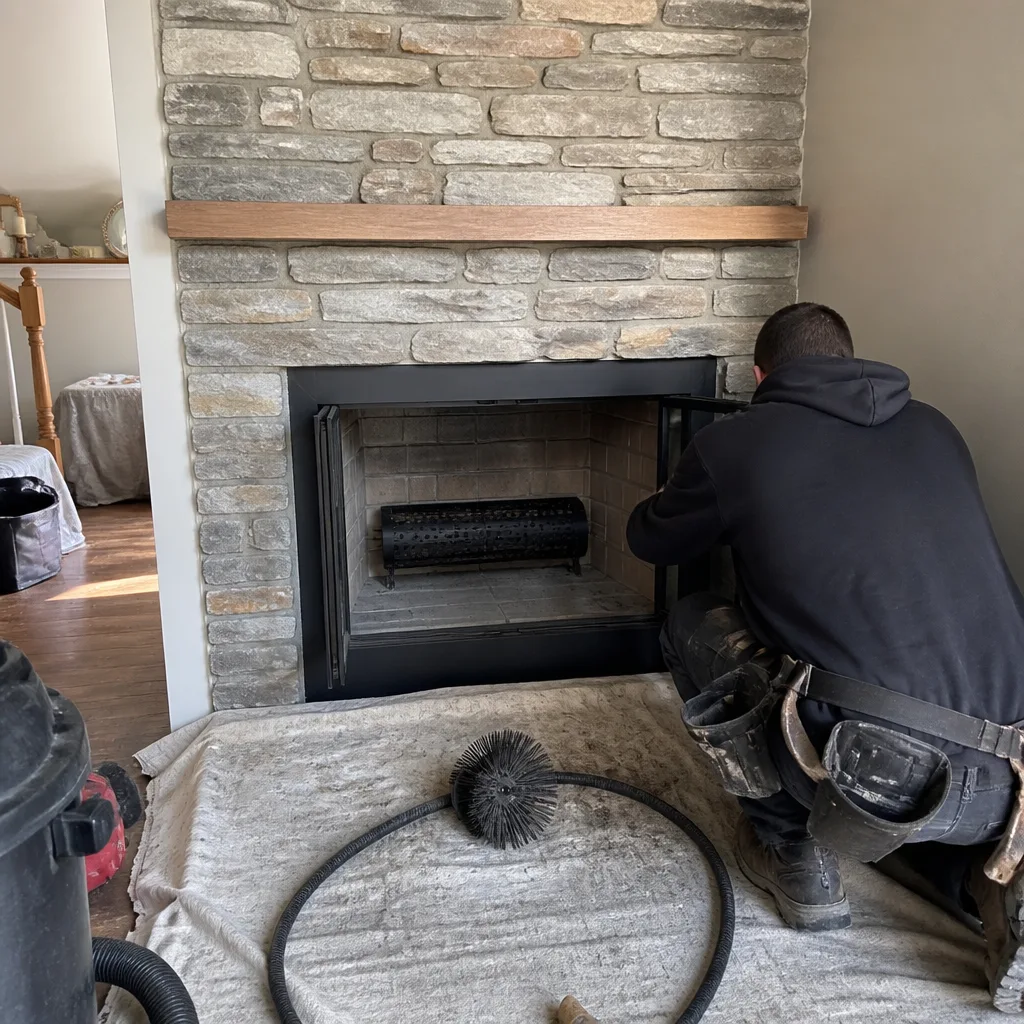 After
After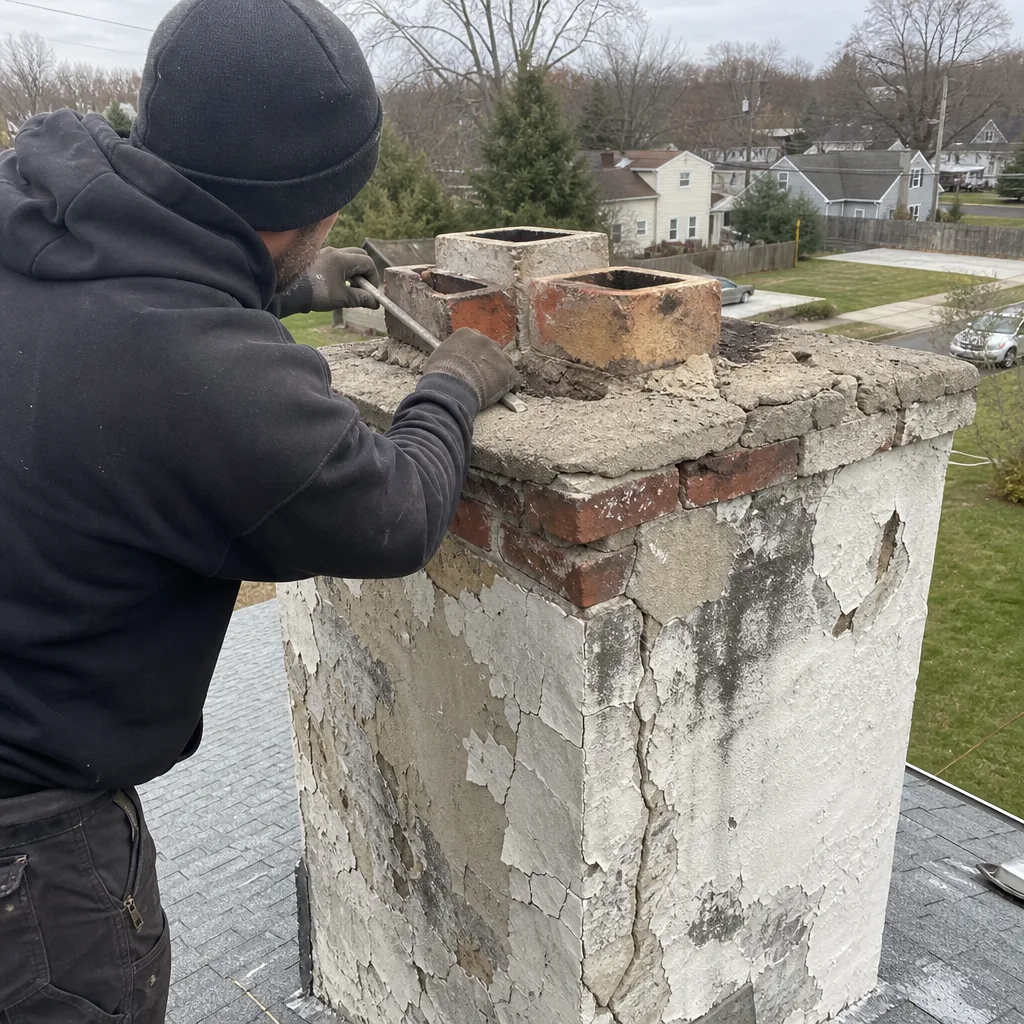 Before
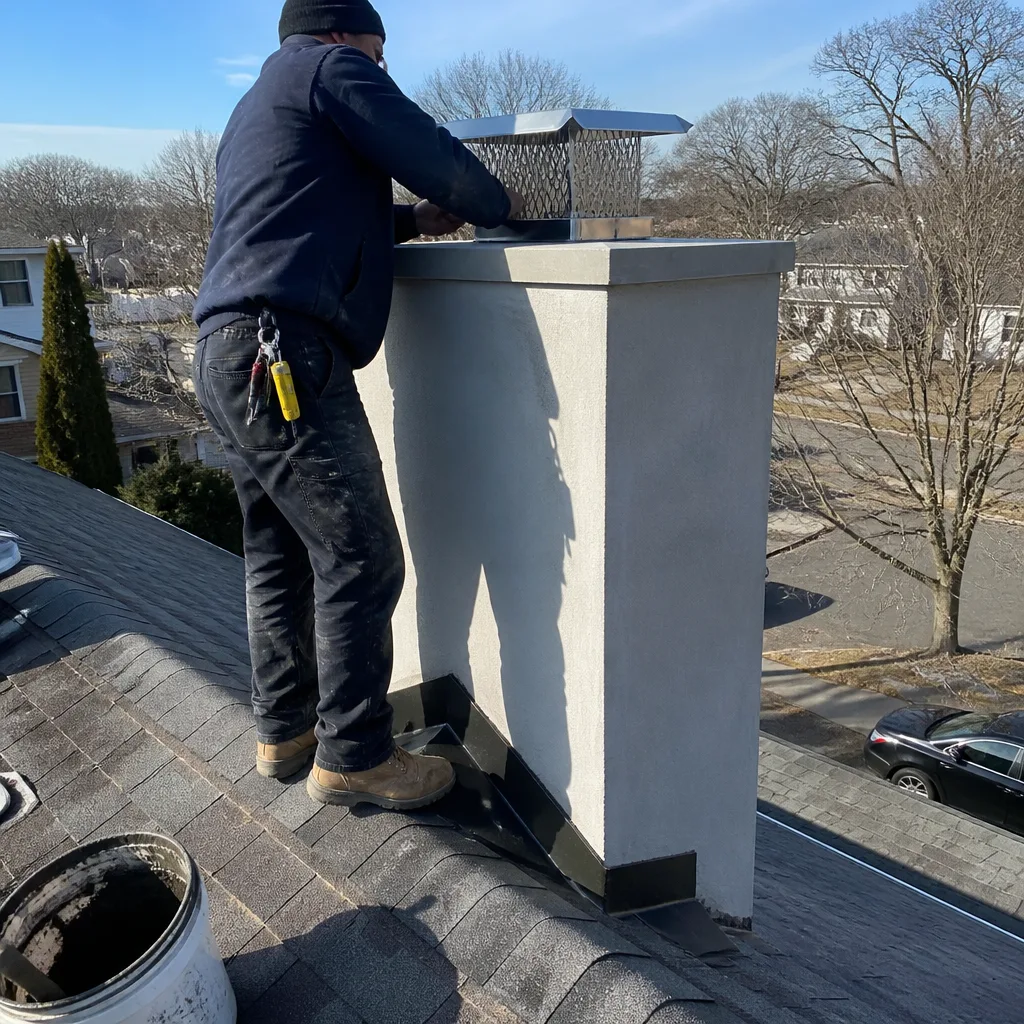 After
AfterCreosote Removal in Hicksville, NY
Creosote removal in Hicksville typically runs between $150 and $450 depending on how much has built up and which stage it’s reached. Most homes we visit can have Chimney Cleaning & Sweep services completed in a single visit, and the fireplace is ready to use the same day. If you’re smelling something sharp and tarry when you open the damper, or you haven’t had a sweep in two or more years, it’s worth getting eyes on it before the next fire season starts.
At Hearthstone Chimney Co., we’ve been removing creosote from chimneys across Hicksville and the surrounding area since 1984 – over 42 years of doing this work the same careful way every time. Russell Haines built this company on the idea that a homeowner deserves a plain-English explanation of what’s in their chimney, photos they can actually look at, and a written guarantee behind the work. That’s still how every job runs. If you’d like to talk through Fireplace Cleaning or what you’re seeing in your fireplace, call us at (845) 757-0998 – a live person answers every call, around the clock.
Creosote removal is one of the most important parts of what we cover under Chimney Cleaning & Sweep in Hicksville. It’s not a separate procedure we tack on – it’s central to keeping a wood-burning system safe. This page explains when you need it, how we do it, what it costs, and why the stage of creosote matters more than most homeowners realize.
What Creosote Is and Why Hicksville Homes See So Much of It
Creosote is what’s left behind when wood smoke cools before it fully exits the flue. The byproducts of combustion – water vapor, unburned gases, tar compounds – condense on the inner walls of the liner and harden over time. Every fire adds a little more. Left unchecked, it builds up in three distinct stages, each more difficult and more dangerous than the last.
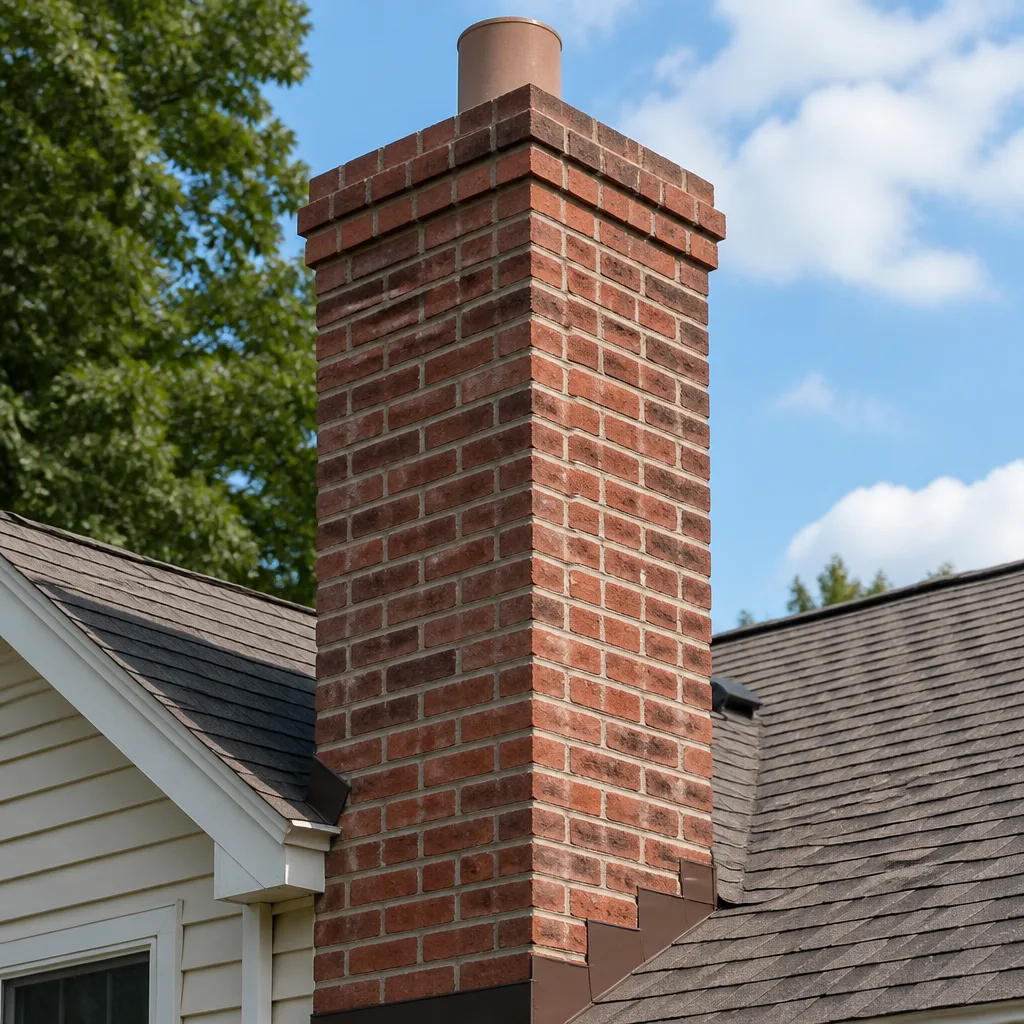
In Hicksville specifically, we see a few conditions that accelerate this buildup. The older Colonial and Cape Cod homes throughout the Newbridge Road corridor and along Broadway were built with exterior chimneys – chimneys that run up the outside of the house rather than through the interior. Those flues run colder than interior ones because they’re exposed to Long Island’s winter wind on three sides. Cold flue walls mean more condensation, which means faster creosote accumulation. Pair that with a homeowner burning wood on a tight damper to stretch the heat, and a chimney that looked clean three years ago can be carrying a thick Stage 2 deposit by now.
The three stages matter because they require different approaches:
- Stage 1 (Dusty or flaky): Loose, dry flakes that brush away cleanly. A standard sweep handles this without any additional treatment. This is what you find in a chimney that’s been swept every season.
- Stage 2 (Tar-like and hardened): A shiny, crunchy, harder deposit that clings to the liner. Standard brushes won’t remove it. This requires rotary tools and, in some cases, chemical treatment before the mechanical work begins.
- Stage 3 (Glazed and thick): Dense, smooth, almost lacquer-like coating that can be a quarter-inch thick or more. This is the one that burns. Stage 3 creosote is the fuel behind chimney fires, and removing it is a multi-step process that sometimes spans more than one visit. In some cases, if a chimney fire has already occurred, the liner itself may need evaluation before we proceed.
Knowing which stage you’re dealing with is why we don’t quote a final number over the phone without looking first. The Level 1 Inspection drives the price, and we photograph what we find so you can see exactly what we’re talking about.
When You Need Creosote Removal
Some of these signs are obvious. Others are easy to dismiss until they’re not. Here’s what to watch for:
- A sharp, acrid smell when the damper is open – even without a fire going. That odor is concentrated creosote off-gassing into the house, and it tends to be strongest in Hicksville during the humid summers when the deposits absorb moisture and amplify the smell.
- A visible dark or shiny coating on the damper throat – if you can see Stage 2 or Stage 3 deposits just by opening the damper and looking up with a flashlight, what’s higher in the flue is almost certainly worse.
- Two or more seasons since the last professional sweep – in a home burning two to three cords of wood per winter, that’s enough time for Stage 1 to progress to Stage 2, especially with an exterior chimney.
- Reduced draft or smoke backing into the room – significant creosote buildup narrows the flue opening and disrupts airflow. If your fireplace smoked last winter but didn’t the winter before, buildup is one of the first things to check.
- A popping or crackling sound coming from the chimney during a fire – this can indicate creosote burning in the flue. It’s a warning sign, not a curiosity. Stop the fire and call for an inspection before the next use.
- You’ve just purchased an older home in Hicksville – we see this often in the Newbridge, Bethpage Road, and Old Country Road neighborhoods where ranch-style homes change hands after 20 or 30 years. The prior owner may have burned regularly but skipped the annual sweep. What looks like a clean fireplace from the living room can be a heavily loaded flue.
Our Creosote Removal Process
We don’t have a single script for every chimney. What we do have is a consistent sequence that makes sure nothing gets missed and the homeowner knows exactly what happened.
- Pre-job inspection and documentation: Before any tools go in, we run our Level 2 camera inspection and photograph the interior of the flue from the firebox to the crown. You’ll see the images. Russell Haines built the process around this step because a homeowner who can see what’s in their chimney doesn’t have to take our word for it. We tell you the stage, the approximate thickness, and whether there are any secondary concerns – cracks in the liner, deteriorating mortar joints, debris from a damaged cap – that we’d address in the same visit.
- Protection of the work area: Drop cloths over the hearth and surrounding floor, a vacuum-sealed dust containment system attached to the firebox opening, and shoe covers before we step inside. Creosote dust is fine, stubborn, and dark. We’ve seen what it does to a light-colored carpet, and that’s not what we’re leaving behind.
- Mechanical removal: For Stage 1 deposits, this is brush work – professional chimney brushes in the correct diameter for the liner, worked from the top down. For Stage 2, we bring in rotary cleaning systems that reach where standard brushes can’t grip. The rotary heads we use are the kind specified by Copperfield and compatible with the liner dimensions common in post-war Hicksville construction.
- Chemical treatment for Stage 2 and Stage 3: Where glazed or hardened deposits resist mechanical removal, we apply a professional-grade creosote modifier. This is not a spray-and-wait product from a hardware store. It changes the chemical structure of the deposit, making it brittle enough for the brushes to break free. In severe Stage 3 cases, we may apply the treatment on one visit and return to complete the mechanical removal after the product has worked, rather than force it and risk damaging the liner.
- Post-removal inspection and second documentation pass: After the flue is cleared, the camera goes back in. We photograph the liner again and compare before-and-after images side by side. If we find a crack or a gap that the creosote was actually masking – which happens – we show you what we found and explain your options in plain language before we propose any additional work.
- Cleanup and plain-English summary: The workspace leaves cleaner than we found it. Before we close out the job, we give you a written summary of what stage the creosote was at, what was done, and what – if anything – we’d recommend watching. Every job is backed by the 90-Day Done Right Promise: if it’s not right, we come back, in writing, no arguing.
Creosote Removal Pricing in Hicksville
Creosote removal in Hicksville costs between $150 and $450 for the majority of jobs. The range is wide because the stage of the deposit is the biggest cost driver – Stage 1 cleaning and Stage 3 glazed-deposit removal are genuinely different amounts of labor and materials.
| Creosote Stage | Typical Approach | Estimated Cost Range |
|---|---|---|
| Stage 1 (flaky, loose) | Standard brush sweep | $150 – $225 |
| Stage 2 (tarry, hardened) | Rotary tools plus possible chemical treatment | $225 – $350 |
| Stage 3 (glazed, thick) | Chemical modifier, mechanical removal, possible return visit | $350 – $450+ |
| Add-on: Level 2 camera inspection | Required for Stage 2/3, recommended for all | Included in our estimate |
A few things affect where your job lands in these ranges. Chimney height matters – a two-story home with a tall exterior chimney takes more time than a single-story ranch. Liner type matters too: a clay tile flue and a stainless steel relining are cleaned differently. If the chimney hasn’t been swept in several years, we sometimes find Stage 2 deposits in the lower flue and Stage 1 higher up, which changes the approach mid-job.
What doesn’t change is the price between the estimate and the invoice. We give you a number upfront. That’s the number on the bill. If we open the damper and find something that changes the scope – a cracked tile, an animal nest, a collapsed section – we stop, show you, and explain before we do anything beyond what was agreed. No surprises.
We also offer a permanent 5% discount for seniors and veterans, and $50 off any repair over $250. If you’ve gotten a written estimate from another company, we’ll give you a free second opinion – just bring the paperwork.
Call (845) 757-0998 to schedule a free estimate. We’ll look at the chimney, show you what’s there, and give you a straight number before any work starts.
FAQs – Creosote Removal
How do I know if my chimney has dangerous creosote buildup?
The most reliable indicator is a professional inspection, but there are signs you can check yourself: a strong, sharp odor when the damper is open, visible dark or shiny deposits on the damper throat, smoke that doesn’t draw cleanly, or a fireplace you haven’t had swept in two or more years. In Hicksville’s older housing stock, exterior chimneys are common and run colder, which means creosote accumulates faster than homeowners typically expect. If any of these apply, call (845) 757-0998 for a free estimate – we’ll tell you exactly what stage you’re dealing with.
Is creosote removal something a homeowner can do with store-bought products?
Stage 1 deposits can be partially addressed with chimney sweeping logs, but those products don’t remove creosote – they make it more brittle, which is a modest help. For Stage 2 and Stage 3 buildup, store-bought sprays and logs aren’t sufficient and can create a false sense of security. Stage 3 glazed creosote is genuinely hazardous: it’s the fuel in most chimney fires, and breaking it loose incorrectly can damage a clay tile liner or drop debris onto smoldering ash. This is work that calls for a trained sweep with the right rotary tools and professional-grade chemical modifiers. We don’t recommend DIY approaches for anything beyond the lightest dusty deposits, and even then a professional check at least every two seasons is the right call.
How long does a creosote removal appointment take in Hicksville?
Most Stage 1 and Stage 2 jobs are done in a single visit running two to three hours, including the inspection, the cleaning, and the post-job camera pass. Stage 3 jobs may require a return visit if we apply a chemical modifier and need to give it time to work before the mechanical removal – we’ll tell you during the Level 2 Inspection whether that’s likely. Our technicians complete most jobs in one visit, and upfront pricing means you know the scope before we begin. For a better read on your specific chimney, call (845) 757-0998.
How often should creosote be removed in a Hicksville home?
The National Fire Protection Association standard calls for at least one inspection per year, with cleaning as needed. For a Hicksville household burning two or more cords of wood per winter, annual sweeping is the right interval – and for homes with exterior chimneys (common in the split-levels and Capes throughout the area), we sometimes recommend a mid-season check if burning is heavy. The simplest rule: if you’re using the fireplace regularly, schedule a sweep every fall before the season starts. A chimney that gets inspected on schedule almost never reaches Stage 3. One that gets skipped for three or four winters sometimes does.
Why Homeowners in Hicksville Call Hearthstone
There are other chimney companies working Nassau County. We’ve been at this since 1984, and we’re still here because we do the work the same way every time: camera first, plain-English explanation, written guarantee, no surprises on the bill. Russell Haines built Hearthstone around the idea that a homeowner who’s been burned by a contractor before – and most have – deserves a company that makes its commitments in writing and then keeps them.
Our 90-Day Done Right Promise means exactly what it says. If the job isn’t right, we come back and make it right. In writing. No paperwork, no arguing. We use professional-grade materials – rotary systems and brushes sourced through Copperfield and Gelco – because the right tool on the right liner is what keeps the job from needing a follow-up. And a live person answers our phone at any hour, because a question about a chimney at 10 on a Sunday night is still a question that deserves an answer.
Creosote removal is part of the broader home safety picture for anyone in Hicksville who burns wood regularly. We don’t treat it as a routine transaction. We treat it as the thing standing between your family and a chimney fire, because that’s what it is.
Key Takeaways
- Creosote removal in Hicksville runs $150 to $450 depending on which of the three stages is present.
- Exterior chimneys, common in Hicksville’s older neighborhoods, run colder and accumulate creosote faster than interior flues.
- Stage 1 is swept away; Stage 2 and Stage 3 require rotary tools, chemical treatment, or both – don’t assume a standard sweep covers all three.
- Every Hearthstone job includes a Level 2 camera inspection with before-and-after photos and a plain-English summary of findings.
- All work is covered by the 90-Day Done Right Promise – in writing, no arguing.
- Upfront pricing means the number on the estimate is the number on the invoice.
- A live person answers at (845) 757-0998 around the clock.
Schedule Your Creosote Removal in Hicksville
If your fireplace has been in regular use, if you’re noticing a tarry smell, or if it’s been more than a year since anyone looked at the flue, it’s worth a call. We’ll schedule an inspection, photograph what’s there, tell you exactly what stage you’re dealing with, and give you an upfront number before a tool comes out of the bag. No pressure, no upselling on things that don’t need doing. Just an honest look at what’s in your chimney and a straight answer about what it takes to fix it.
Call Hearthstone Chimney Co. at (845) 757-0998. Estimates are free, the phone is answered by a live person, and we’ll be in Hicksville when we say we will.
Written by Russell Haines, Owner at Hearthstone Chimney Co., serving Hicksville.