
Last updated September 10, 2026
Level 1 sweep and inspection to the NFPA 211 annual standard - flue, crown, cap, and flashing checked and photographed
Chimney sweep logs do not sweep chimneys. They loosen some creosote - which then falls where a brush and vacuum still have to collect it.
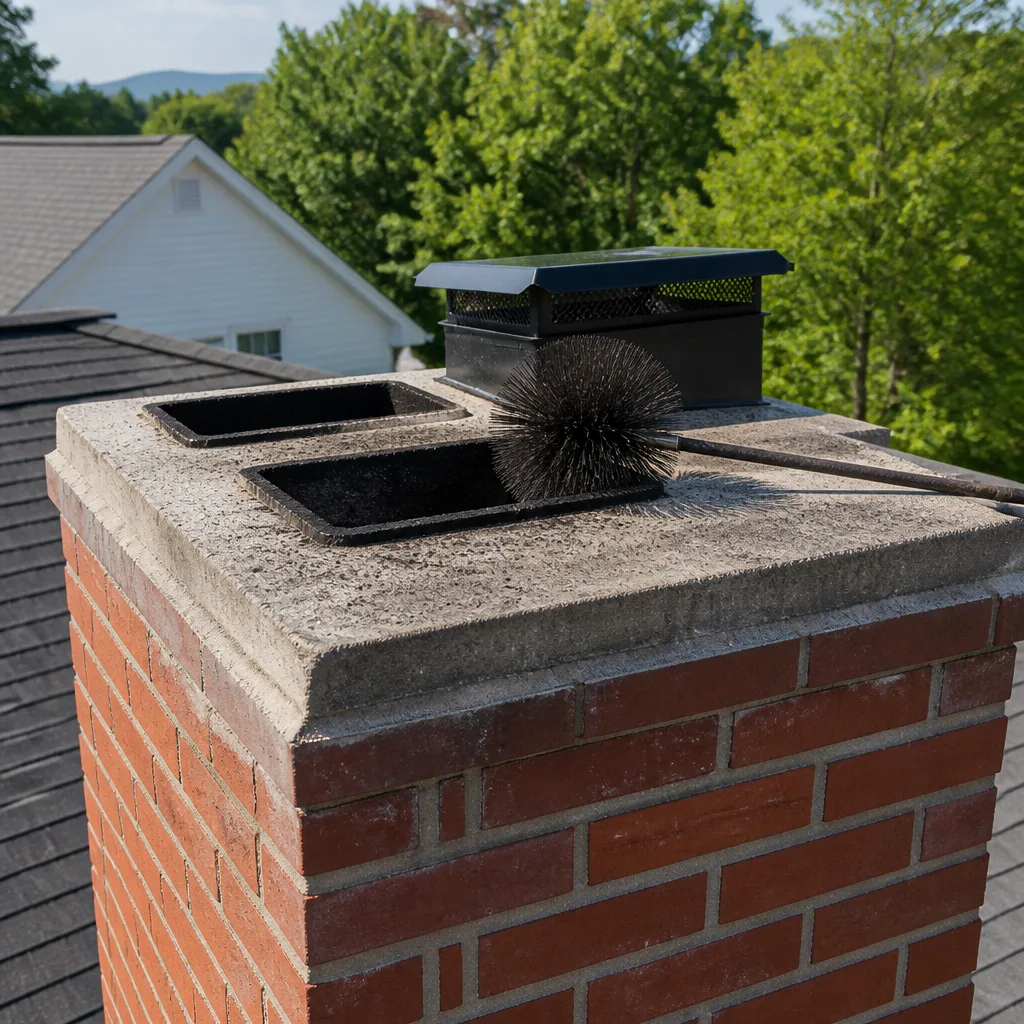
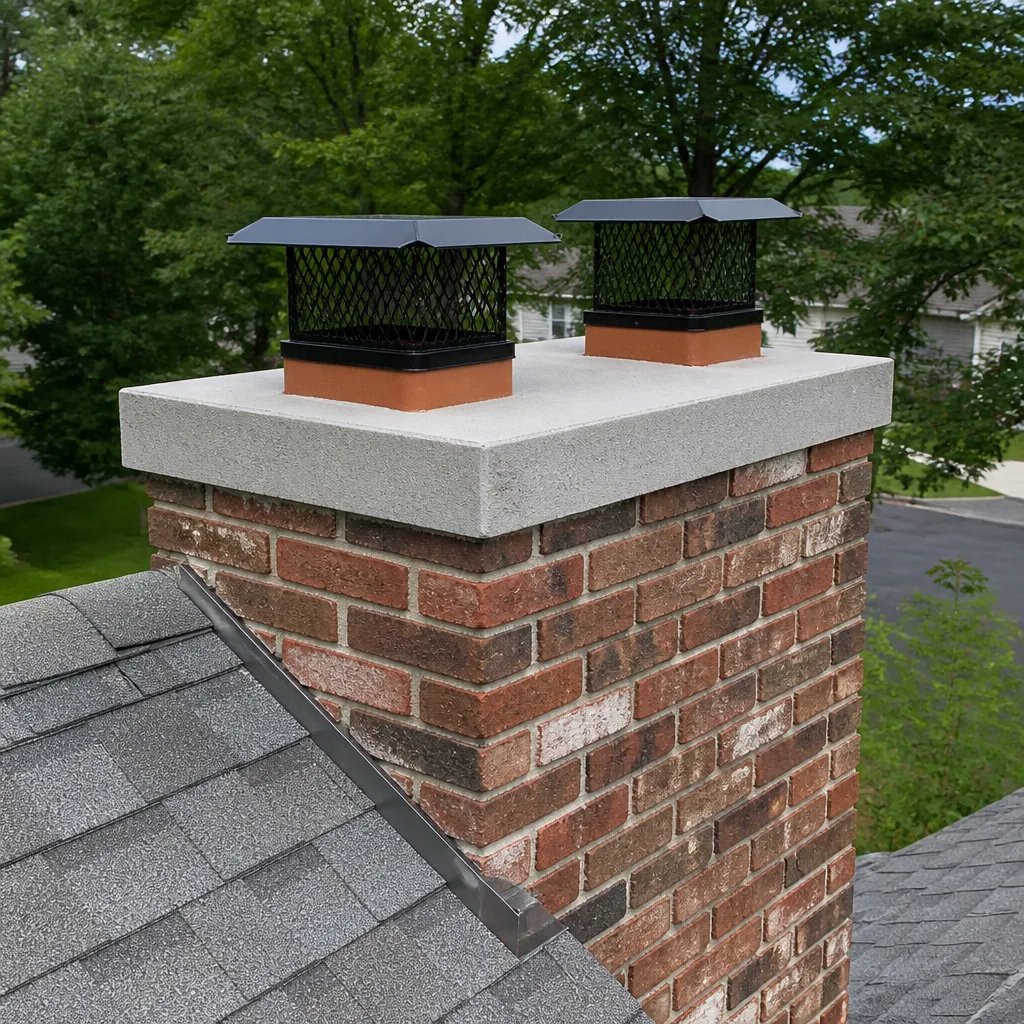
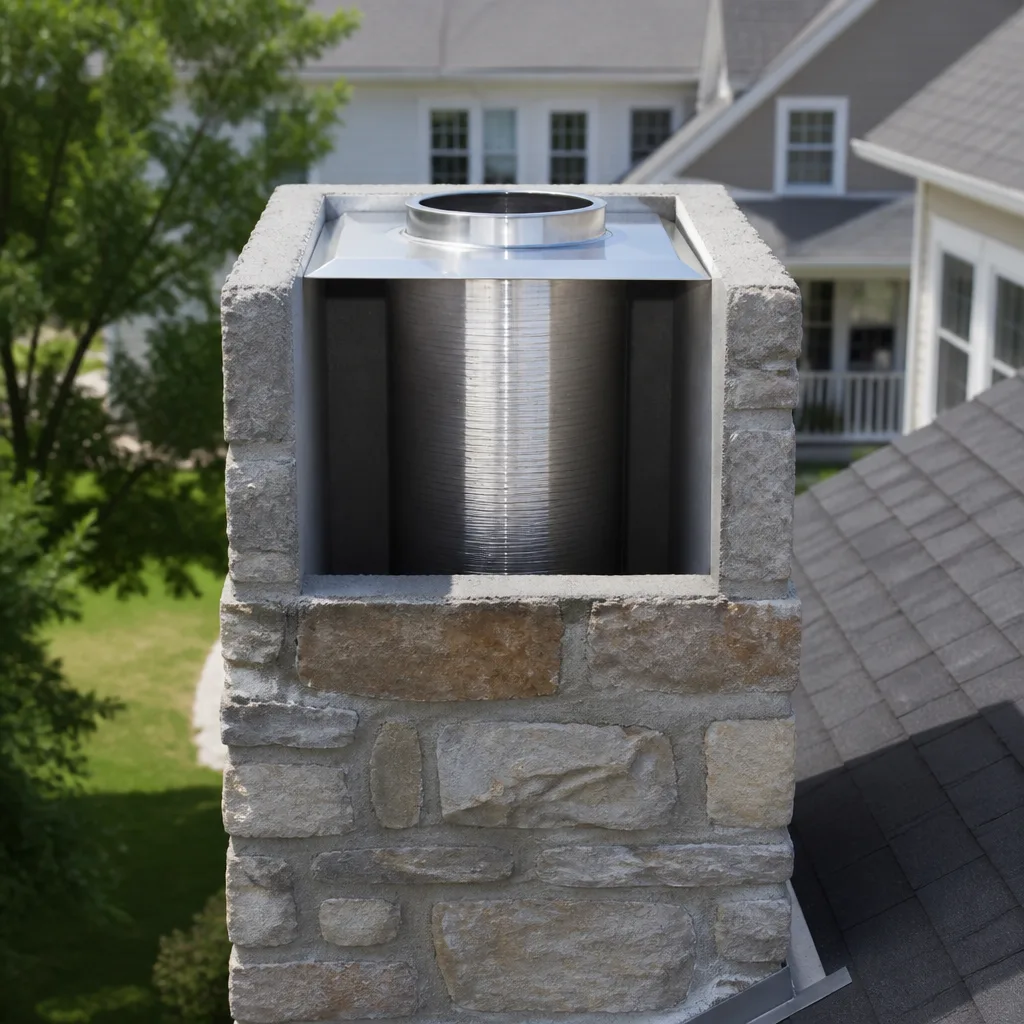
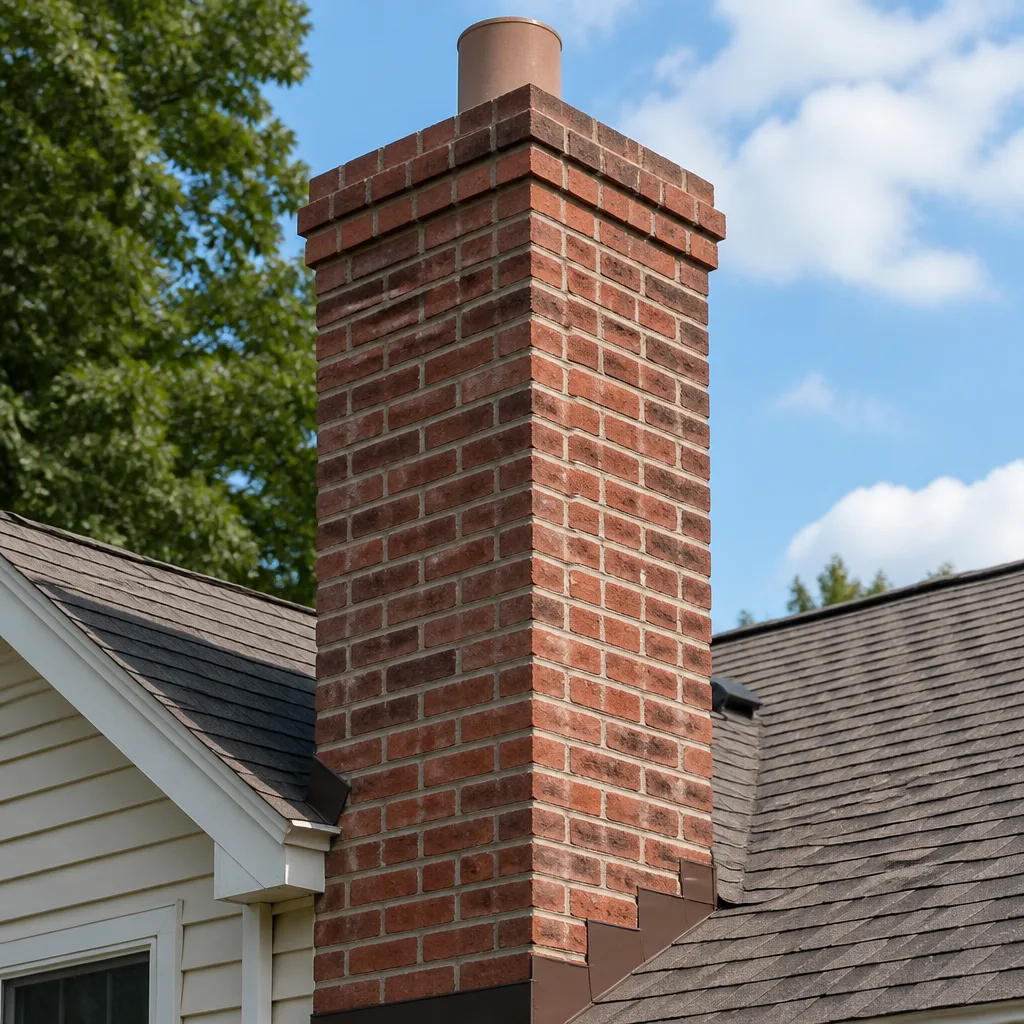
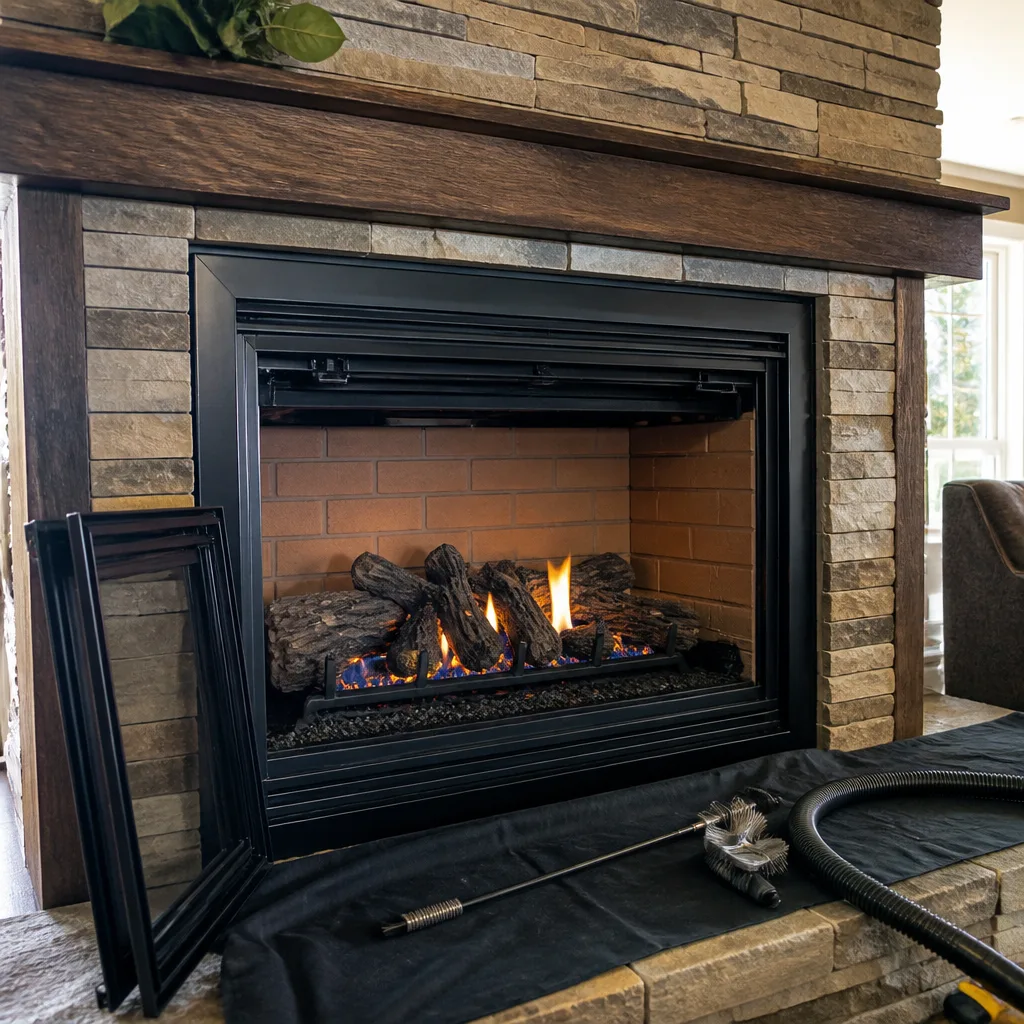
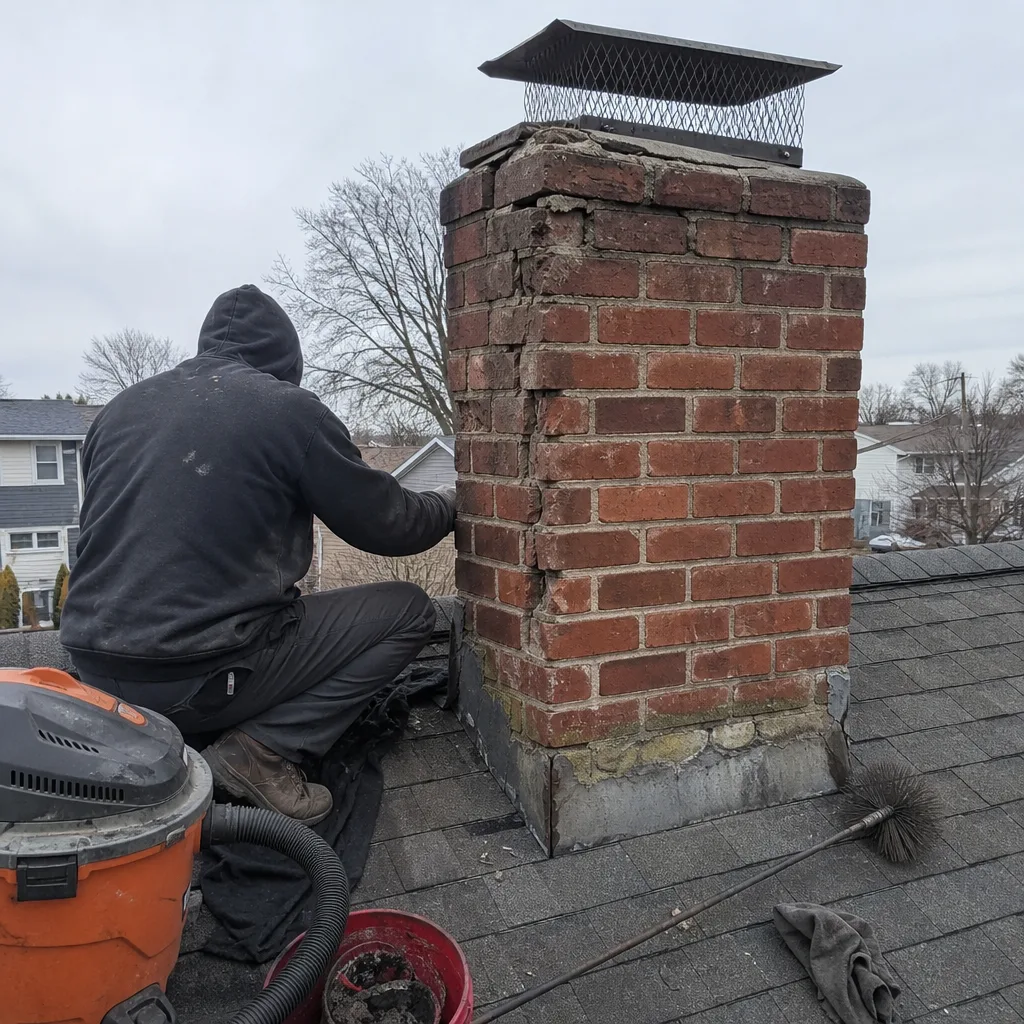 Before
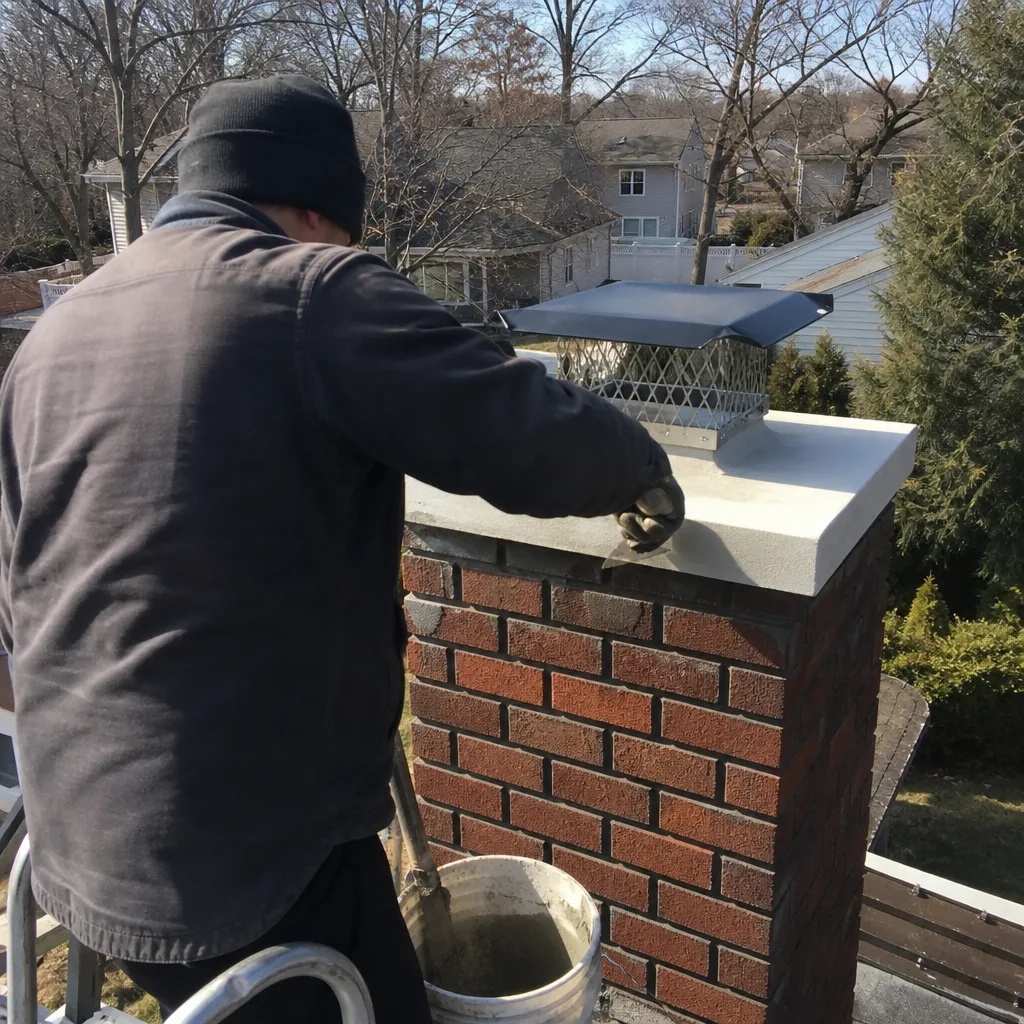 After
After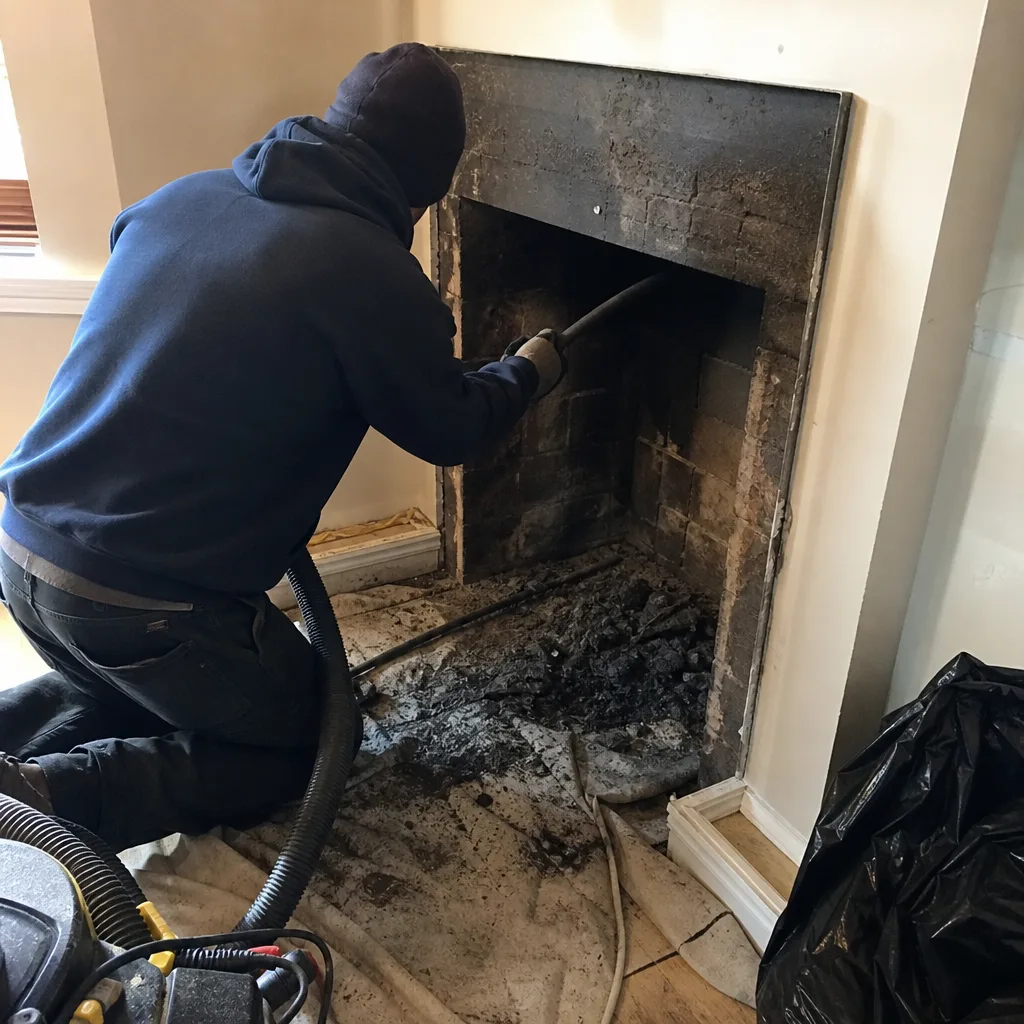 Before
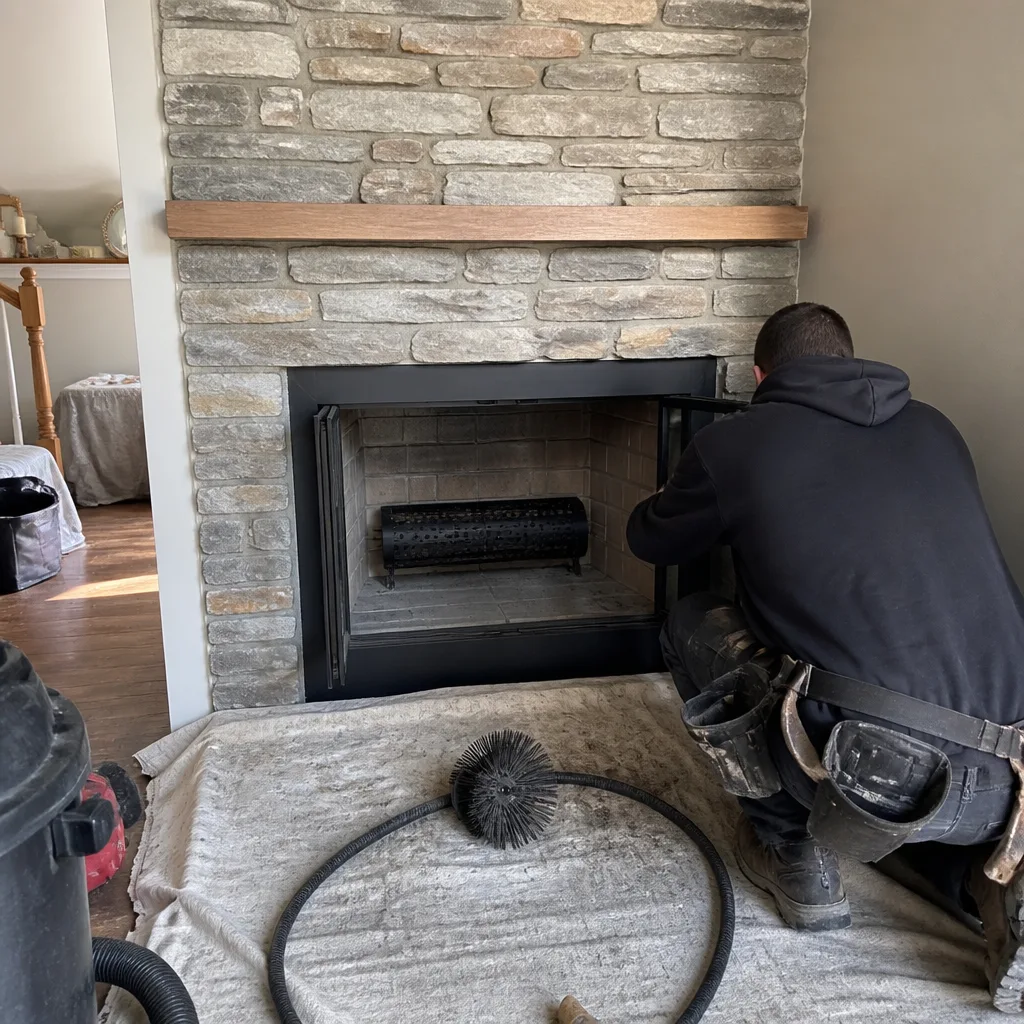 After
After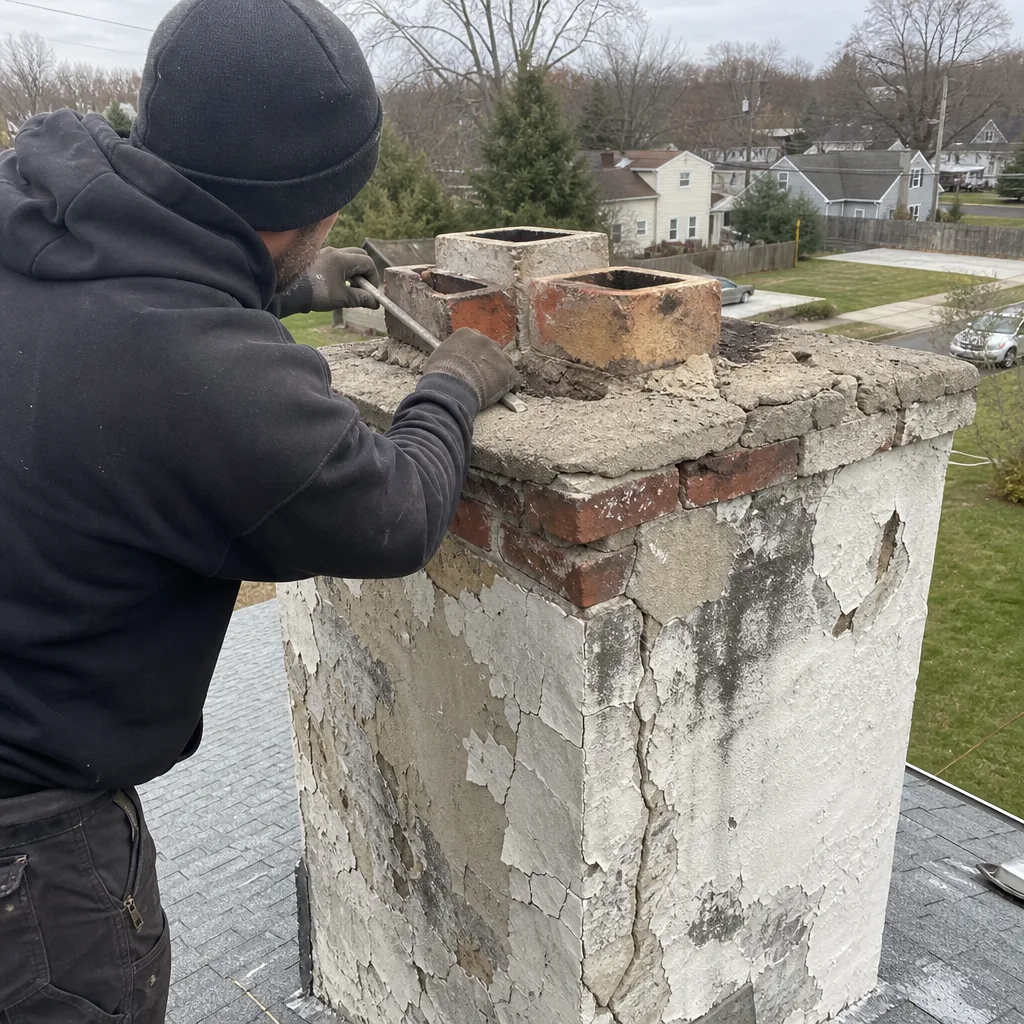 Before
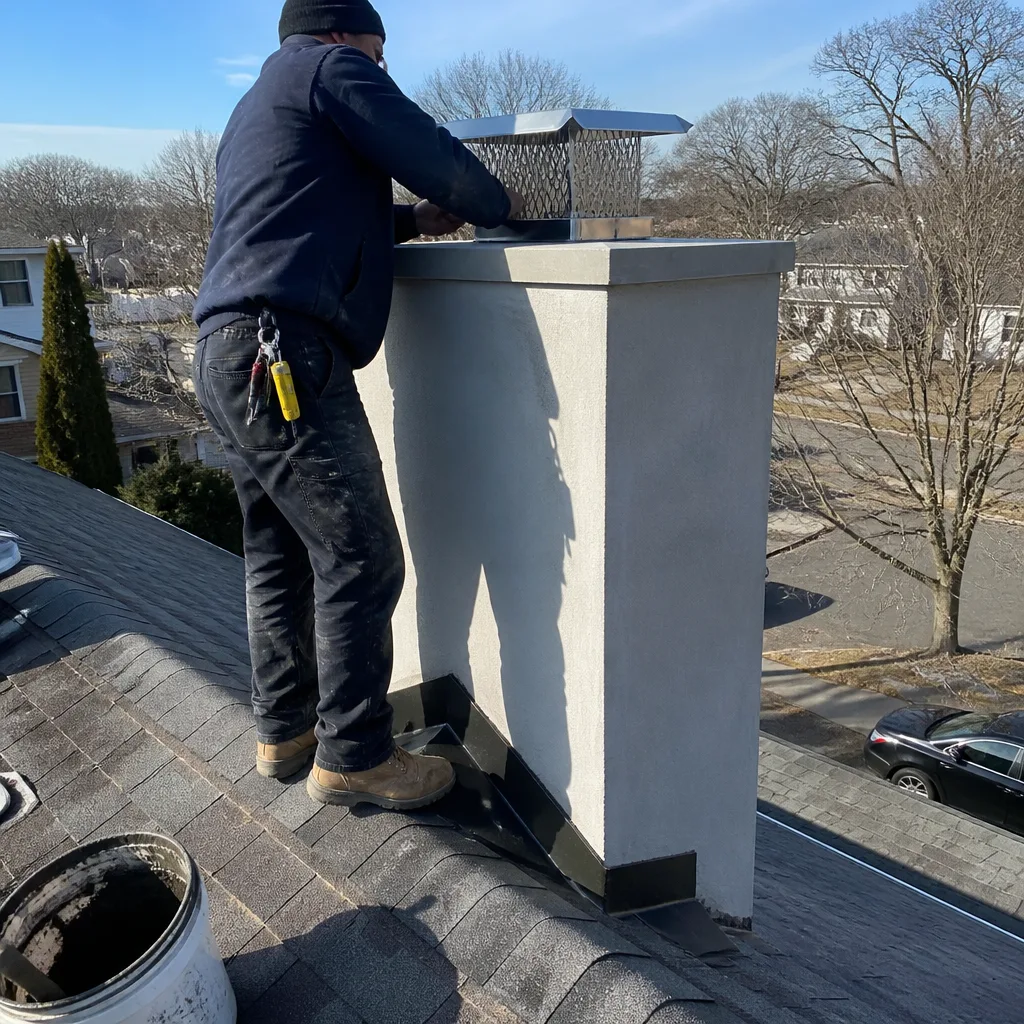 After
AfterThe Complete Guide to Chimney Cleaning in Hicksville
The National Fire Protection Association logs roughly 25,000 chimney-related house fires annually - and the majority involve chimneys that were “cleaned recently.” The word recently is doing a lot of heavy lifting. In Hicksville, where Long Island winters push heating systems hard and summer humidity lingers in flue liners, a quick brush-and-vacuum job can leave dangerous creosote deposits, hidden liner damage, and obstructed venting paths untouched. This guide explains what a proper chimney cleaning actually involves, why the inspection matters as much as the sweep, and how to read the paperwork when a technician leaves your driveway. For more guides & resources on keeping your home safe, explore our blog. Whether you burn cordwood in a Levittown-era ranch or run a gas insert in a post-war Cape, you’ll know exactly what to ask for and what to expect back.
Quick Answer
A proper chimney cleaning in Hicksville removes combustible creosote deposits, clears obstructions, and includes a documented inspection of the flue liner, smoke chamber, and exterior masonry. For most wood-burning fireplaces and stoves, this should happen annually before the heating season begins. Oil and gas systems need less frequent sweeping but require camera inspection of the liner, especially after any fuel conversion.
Table of Contents
- What Happens During a Professional Chimney Cleaning
- Level 1, 2, and 3 Inspections: Which Hicksville Homeowners Actually Need
- Creosote Stages and Why Stage 2+ Requires More Than a Standard Sweep
- How Oil-to-Gas Conversions Affect Your Chimney Liner
- What Legitimate Post-Cleaning Documentation Should Include
- The 90-Day Follow-Up: What Problems Surface After a Cleaning
- What Chimney Cleaning Costs in Hicksville
- Choosing a Chimney Company in Hicksville
What Happens During a Professional Chimney Cleaning
A chimney cleaning is not a single action. It is a sequence of controlled steps, each with a purpose, and the quality of each step determines whether your flue is actually safe or merely tidy-looking.
Step 1: Exterior and interior visual assessment. Before any brush enters the flue, a technician should examine the chimney crown, cap, flashing, and accessible masonry from the roof or ladder. Inside, we check the firebox for cracks, damaged bricks, or deteriorated mortar joints. In Hicksville, where many homes were built during the 1940s through 1970s, we regularly find original terra cotta flue liners with spalled surfaces and mortar erosion that a homeowner cannot see from the hearth.
Step 2: Containment setup. Drop cloths protect flooring and furniture. A high-powered HEPA vacuum runs continuously to capture fine particulate. Creosote dust is a respiratory hazard; proper containment is not optional.
Step 3: Mechanical sweeping of the flue. We use rotating poly or wire brushes sized to the flue diameter, driven by a flexible rod system. The brush choice matters: poly for metal liners, wire for masonry flues, and specialized heads for glazed creosote. The goal is complete contact with all flue surfaces, not a quick pass through the center.
Step 4: Smoke chamber and firebox cleaning. The smoke chamber - the area above the damper and below the flue - is where many chimney fires begin. It is also where amateur sweeps often stop. We hand-scrape this area to remove creosote buildup that brushes cannot reach.
Step 5: Debris and obstruction removal. Bird nests, squirrel caches, and collapsed liner fragments are common in Hicksville chimneys, particularly in neighborhoods with mature oak and maple canopies. We remove these mechanically, never with chemical “chimney cleaning logs” that claim to dissolve creosote. Those products are not recognized by the Chimney Safety Institute of America as a substitute for mechanical cleaning.
Step 6: Final inspection and documentation. Every cleaning at Hearthstone Chimney Co. ends with a camera inspection and a written report. Photos show what we found, what we did, and what condition the system is in now. You receive this before we leave.
Most cleanings take 45 to 90 minutes. A Level 2 inspection adds time but is essential after any chimney fire, real estate transaction, or fuel conversion.
Level 1, 2, and 3 Inspections: Which Hicksville Homeowners Actually Need
The NFPA 211 standard defines three inspection levels, and understanding the difference protects you from both inadequate service and unnecessary upselling.
Level 1 Inspection is a visual examination of readily accessible portions of the chimney exterior, interior, and connecting appliances. No tools are used to open or remove components. This is appropriate when your appliance and venting system are unchanged and you plan to continue using it as you have. If you burned the same fuel, in the same fireplace, with no performance problems last season, a Level 1 with cleaning is typically sufficient.
Level 2 Inspection is required when any change is made to the system, after a chimney fire or external event (earthquake, lightning strike), or upon sale or transfer of the property. It includes everything in Level 1 plus examination of accessible attics, crawl spaces, and basements, and a video scan of the interior flue liner. In Hicksville, where oil-to-gas conversions have been common for two decades, we perform Level 2 inspections routinely. The camera reveals liner sizing mismatches, corrosion patterns, and gaps between liner sections that visual inspection cannot detect.
Level 3 Inspection is the most invasive, involving removal of building materials or chimney components to access concealed areas. This is only justified when a Level 1 or 2 inspection suggests a hidden hazard that cannot be evaluated otherwise. We have recommended Level 3 inspections fewer than ten times in forty-two years of serving Nassau County. It is not a routine service.
| Inspection Level | What It Includes | When You Need It |
|---|---|---|
| Level 1 | Visual check of accessible areas; no tools | Annual maintenance, no changes, no problems |
| Level 2 | Level 1 + video scan, attic/crawl space check | Fuel conversion, chimney fire, home sale, new appliance |
| Level 3 | Level 2 + destructive investigation of concealed areas | Hidden hazard suspected, Level 2 inconclusive |
After a Long Island winter with heavy heating use, we recommend Hicksville homeowners request at minimum a Level 2 inspection every three to five years, even without apparent problems. For maintenance tips throughout the year, see our Seasonal Chimney Cleaning Care for Hicksville: Year-Round Homeowner’s Guide. Freeze-thaw cycles in our climate accelerate liner deterioration.
Creosote Stages and Why Stage 2+ Requires More Than a Standard Sweep
Creosote is not uniform. It forms in three distinct stages, and each demands different treatment. A technician who does not identify the stage before beginning will leave deposits behind.
Stage 1: Sooty or flaky creosote. This is loose, dusty, or flaky material that brushes away readily. It forms with dry, seasoned hardwood burned at adequate temperatures. A standard mechanical sweep removes it completely. This is what most homeowners imagine when they think of chimney cleaning.
Stage 2: Crusty or tar-like creosote. This material has begun to condense and harden, forming a crust that adheres to flue walls. It results from cooler flue temperatures, unseasoned wood, or restricted airflow. Standard brushes will not remove it. We use rotary chains or specialized chemical treatments followed by mechanical action. In Hicksville, we see Stage 2 regularly in fireplaces with exterior chimneys on north-facing walls, where cold downdrafts cool the flue below optimal temperatures.
Stage 3: Glazed or hardened creosote. This is a dense, shiny, tar-like coating that is extremely combustible and essentially impervious to brushing. It requires chemical treatment to soften, followed by aggressive mechanical removal, often over multiple visits. Stage 3 creosote is a significant fire hazard and indicates a systemic combustion problem that must be corrected - typically through improved wood seasoning, adjusted air intake, or flue redesign.
The danger of Stage 2 and 3 creosote is not merely that it burns. It burns at extremely high temperatures, and the resulting chimney fire can crack liners, damage surrounding framing, and ignite adjacent combustibles through thermal transfer. A cracked liner then permits carbon monoxide and combustion gases to enter wall cavities. In our experience, the chimneys that produce the most dramatic fire department photos are often those with glazed creosote that a standard sweep failed to address.
We document creosote stage in every report. If your sweep does not, you do not know what was actually in your flue.
How Oil-to-Gas Conversions Affect Your Chimney Liner
Nassau County has seen extensive fuel conversions over the past two decades, driven by oil price volatility and efficiency incentives. A conversion changes not merely the burner but the entire combustion profile of your chimney, and the liner must be evaluated accordingly.
Oil combustion produces acidic residue that attacks terra cotta liners, but it also generates higher flue temperatures that help maintain draft. Gas combustion is cleaner but cooler, and the resulting water vapor condenses in flues that were sized for oil. This condensation is acidic and accelerates corrosion of both terra cotta and unlined masonry.
The critical issue is liner sizing. A flue that worked for an oil furnace is often too large for an efficient gas unit. Oversized flues cool the exhaust too quickly, causing condensation and poor draft. The solution is typically a chimney liner sized precisely to the new appliance, installed by a technician who understands both the appliance specifications and the NFPA 211 sizing tables.
We use DuraFlex and Olympia Chimney stainless steel liners for these applications, with insulation where required by code. These are not builder-grade products; they carry lifetime warranties when properly installed. A liner installed without insulation in an exterior chimney in Hicksville’s climate will fail prematurely. We have replaced too many shortcuts to count.
If your home was converted from oil to gas and the chimney was not professionally evaluated, assume the liner is wrong until proven otherwise. A Level 2 inspection with camera documentation is the only way to know.
What Legitimate Post-Cleaning Documentation Should Include
A receipt is not a report. A handwritten note saying “swept and inspected” is not a report. Legitimate documentation protects you, validates your maintenance for insurance purposes, and creates a baseline for future comparison.
Every post-cleaning report should contain:
- Date, address, and technician identification. You need to know who performed the work and when.
- Appliance and chimney specifications. Fuel type, appliance manufacturer and model if visible, flue dimensions, liner material and condition.
- Photos of the flue interior before and after cleaning. Not stock images. Your flue, your deposits, your liner condition. We provide these on every Level 2 inspection.
- Creosote stage identification and removal method. What was found and how it was addressed.
- Written condition verdict. A plain-English statement of whether the system is safe to use, safe with monitoring, or unsafe pending repair. Vague language like “appears okay” is inadequate.
- Specific measurements. Liner thickness remaining, crack dimensions, clearance to combustibles where accessible.
- Recommended actions with priority ranking. What must be done before next use, what should be done this season, what can wait until next maintenance cycle.
- Company guarantee terms. What happens if something goes wrong after the cleaning.
At Hearthstone Chimney Co., our reports are governed by the K.E.Y.S. values code: Krafted right, Every time, Your home first, Standing behind it. The 90-Day Done Right Promise applies to every cleaning - if it’s not right, we make it right, in writing, no arguing. You should accept nothing less from any company working in your home.
Keep these records. They are evidence of due diligence for your homeowner’s insurance, documentation for real estate disclosure, and protection against a future contractor who claims a problem “has been developing for years.”
The 90-Day Follow-Up: What Problems Surface After a Cleaning
Some chimney issues do not reveal themselves during the cleaning. They emerge weeks later, as thermal cycling, moisture migration, and continued use stress components that were already compromised.
Liner cracks from thermal shock. A chimney fire, even a minor one the homeowner did not notice, can crack a terra cotta liner. The crack may not be visible during cleaning if debris masks it, or if the liner has not yet shifted. As the heating season progresses, expansion and contraction open the crack. Smoke or carbon monoxide may then enter wall cavities. This is why we include a 90-Day Done Right Promise - if a concealed crack becomes apparent after our cleaning, we return and address it.
Crown or cap leaks. Water intrusion often accelerates after cleaning disturbs deteriorated mortar. A crown that appeared sound in dry October may leak by January. Our inspections include crown condition assessment, and our guarantee covers follow-up if our initial evaluation missed a developing problem.
Damper malfunction. Cleaning removes creosote that may have been masking a corroded or misaligned damper. Once clean, the damper may not seal or open properly. This is not a defect caused by cleaning; it is a defect revealed by cleaning, and it should be addressed promptly.
Draft problems from improper sizing. A flue that drafted adequately with heavy creosote buildup may draft poorly once cleaned, because the deposits were actually helping constrict an oversized flue. This indicates a design problem that predates the cleaning and requires professional correction.
The 90-Day Done Right Promise exists because we have seen these patterns across four decades in Nassau County. A company that leaves your driveway and forgets your name cannot stand behind work this way. We can, and we do, in writing, with no paperwork required from you to make a claim.
What Chimney Cleaning Costs in Hicksville
Pricing varies with accessibility, appliance type, and inspection level. The table below reflects Hicksville market ranges for legitimate, documented service. Prices below these ranges typically indicate incomplete inspection, uninsured labor, or undocumented work.
| Service | Typical Range in Hicksville | What’s Included |
|---|---|---|
| Level 1 cleaning and inspection | $189 - $279 | Mechanical sweep, visual inspection, basic report |
| Level 2 cleaning and camera inspection | $289 - $429 | Full sweep, video scan, photo report, written verdict |
| Stage 2 creosote removal | $150 - $300 additional | Rotary treatment, extended labor, re-inspection |
| Stage 3 creosote removal | $400 - $800+ | Chemical treatment, multiple visits, full documentation |
| Gas fireplace cleaning | $159 - $219 | Glass, burner, pilot cleaning; safety check |
| Pellet stove cleaning | $199 - $289 | Exhaust vent, combustion chamber, ash removal |
Our $89 Seasonal Tune-Up is available for qualifying gas fireplaces and includes basic cleaning and safety inspection. We also offer $50 off any repair over $250, a free second opinion on any written estimate, and a permanent 5% senior and veteran discount. No-hassle upfront pricing means the number on the estimate is the number on the invoice.
Call (516) 259-3797 for an exact quote - estimates are free.
Choosing a Chimney Company in Hicksville
The chimney service industry in Nassau County includes certified professionals, seasonal operators, and price-cutting chains with high technician turnover. Distinguishing them requires asking specific questions.
Are you CSIA-certified? The Chimney Safety Institute of America certification is the industry standard. It requires continuing education and adherence to a code of ethics. Ask for the certificate number and verify it.
What does your inspection include? “We’ll take a look” is not an answer. Demand specifics: camera inspection, photo documentation, written report, measurements.
What is your guarantee? A verbal “we stand behind our work” is meaningless. Request the guarantee in writing. Our 90-Day Done Right Promise is printed on every invoice.
Who answers your phone? At Hearthstone, a live person answers every call, 24 hours a day, 7 days a week. Not voicemail, not a callback queue, not an app. When you smell smoke or your carbon monoxide detector activates, you need a human response.
What materials do you use? We specify professional-grade products: DuraFlex and Olympia Chimney for liners, HeatShield for crown repair, Gelco for caps. We do not substitute builder-grade materials to hit a price point.
Can you provide local references? A company with decades in Hicksville should have them readily. We have served this community since 1984.
Background-checked, uniformed technicians complete most jobs in a single visit. We’ll be there when we say. A square deal: no surprises on the bill.
Common Mistakes to Avoid
- Assuming a “clean” chimney is a safe chimney. Cleaning removes deposits; it does not repair cracked liners, deteriorated crowns, or improper clearances. The inspection matters as much as the sweep.
- Hiring based on the lowest price. In Hicksville, sub-$150 sweeps typically skip the smoke chamber, omit camera inspection, and leave no documentation. You will pay again to have it done properly.
- Ignoring oil-to-gas conversion implications. Your neighbor’s gas fireplace needs different evaluation than your converted oil furnace. Liner sizing and corrosion patterns differ significantly.
- Using chemical logs as a substitute for sweeping. These products may reduce light soot but do not remove Stage 2 or 3 creosote and can mask developing hazards.
- Skipping annual inspection after switching to gas. Gas systems produce corrosive condensation and require liner evaluation. “Gas is clean” is a dangerous misconception.
- Failing to request before-and-after photos. Without photographic evidence, you have no proof of what was actually in your flue or what condition it is in now.
- Neglecting the chimney cap. A missing or damaged cap admits water, animals, and debris that accelerate deterioration. Cap replacement is inexpensive prevention.
When to Call a Professional
Call a certified chimney professional before the heating season begins if you have not had an inspection in twelve months, if you notice draft problems or smoke spillage, if your carbon monoxide detector has activated, or if you have changed fuels or appliances. After any chimney fire, even one that self-extinguished, a Level 2 inspection is mandatory before next use.
In Hicksville, where many homes rely on aging masonry chimneys and converted heating systems, proactive evaluation prevents emergency repairs in January. Hearthstone Chimney Co. offers free estimates in Hicksville - call (516) 259-3797. A live person will answer, any hour, any day.
Frequently Asked Questions
A professional chimney sweep in Hicksville typically costs between $189 and $279 for a Level 1 cleaning with visual inspection, or $289 to $429 for a Level 2 cleaning with camera inspection and photo documentation. Stage 2 or 3 creosote removal adds $150 to $800 depending on severity. Call (516) 259-3797 for an exact quote - estimates are free.
Wood-burning fireplaces and stoves should be swept annually, ideally before the heating season begins. Gas and oil systems need less frequent mechanical cleaning but require annual inspection of the liner and connections. After any chimney fire or fuel conversion, a Level 2 inspection is necessary regardless of timing.
You need a new liner if your existing liner is cracked, improperly sized for your current appliance, or missing entirely. In Hicksville, we frequently find terra cotta liners damaged by oil combustion acids or gas conversion condensation. We never recommend liner replacement without camera evidence you can see yourself. Sometimes the liner can be repaired with HeatShield or similar products; other times, DuraFlex or Olympia Chimney stainless steel replacement is the only safe option.
Skipped cleaning allows creosote to accumulate, increasing fire risk and restricting draft. Stage 2 and 3 creosote becomes increasingly difficult and expensive to remove. Deferred maintenance also conceals liner damage, crown deterioration, and water intrusion that compound repair costs. In our experience, the $200 annual sweep prevents $2,000 to $10,000 in emergency repairs.
Request before-and-after photos of the flue interior, a written condition verdict with specific measurements, and documentation of the creosote stage found and removal method used. A receipt alone is insufficient. At Hearthstone, every cleaning ends with photos you can see and a plain-English verdict.
Mechanical sweeping of a ground-level fireplace with proper brushes and vacuum is possible for a knowledgeable homeowner, but it does not substitute for professional inspection of the flue liner, smoke chamber, and exterior components. Roof work on steep pitches, evaluation of concealed damage, and identification of combustion hazards require training and equipment. For safety and documentation, professional service is the sound choice.
The Bottom Line
A proper chimney cleaning in Hicksville is not a commodity purchase. It is a technical service that requires correct diagnosis, appropriate mechanical action, and thorough documentation. The NFPA’s 25,000 annual chimney fires include many chimneys that received superficial cleaning by untrained or rushed technicians. Protect yourself by demanding specific inspection levels, photographic evidence, written guarantees, and plain-English verdicts. The modest cost of qualified service is trivial against the cost of fire damage, carbon monoxide exposure, or emergency winter repairs. Done right - and we stand behind it - a chimney cleaning is the single most cost-effective maintenance you can perform on your home’s heating system.
Written by Russell Haines, Owner at Hearthstone Chimney Co., serving Hicksville since 2014.