
Last updated September 10, 2026
Level 1 sweep and inspection to the NFPA 211 annual standard - flue, crown, cap, and flashing checked and photographed
Chimney sweep logs do not sweep chimneys. They loosen some creosote - which then falls where a brush and vacuum still have to collect it.
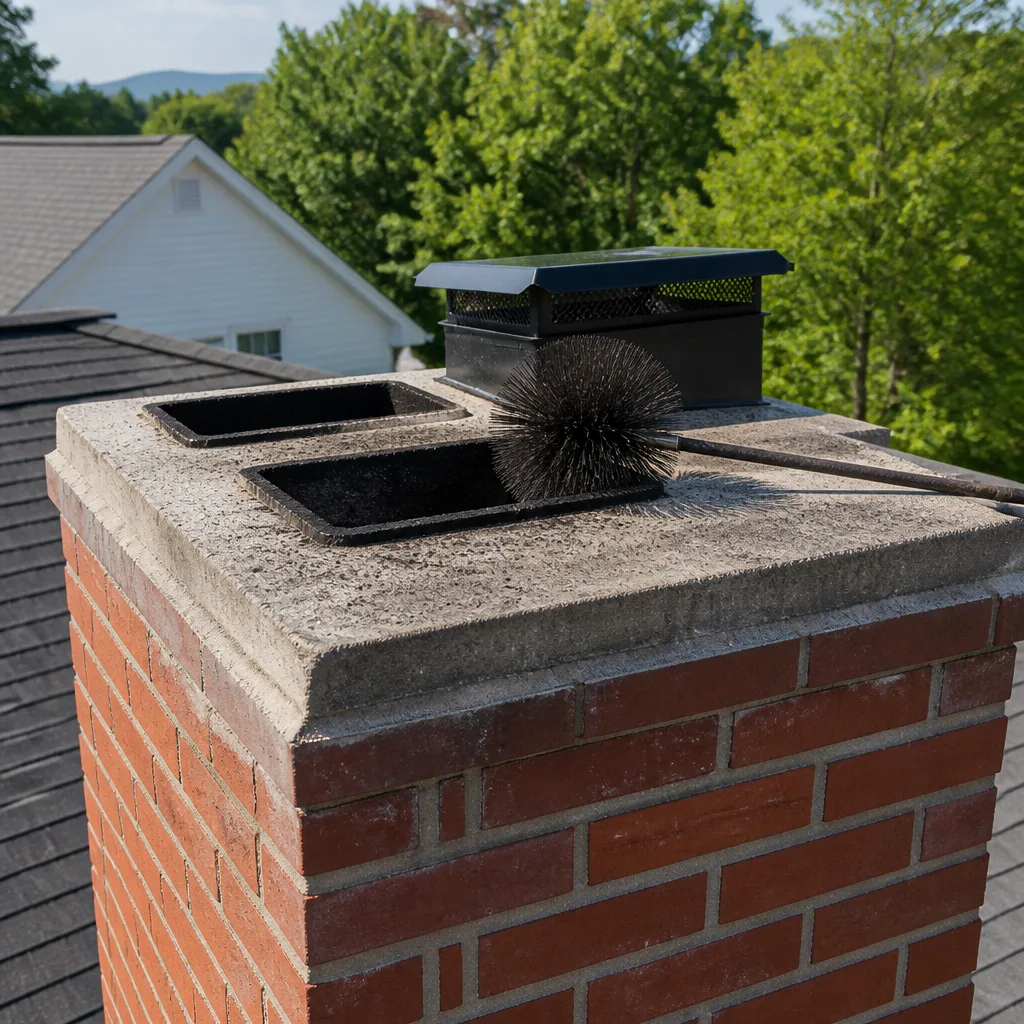
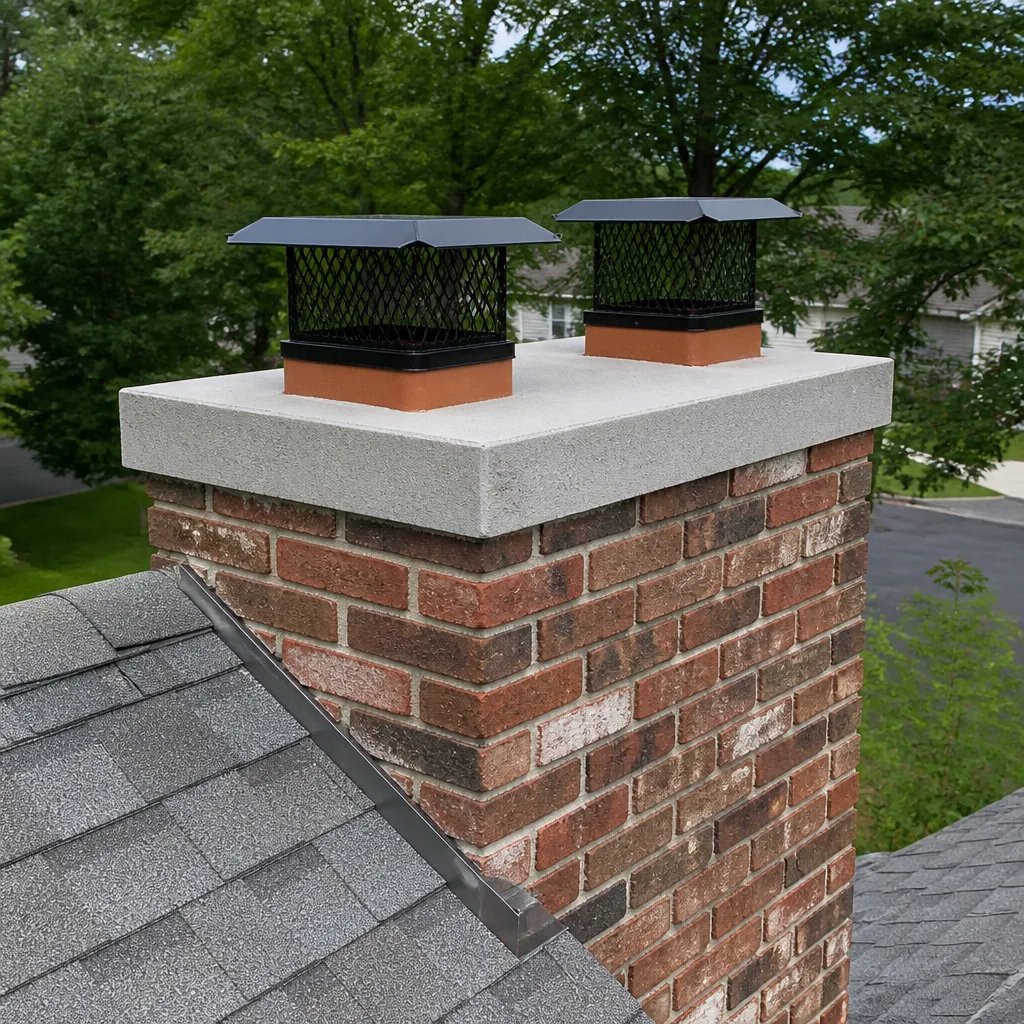
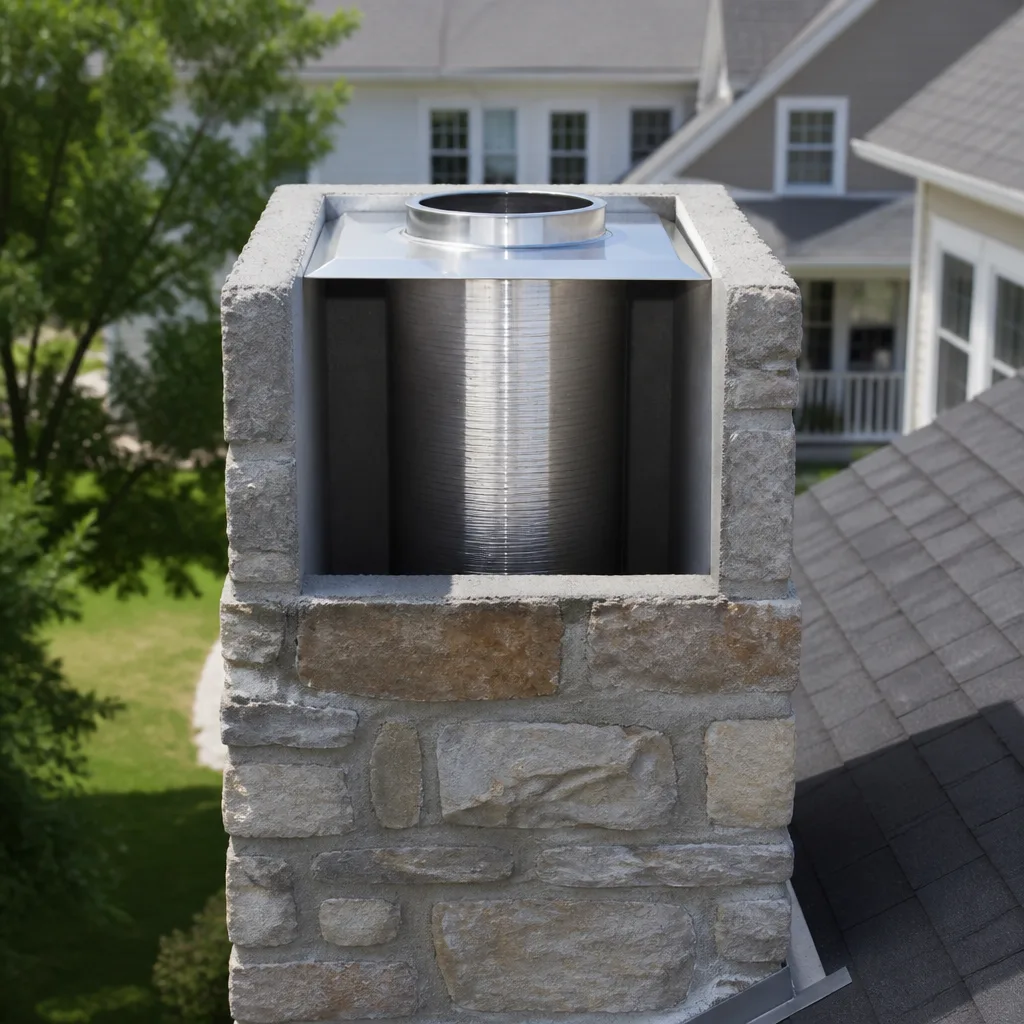
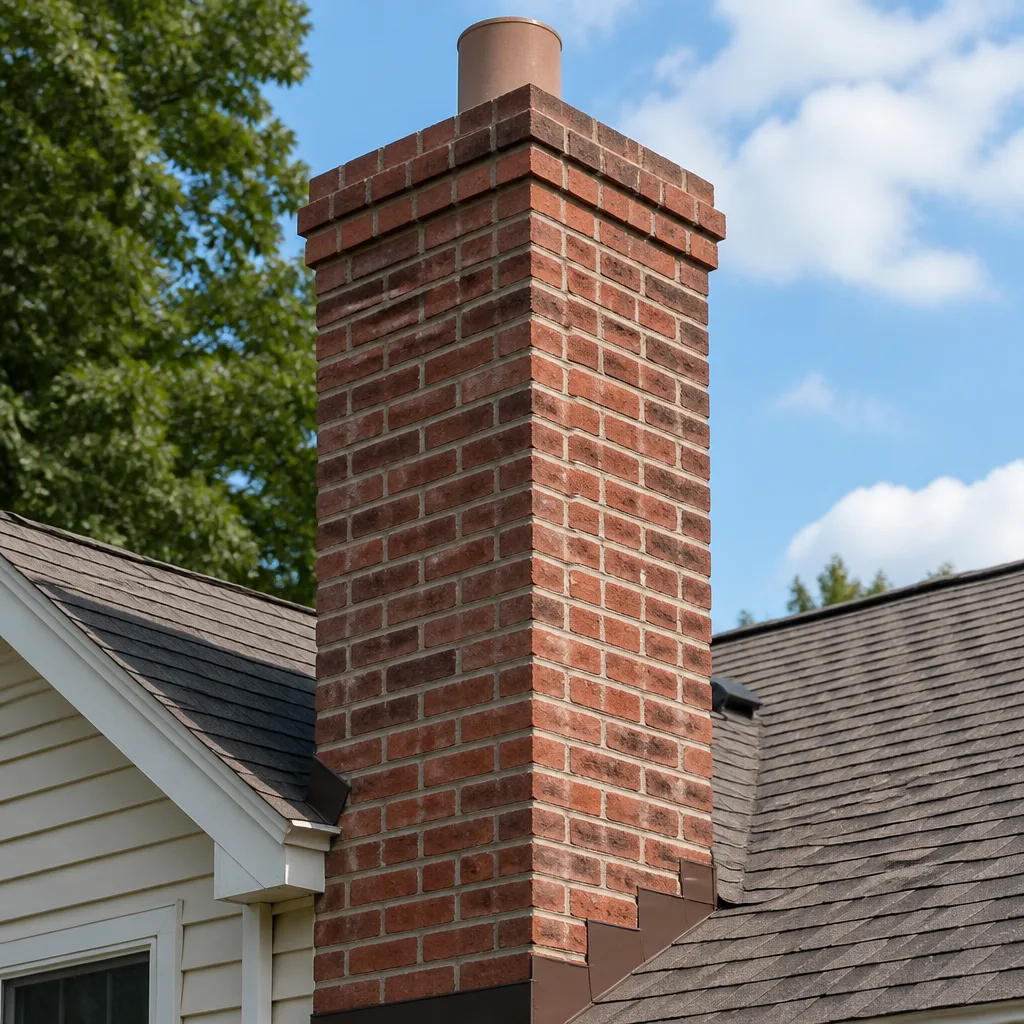
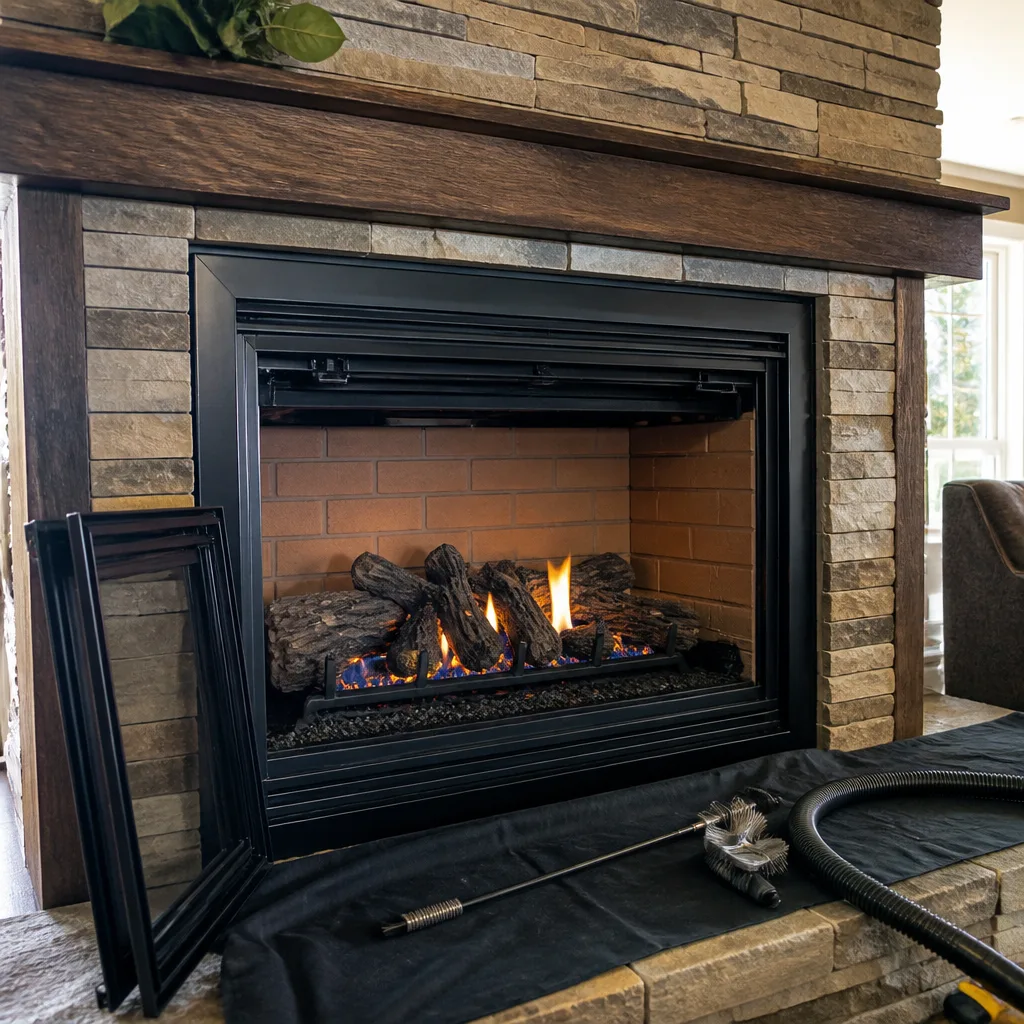
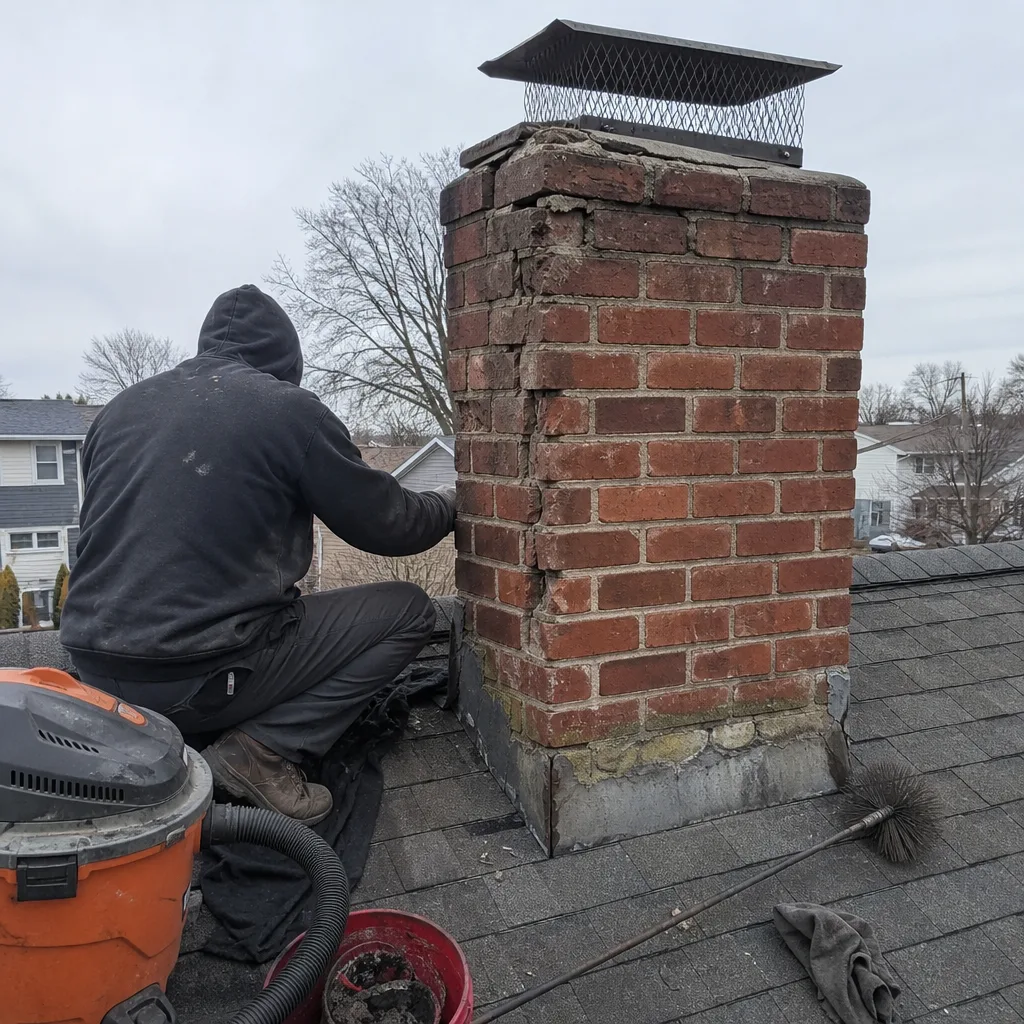 Before
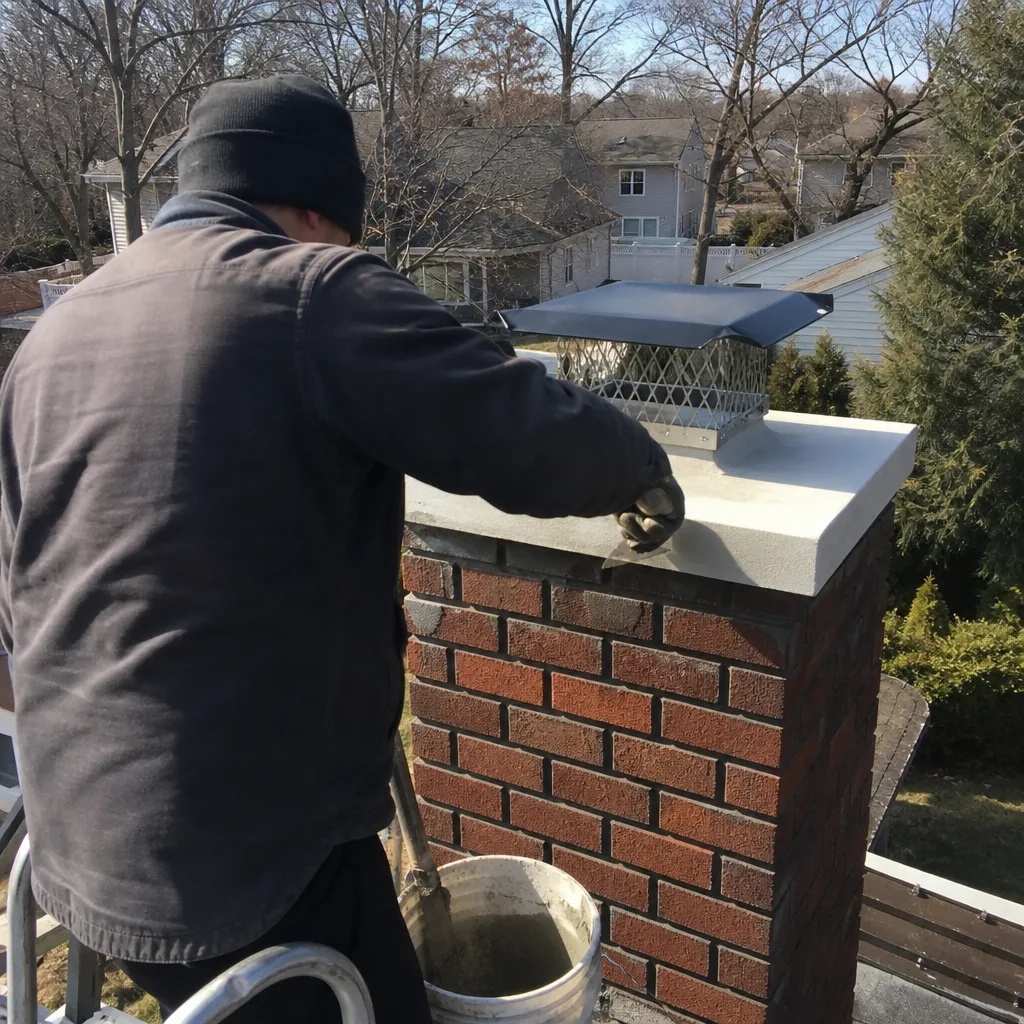 After
After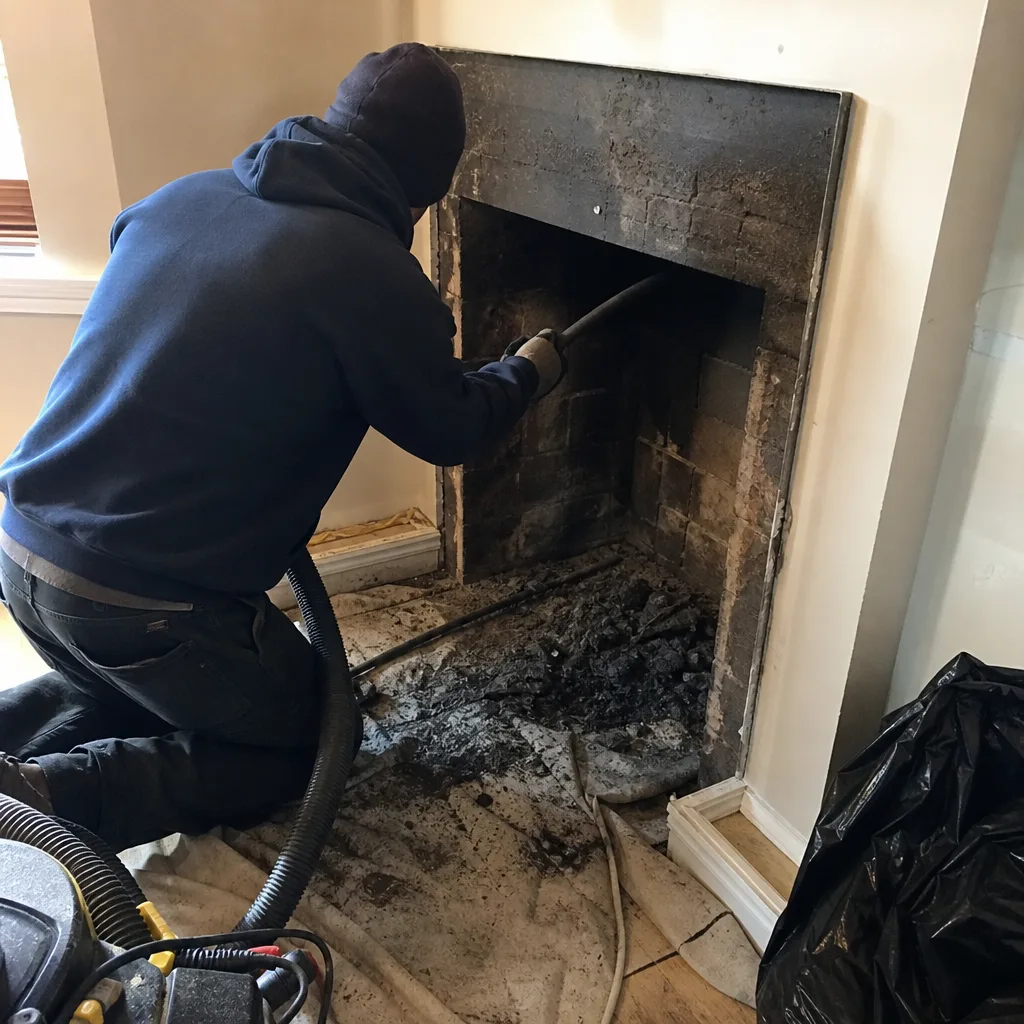 Before
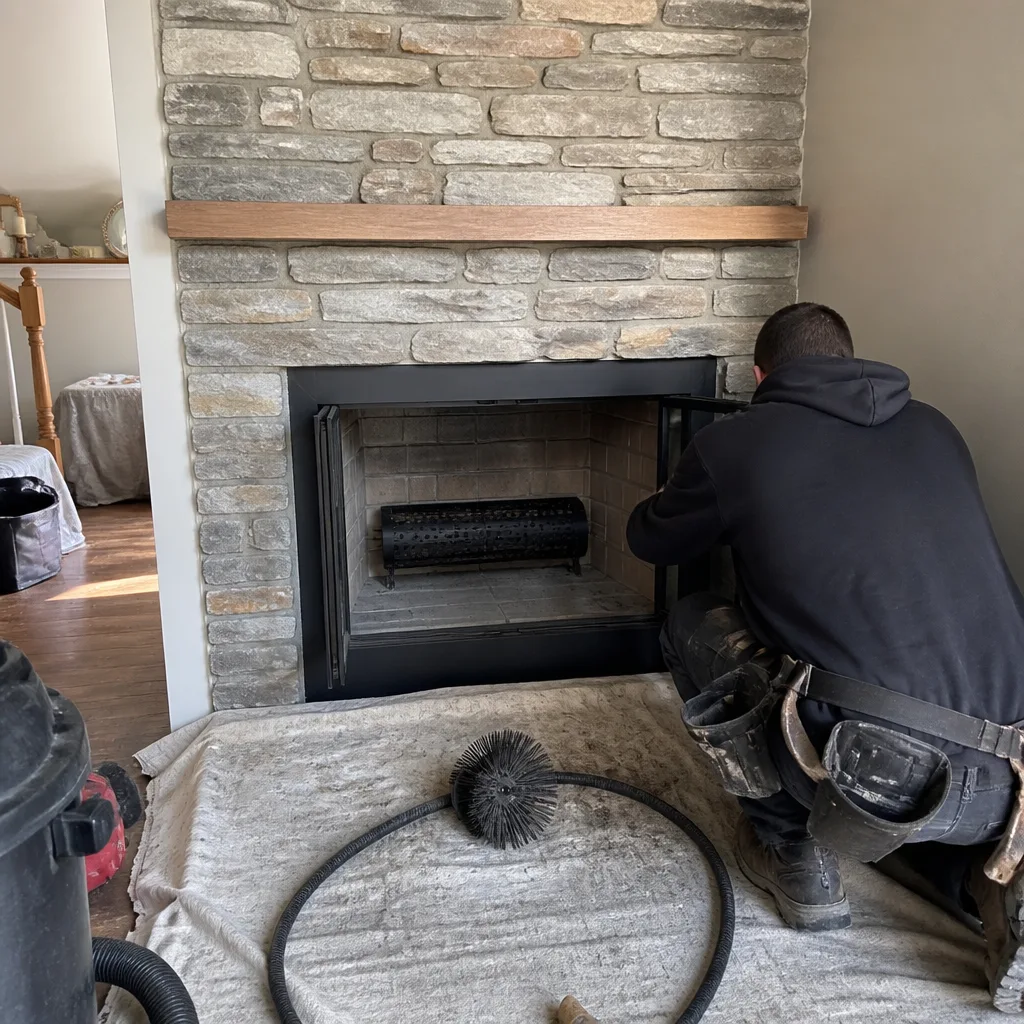 After
After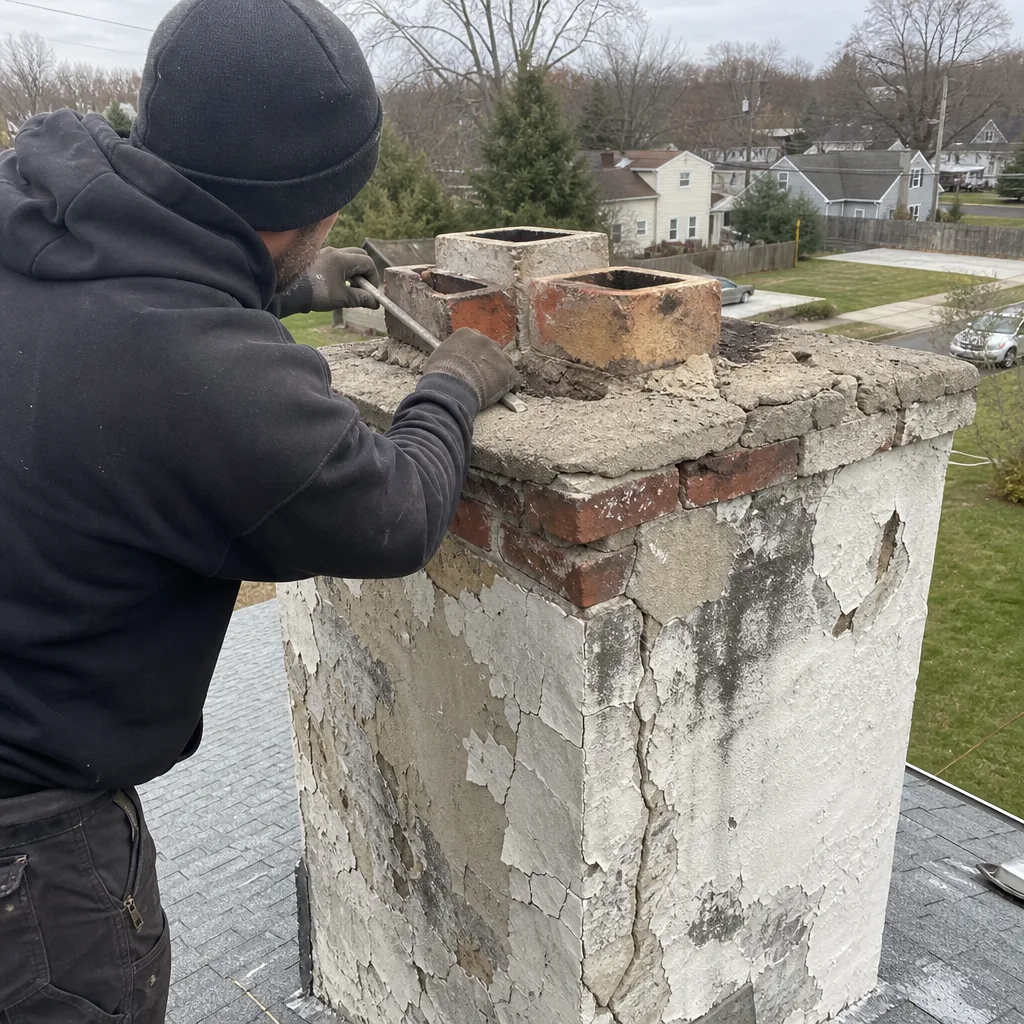 Before
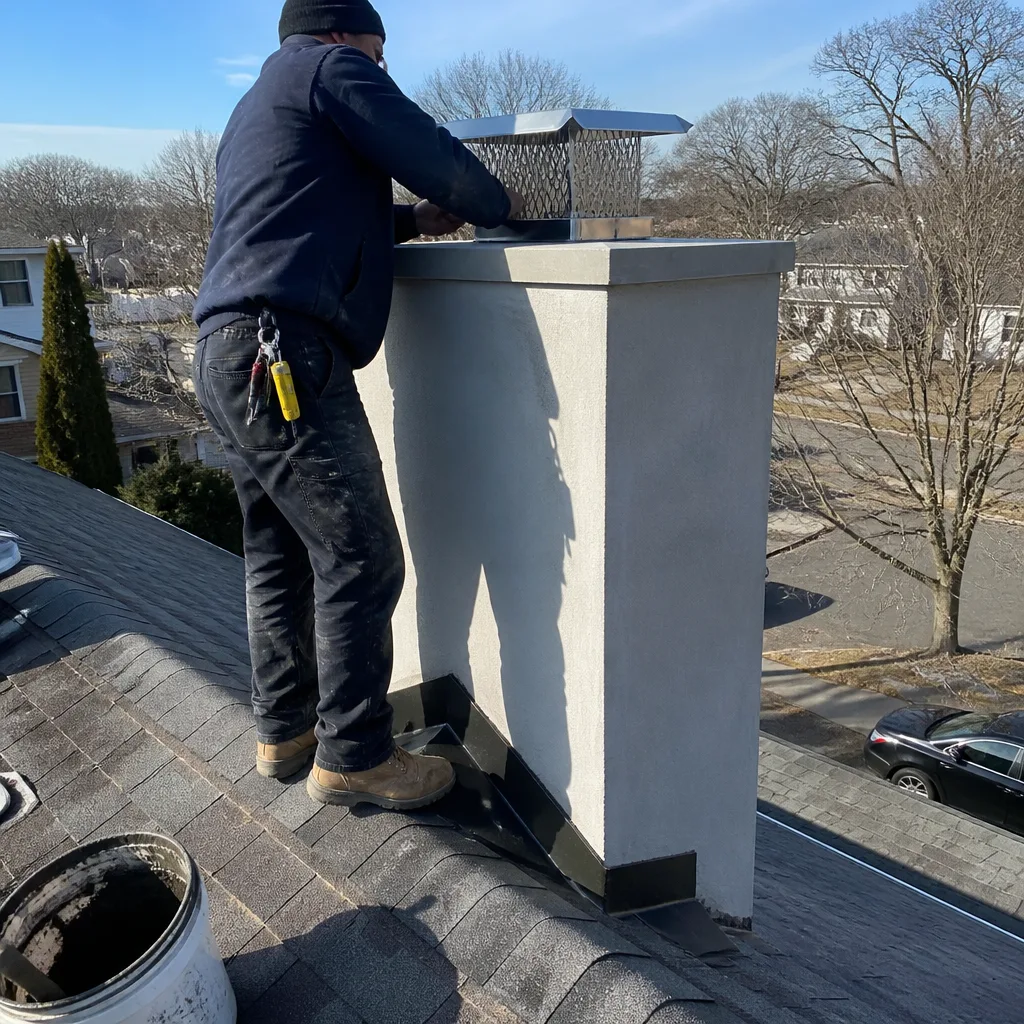 After
AfterSeasonal Chimney Cleaning Care for Hicksville: Year-Round Homeowner’s Guide
Most chimney problems that show up in October were set in motion in March. The freeze-thaw cycles Long Island gets in late winter are among the most destructive forces a masonry chimney faces, and they do their damage quietly, while homeowners are thinking about spring lawns, not the stack above their roofline. In Hicksville, where many homes were built during the post-war boom and have seen forty or more heating seasons, the seasonal rhythm of chimney wear is predictable once you know what to watch for. This guide maps the year by what actually happens to mortar, liners, caps, and creosote between November and October, so you know when to act and what to watch for in each stretch - and for a printable version of these tasks, see our Chimney Cleaning & Sweep Maintenance Checklist for Hicksville Homeowners.
Quick Answer
Seasonal chimney care in Hicksville means matching maintenance to what each season does to your system: fall for pre-burn inspections and creosote removal, winter for monitoring draft and snow load, spring for documenting freeze-thaw damage, and summer for liner checks and scheduling before the August-September booking rush. Annual cleaning is the floor, not the ceiling - timing it to the season prevents the small problems that become expensive repairs.
Table of Contents
- Fall: The Pre-Season Inspection Window
- Winter: Burning Season and Real-Time Risks
- Spring: Documenting What the Winter Did
- Summer: The Hidden Damage Season
- Timing Your Annual Sweep: Why August-September Wins in Hicksville
- What a Level-2 Inspection Actually Covers
- What Seasonal Chimney Care Costs in Hicksville
- Common Mistakes to Avoid
- When to Call a Professional
- Frequently Asked Questions
Fall: The Pre-Season Inspection Window
The fall inspection matters more than the post-season one because it is your last chance to catch problems before you light the first fire. In Hicksville, where temperatures can swing from sixty degrees to below freezing inside a single October week, a chimney that sat idle all summer may have developed gaps, blockages, or moisture damage that will not show symptoms until the system is under load.
Here is what we are checking for in October, and why each item matters:
- Glazed creosote buildup. A full season of burning produces more than ash. When wood burns incompletely, volatile compounds rise, cool, and condense on flue walls. The result is creosote, which exists in three stages: sooty (brushable), flaky (requires more aggressive tools), and glazed (hardened, tar-like, and a genuine fire hazard). Hicksville’s older homes, many with original masonry fireplaces sized for the heating demands of 1955, often burn inefficiently by modern standards. That inefficiency accelerates creosote accumulation. We remove it with rotary systems designed for each stage - no shortcuts with a standard brush on glazed buildup.
- Obstructions from summer visitors. Squirrels, starlings, and raccoons are active in Hicksville’s mature tree canopy through September. A cap that was secure in May may have been breached by August. Nesting material blocks airflow, and blocked airflow pushes smoke and carbon monoxide into living space. We document cap condition with photos you can see.
- Damper function and seal. A damper that does not fully open creates smoke backup. A damper that does not fully close bleeds heated air all winter. Both are common in homes where the damper has not been exercised since March.
- Firebox and smoke chamber integrity. The transition from firebox to flue is a high-stress zone. Cracked mortar here exposes surrounding framing to heat - a condition that does not announce itself until it is serious.
The pre-season inspection also sets your baseline for the year. When we return in spring with the same camera and the same documentation standards, we can show you exactly what changed. That comparison is how we catch liner degradation and crown cracking in their early stages, before water has a path to the interior structure.
Our Chimney Cleaning & Sweep in Hicksville includes full debris removal, firebox cleaning, and a written condition report with photos. The $89 Seasonal Tune-Up covers this for standard systems.
Winter: Burning Season and Real-Time Risks
Once the first sustained cold arrives in Hicksville, typically by mid-December, your chimney enters its highest-stress period. The temperature differential between flue gases and outside air is at its maximum, which creates strong draft but also accelerates thermal cycling in the masonry. Here is what we tell homeowners to monitor between professional visits, and what requires immediate attention.
Snow and ice load on the cap. Heavy, wet snow - common in Long Island nor’easters - can pack over the cap screen and restrict airflow. Restricted airflow causes smoky fires, poor combustion, and in extreme cases, carbon monoxide spillage. The one check you can do safely from the ground: after a significant snowfall, use binoculars to verify the cap is clear and upright. If the cap is buried or visibly tilted, do not burn until it is cleared. We do not recommend roof access in winter conditions - that is what we are for.
Draft problems in very cold snaps. When outside temperatures drop below twenty degrees and stay there, the air column in a cold chimney can be too dense to establish draft. The result is smoke rolling out the firebox on ignition. The traditional fix, a rolled newspaper torch, is effective but temporary. Persistent draft issues in Hicksville’s older, shorter chimneys - many built to pre-1950 standards - may indicate a sizing mismatch with modern, more efficient appliances. We measure and document flue dimensions against appliance specifications.
Carbon monoxide vigilance. Every home with a combustion appliance needs CO detectors on every sleeping level. In winter, when windows are closed and heating systems run continuously, the risk window is widest. A blocked flue, a cracked heat exchanger, or backdrafting from a tightly sealed house can all introduce CO. The detector is your last line of defense; the inspection is your first.
We do not perform cleaning during active burn season unless there is a documented hazard - the creosote you are removing is from the previous season, and disturbing a system that is in daily use carries its own risks. If you suspect a winter problem, call. We answer live, 24 hours a day, and we will tell you whether it can wait or needs immediate attention.
Spring: Documenting What the Winter Did
March and April in Hicksville bring what we call the damage season. Not because damage happens then, but because damage done in January and February becomes visible then. The freeze-thaw cycle is the mechanism, and it is relentless.
Here is how it works. Water enters masonry through cap cracks, crown failures, or porous brick. When temperatures drop below freezing, that water expands by about nine percent. The expansion forces micro-fractures wider. When temperatures rise, the ice melts, the water penetrates deeper, and the cycle repeats. Long Island’s climate is particularly cruel in this regard: we get dozens of freeze-thaw cycles per winter, more than colder regions where the temperature stays below freezing for months at a time.
By late March, the evidence is on the ground. We tell homeowners to walk the perimeter of their chimney after the snow clears and look for:
- Sand-like debris at the chimney base. This is spalling - the outer face of brick or mortar popping off due to freeze-thaw pressure. In Hicksville’s Levitt-era homes, where brick quality varies and mortar mixes were often high in lime, spalling can progress from cosmetic to structural in three to five years if uncaught.
- White efflorescence on brick faces. This powdery deposit is soluble salts carried to the surface by moisture migration. It signals water is moving through the masonry, which means the interior is wet-cycling too.
- Crown cracks visible from the yard. A crown should shed water like a tent roof. Cracks become channels, channels become leaks, leaks become interior damage.
- Deteriorated flashing at the roofline. Spring rains test every seal. Water stains on ceiling drywall near the chimney breast almost always trace to flashing, not roof shingles.
Spring is the best time to photograph damage because the conditions that caused it are fresh, and the full summer repair window lies ahead. We document everything with dated photos and a plain-English verdict: what can wait, what should be scheduled, and what needs attention before next burn season. Our Chimney Repair in Hicksville includes crown rebuilding with professional-grade materials, tuckpointing, and flashing replacement.
Summer: The Hidden Damage Season
Homeowners often assume summer is downtime for chimney care. In our experience, it is when some of the most consequential degradation happens - quietly, invisibly, and undisturbed.
Heat and humidity accelerate liner degradation, particularly in clay tile liners installed before 1990. The thermal shock of winter burning creates hairline cracks in tile. In summer, humid air penetrates those cracks, and the clay swells slightly with moisture. The swelling does not reverse completely when fall drying arrives. Over ten or fifteen seasons, the cumulative distortion can open gaps between tile sections that were tight when installed. A summer inspection, with the system cool and accessible, often catches this progression that fall cleaning misses - because in fall, we are focused on immediate burn readiness, not long-term liner condition.
Summer is also when animal entry is most likely. Juvenile squirrels and raccoons disperse from maternal dens in June and July, and a chimney without a secure cap reads as habitat. We remove nesting material, install proper screening, and document the repair.
For Hicksville homeowners, summer offers another practical advantage: scheduling flexibility. Our calendar opens in June and July, with appointment availability that does not exist in September and October. The homeowners who book summer inspections get the same Level-2 camera documentation, the same photo report, and the same plain-English verdict - but with time to act on what we find, and without the pressure of a cold front approaching.
Our Fireplace Services in Hicksville include summer damper repair, firebox refractory panel replacement, and gas log set installation for homeowners converting wood systems.
Timing Your Annual Sweep: Why August-September Wins in Hicksville
The conventional wisdom says clean your chimney in fall, before burning season. The conventional wisdom is not wrong, but it is imprecise. In Hicksville’s market, where demand concentrates in a six-week window, the practical reality is that October appointments book by mid-September, and the technicians who remain available in late October are often the ones other companies could not schedule.
We recommend August through September for three reasons specific to this area:
- Weather cooperation. Hicksville’s August and September days are warm enough that a chimney can be thoroughly swept and left to air-dry before any evening cool. Moisture trapped in a flue before first fire is a non-issue.
- Repair lead time. If inspection reveals crown damage, liner gaps, or masonry needs, scheduling repair in September or early October leaves margin before first freeze. The same repair quoted in November may not be completable until spring - meaning a winter of compromised operation or no operation at all.
- Price stability. Our pricing is flat and upfront year-round, but emergency or rush scheduling in October carries inherent cost in stress and limited options. Booking in the August-September window is simply easier on the homeowner.
For homeowners who burned heavily the previous winter - more than three cords of wood, or daily use from December through March - we sometimes recommend a mid-season check in January or February, with full cleaning deferred to spring. This is not standard, but for high-use systems, it prevents glazed creosote from hardening through a second season.
What a Level-2 Inspection Actually Covers
The National Fire Protection Association defines three levels of chimney inspection. Level 1 is visual, from accessible areas, without tools. Level 2 adds camera examination of the flue interior, inspection of accessible portions of the attic and basement, and documentation of all findings. Level 3 involves demolition of building materials to access concealed areas, and is only triggered when Level 2 indicates hidden hazards.
We perform Level 2 inspections as our standard, because a flue that looks sound from the firebox can be deteriorated ten feet up where no eye can reach. Our process:
- Exterior documentation. Crown, cap, flashing, brick condition, and clearances to combustibles. Photos from multiple angles.
- Interior firebox and smoke chamber. Cracking, mortar loss, and proper construction per applicable code.
- Flue camera scan. A high-resolution camera is run the full length of the flue, with the technician narrating findings in real time. The homeowner sees what we see. We document cracks, gaps, glaze buildup, and obstructions with timestamped images.
- Attic and basement access. Where accessible, we check for proper clearance, signs of past leaks, and structural support condition.
- Written verdict. A plain-English summary: what is sound, what needs monitoring, what needs action, and on what timeline. No jargon, no scare tactics, no open-ended recommendations.
The inspection report becomes your baseline. Compare year to year, and the progression of wear becomes visible and predictable. That predictability is how you avoid emergency repairs and unexpected costs.
We use professional-grade materials from brands we trust: Olympia Chimney for stainless steel liner systems, Famco for caps and termination hardware, and Copperfield for specialty repair products. No builder-grade substitutes - the difference in longevity is measured in decades, not years.
What Seasonal Chimney Care Costs in Hicksville
Cost transparency matters to homeowners who have been burned by vague estimates and invoice surprises. Our pricing is flat, agreed before booking, and documented in writing. Here is what seasonal care typically runs in the Hicksville market:
| Service | Typical Range | What It Includes |
|---|---|---|
| Seasonal Tune-Up (standard sweep + Level-1 inspection) | $89 | Debris removal, firebox cleaning, basic condition check, written report |
| Level-2 Camera Inspection | $225-$325 | Full flue scan, interior/exterior documentation, photo report, plain-English verdict |
| Chimney Sweep with Level-2 Inspection | $275-$395 | Complete cleaning plus camera documentation and written assessment |
| Crown Repair/Rebuild | $450-$1,200 | Crack sealing to full rebuild with professional-grade crown mix |
| Cap Replacement (standard stainless) | $275-$450 | Properly sized cap with animal screen, installed |
| Flashing Repair | $350-$850 | Step flashing and counterflashing replacement as needed |
| Liner Repair/Replacement | $1,800-$4,500 | Stainless steel liner system, sized to appliance, with warranty |
These ranges reflect Hicksville’s market conditions: labor costs consistent with Nassau County, material access from regional distributors, and the building stock typical of this area. Every estimate is confirmed in person before work begins - the number on the estimate is the number on the invoice.
Standing offers: $50 Off Any Repair Over $250; Free Second Opinion on any written estimate; $89 Seasonal Tune-Up; permanent 5% Senior and Veteran discount. These are not introductory come-ons. They have been in place for years because they represent how we believe pricing should work.
Common Mistakes to Avoid
- Waiting for smoke to signal a problem. By the time smoke backs up into your living room, the issue is advanced. Annual inspection catches what your senses cannot.
- Assuming a gas fireplace needs no care. Gas systems do not produce creosote, but they do produce moisture and corrosive byproducts. The liner degrades, the damper rusts, and debris still blocks vents. We inspect gas systems with the same camera documentation.
- Hiring based on the lowest coupon price. The $49 sweep that takes twenty minutes and leaves glazed creosote in place is not a deal. It is a deferred cost, paid later in fire risk or re-cleaning.
- Ignoring spalling at the chimney base. That sand-like debris is not normal weathering. It is active structural degradation, and in Hicksville’s wet-freeze climate, it accelerates.
- Skipping the cap to save money. A proper cap costs less than one squirrel removal and repair. It also prevents the water entry that destroys mortar from the top down.
- Booking too late in the season. October 15th is not too late for an inspection, but it is too late to schedule repairs before first freeze. August-September booking protects your options.
- Accepting verbal recommendations without photo evidence. If a technician tells you the liner is cracked, ask to see it. If they cannot or will not show you, get a second opinion. Our camera inspections produce photos you keep.
When to Call a Professional
Some conditions require immediate professional assessment: visible flame or sparking from the chimney exterior, smoke entering living space during normal operation, a collapsed or damaged cap after a storm, or any carbon monoxide alarm activation. Do not attempt diagnosis or repair yourself - the risks of fire, structural damage, and poisoning are real and not theoretical.
For less urgent concerns, the threshold is simple: if you have not had a Level-2 inspection in the past twelve months, schedule one. The documentation matters as much as the immediate findings. A baseline established now enables comparison next year, and that comparison is how we catch progressive damage before it becomes expensive.
Hearthstone Chimney Co. offers free estimates in Hicksville. Call (516) 259-3797. A live person answers, 24 hours a day, every day. We will schedule at your convenience, perform the inspection with the same thoroughness we apply to our own homes, and leave you with photos you can see and a verdict you can understand. Done right - and we stand behind it.
Frequently Asked Questions
A standard chimney sweep with basic inspection typically runs $89 to $395 depending on whether a Level-2 camera inspection is included. Our $89 Seasonal Tune-Up covers full cleaning and a written condition report for standard systems. Call (516) 259-3797 for an exact quote - estimates are free.
The National Fire Protection Association recommends annual inspection for all chimney systems, and cleaning as needed based on creosote accumulation. In practice, most Hicksville homeowners who burn wood regularly need annual sweeping; gas systems need inspection every one to two years. The determining factor is use, not calendar time alone.
Clay tile liners with isolated cracks can sometimes be sealed with HeatShield cerfractory foam, a product we apply with specialized equipment. If tiles are displaced, severely cracked, or if the flue is unlined, stainless steel replacement is the durable solution. We do not recommend replacement without camera documentation you can review yourself - and we will tell you plainly when repair is sufficient.
Skipped maintenance leads to three predictable outcomes: creosote accumulation increases fire risk progressively; moisture entry degrades mortar and liner; and minor damage becomes major repair. In Hicksville’s climate, a crown crack left two years typically becomes a $1,200 rebuild instead of a $300 seal. The cost of prevention is always lower than the cost of remediation.
Ground-level visual checks - cap condition, base debris, flashing from the yard - are appropriate for homeowners. Flue interior inspection requires specialized camera equipment and training. We do not recommend roof access without proper safety equipment, and we do not provide DIY guidance for flue work. The risks of missing something consequential outweigh any savings.
Summer chimney odor usually indicates creosote deposits absorbing humidity, or animal entry leaving organic material. A thorough sweep removes the source, and a proper cap prevents recurrence. In Hicksville’s humid July and August, even a lightly used system can develop noticeable odor if creosote is present. The fix is cleaning, not air freshener.
The Bottom Line
Annual chimney cleaning is necessary but not sufficient. In Hicksville’s four-season climate, each season stresses your chimney differently: fall demands pre-burn readiness, winter requires vigilance for draft and CO risk, spring reveals freeze-thaw damage, and summer offers the best conditions for thorough inspection and repair scheduling. The homeowners who avoid emergencies are the ones who match maintenance to the season, document condition year over year, and act on recommendations before small problems become large ones. Book in the August-September window. Ask for photos. Get the verdict in writing. And explore more guides & resources to keep your system safe year-round. And work with a company that plans to be here when you need us next - because in this business, the long view is the only honest one.
Written by Russell Haines, Owner at Hearthstone Chimney Co., serving Hicksville since 2014.